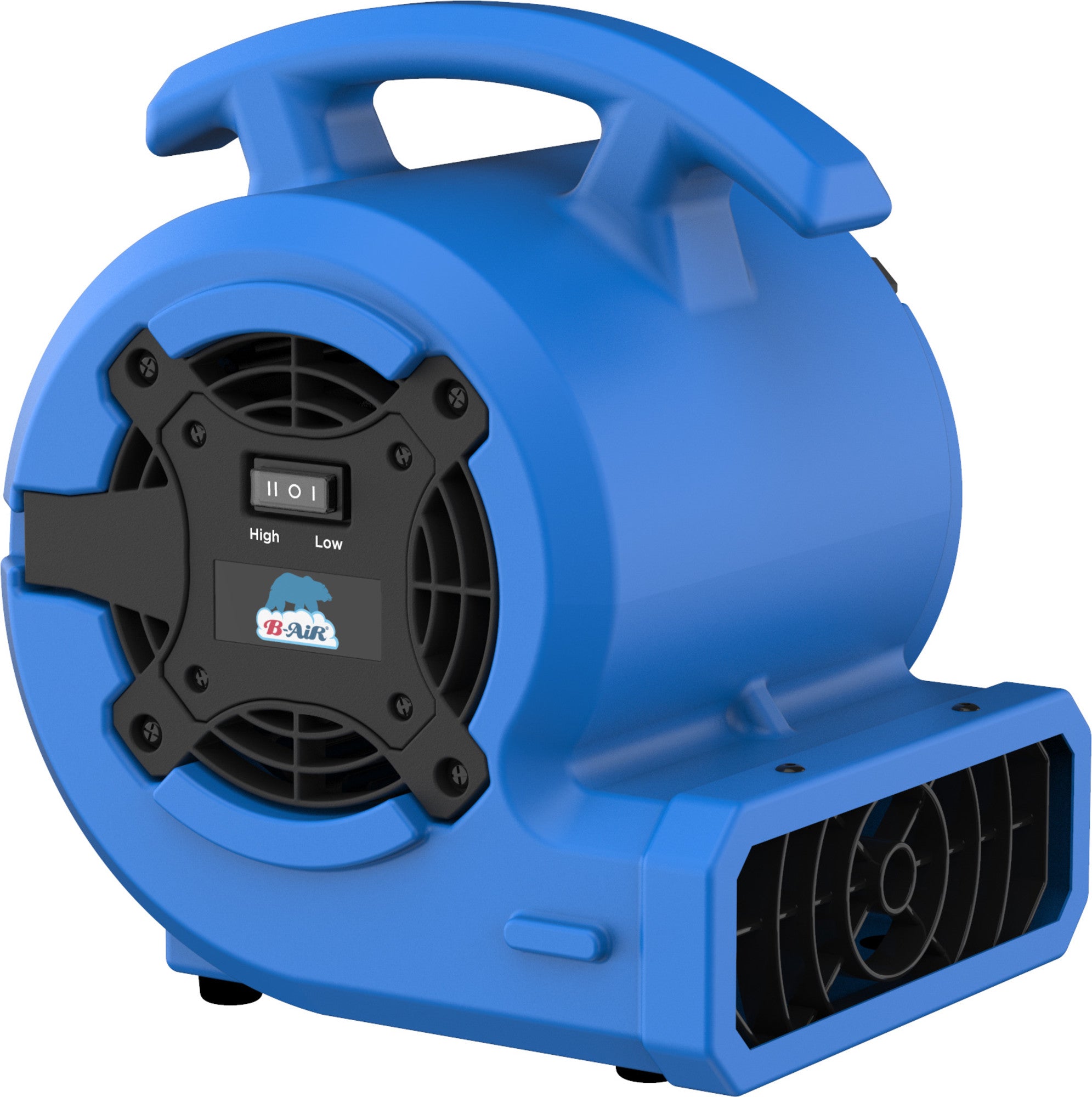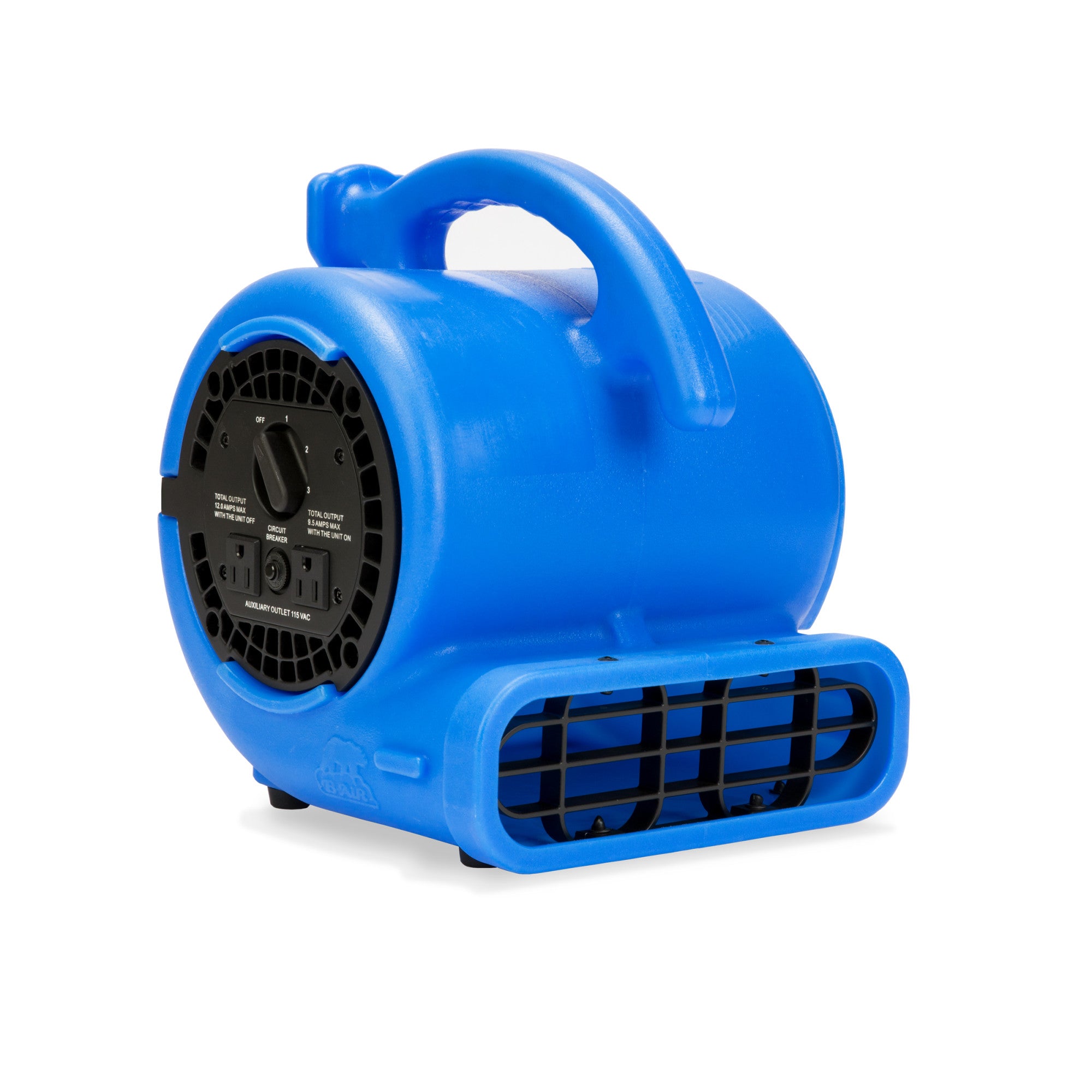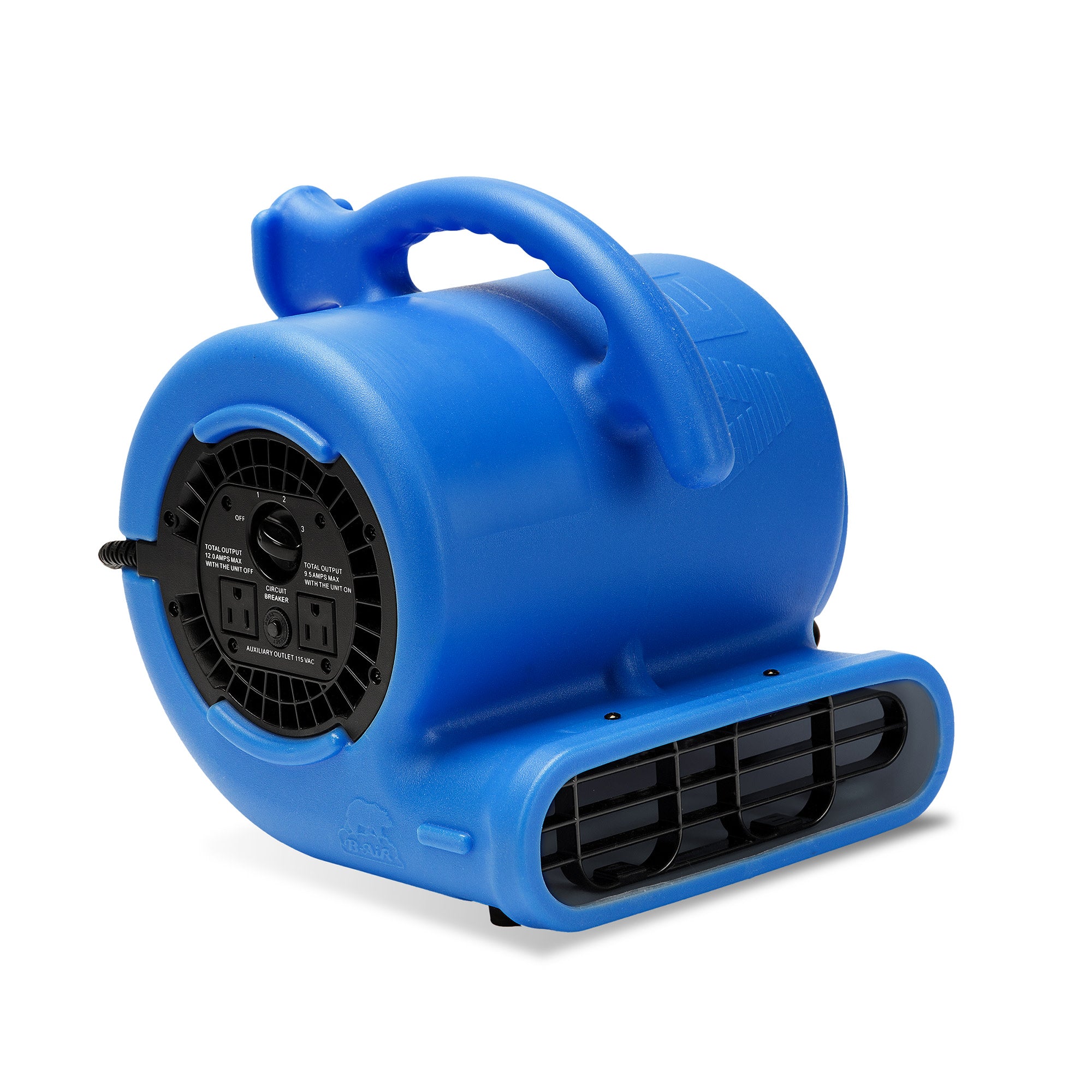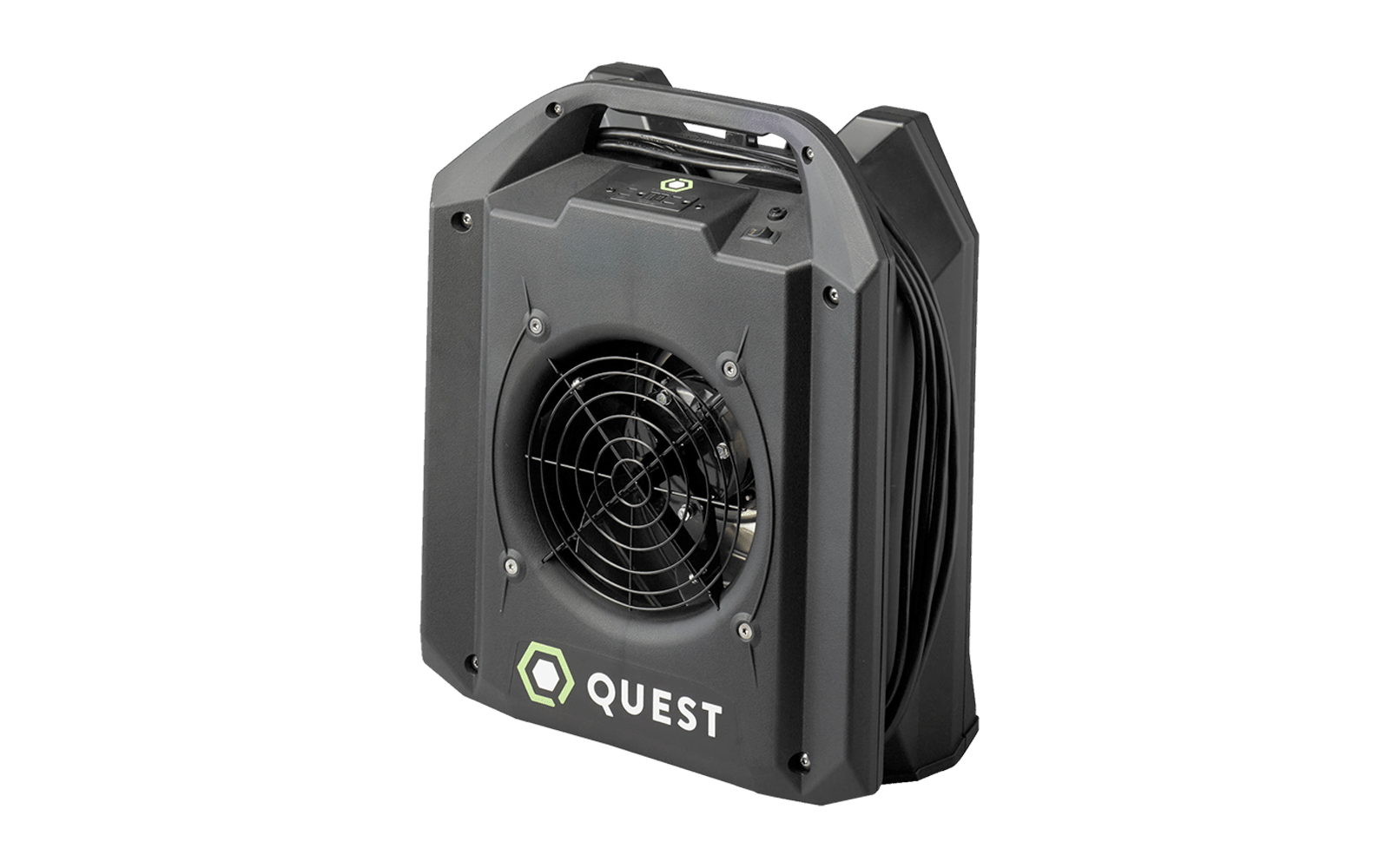

Up to 1,000 cfm Air Mover
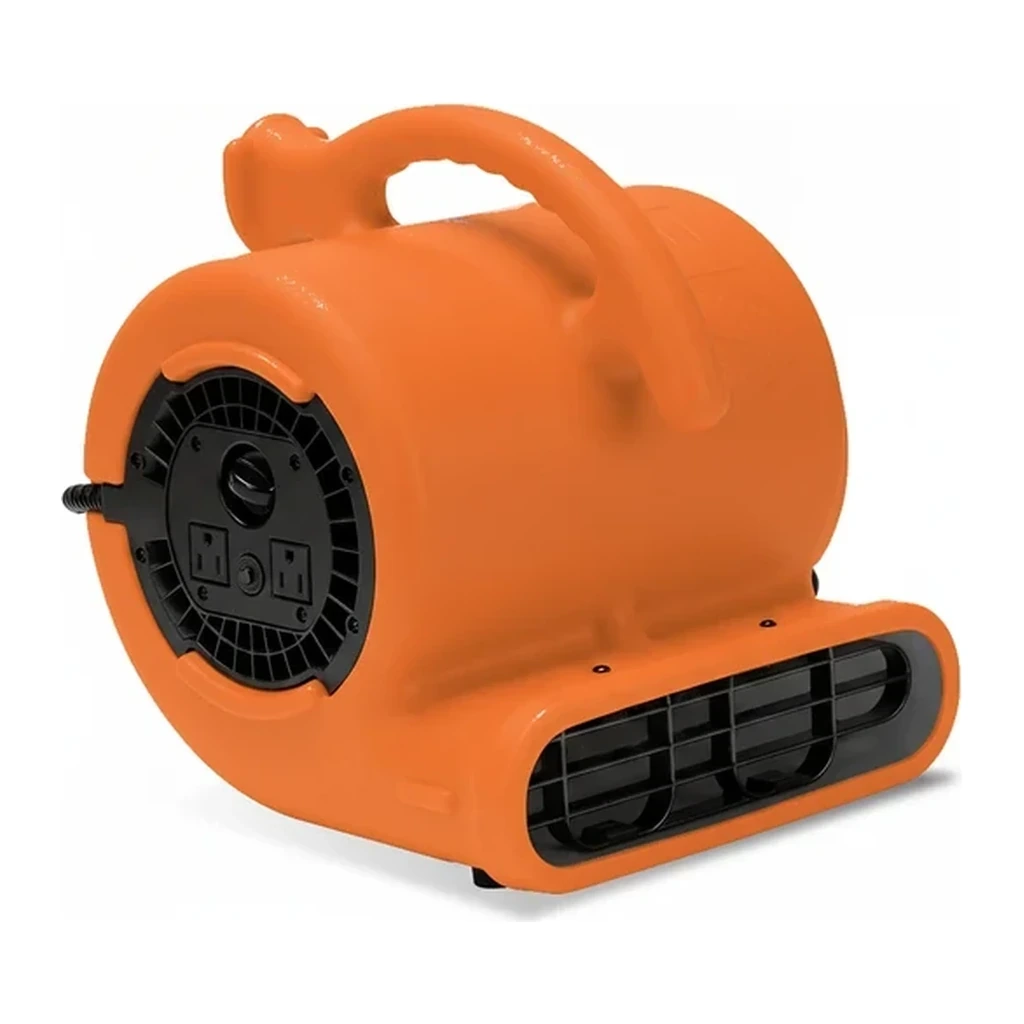
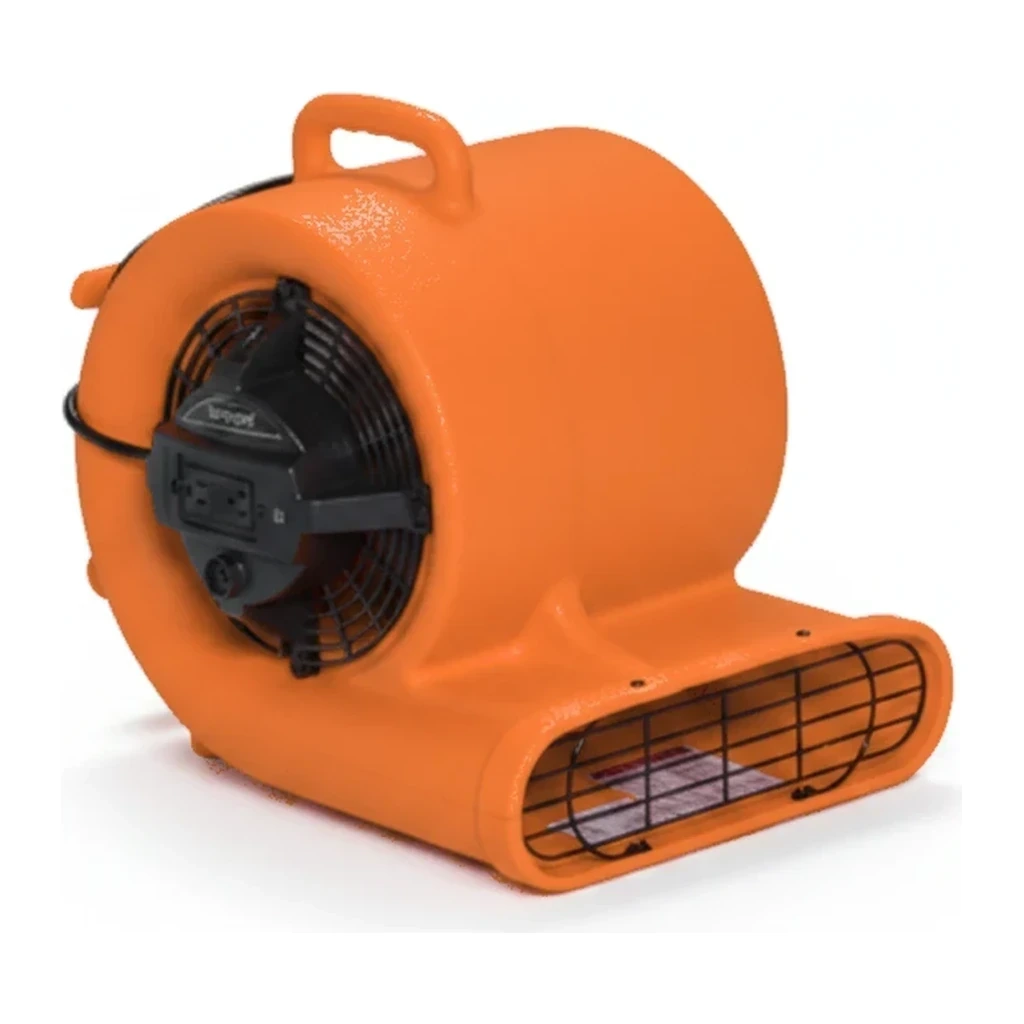
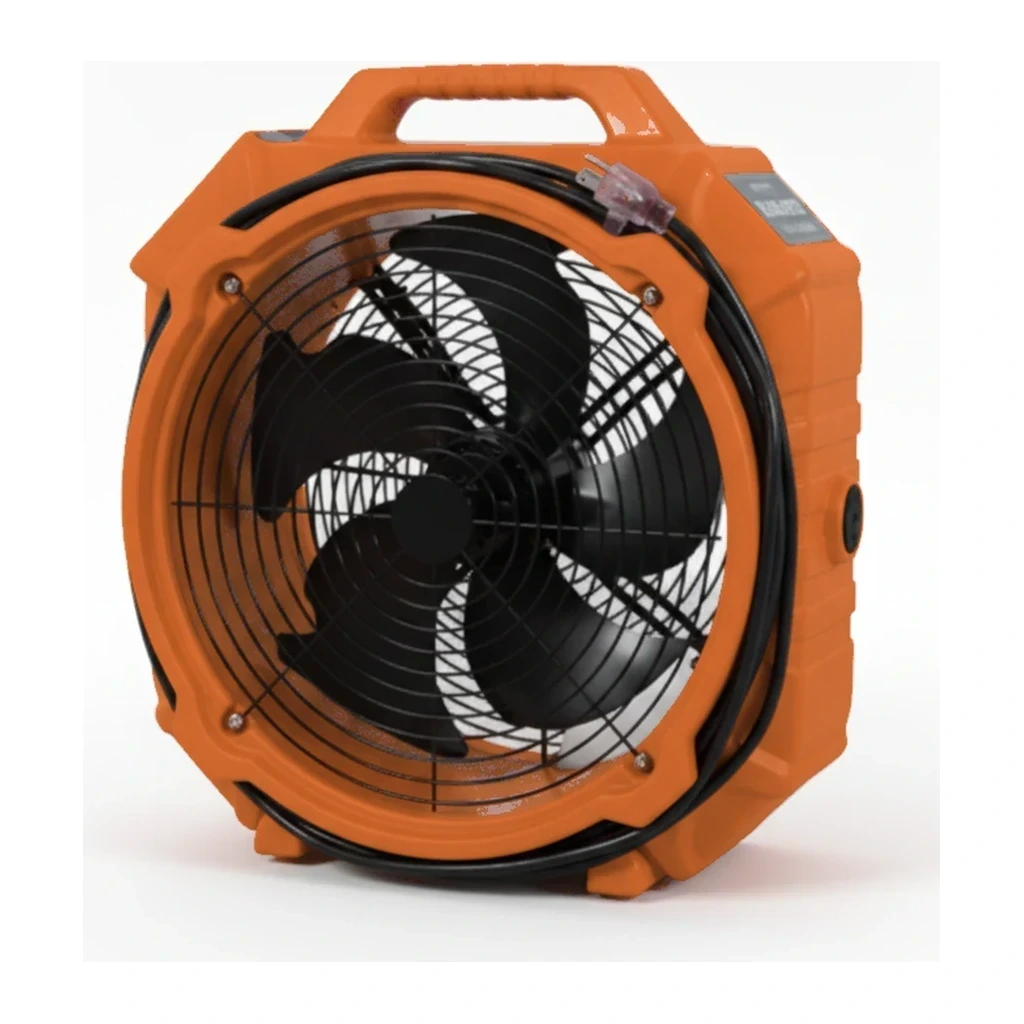
Air movers rated up to 1,000 cfm are compact, stackable units designed to dry confined spaces such as a single wall cavity, a room-sized carpet area, or a closet. This is the smallest and most widely deployed air mover class in the restoration and remediation industry. For larger open areas or whole-room air circulation, the 1,000-2,000 cfm class offers greater coverage per unit.
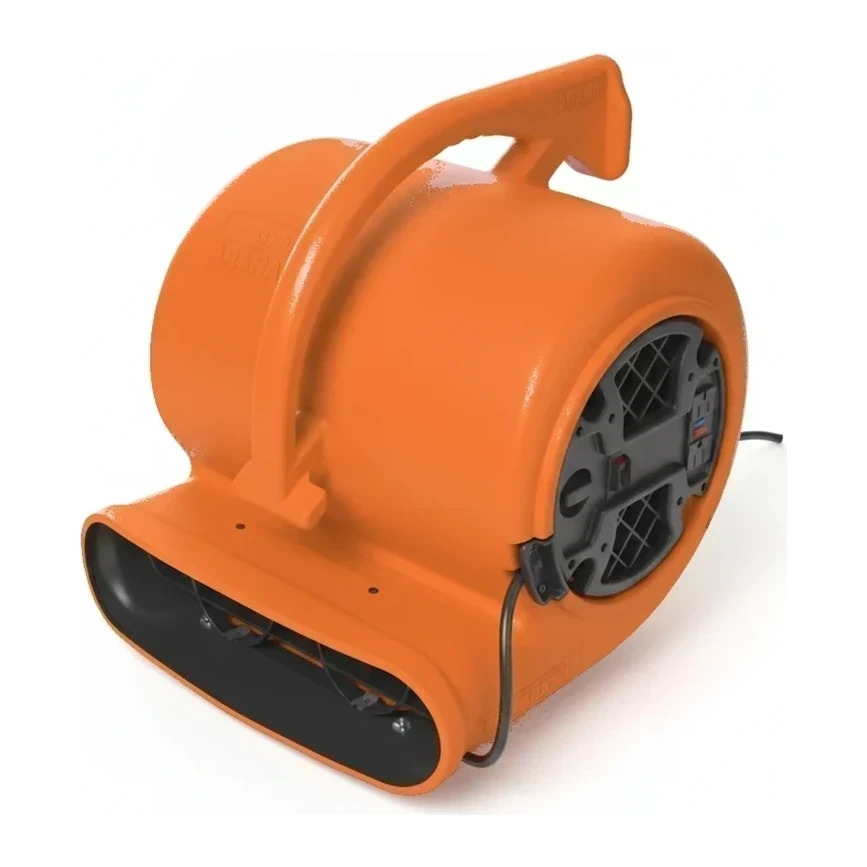
Cat classes
Pick a size class: capacity and reach differ across the range.
Key specifications
| Specification | Typical range | What it means |
|---|---|---|
| Airflow | 120-980 cfm | Range spans entry-level centrifugal units to high-velocity axial designs; most models cluster between 500-900 cfm |
| Fuel capacity | 17-68 gal | Applies to gasoline-powered portable models; electric versions dominate this size class |
| Form factor | Low-profile stackable | Designed for tight spaces and efficient transport; three or more units typically fit in a cargo van |
How to choose
This size class is the standard choice when drying localized moisture intrusion: water-damaged carpet in a bedroom, a single soaked wall, or confined spaces such as bathrooms and closets. Multiple units are often deployed together to create overlapping airflow patterns in water-loss scenarios. When the objective is to circulate air throughout an entire basement, gymnasium, or open warehouse space, the 1,000-2,000 cfm Air Mover provides more efficient coverage and reduces the total number of units required on site.
What this size handles
- Drying carpet and pad in a residential bedroom after pipe leak
- Accelerating wall-cavity drying behind removed baseboards
- Ventilating a bathroom or closet during mold remediation
- Supporting dehumidification in a hotel room water-loss event
- Circulating air in a small retail stockroom during restoration
- Drying hardwood floors in localized spill or overflow areas
Safety & operation
- Position units to avoid tripping hazards; cord management is critical when deploying multiple machines
- Do not operate electric models in standing water or saturated environments without GFCI protection
- Gasoline-powered units must be operated outdoors or in well-ventilated spaces to prevent carbon monoxide buildup
- Secure stacked units during transport to prevent shifting and impact damage
Transport & logistics
- Three to six units stack in a standard cargo van or pickup bed
- Individual units weigh 15-35 lb and are carried by handle or grip cutouts
- Electric models require no fuel transport; gasoline versions necessitate approved containers
Power & supply
- Electric models operate on standard 115V, 15A or 20A circuits; amperage draw typically 1.5-8 amps per unit
- Multiple units may share a circuit depending on draw; distribution planning required to avoid overloads
- Gasoline-powered variants run on pump gas; fuel capacity supports 8-24 hours of continuous operation
Frequently asked
How many air movers are needed for a typical residential water-loss event?
What distinguishes axial from centrifugal designs in this size range?
Can this size class substitute for dedicated ventilation in confined-space work?
Compare popular models
Find by spec →Normalised to the same units. A dash means the figure was not published.
| Model | Airflow | Fuel capacity |
|---|---|---|
| Echo ES-250 | 392 cfm | 16.9 gal |
| Echo PB-2520 | 453 cfm | 18.6 gal |
| Echo PB-255LN | 354 cfm | 16.9 gal |
| Echo PB-2620 | 456 cfm | 20.3 gal |
| Echo PB-265LN | 375 cfm | 22.3 gal |
| Echo PB-580H | 517 cfm | 62.0 gal |
Related equipment
Browse by manufacturer
Sources
Every specification is verified against the manufacturer's published data, with the source linked for reference.
Up to 1,000 cfm Air Mover
42 models · Every spec cited to source