

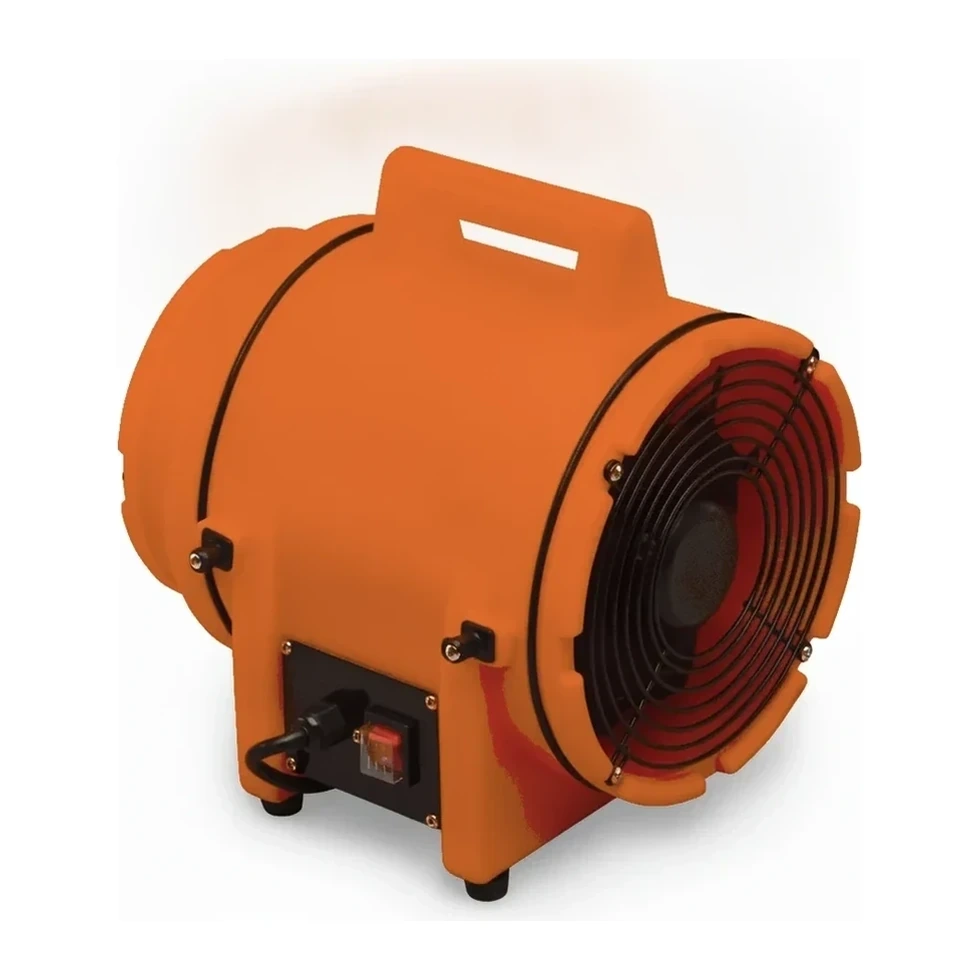
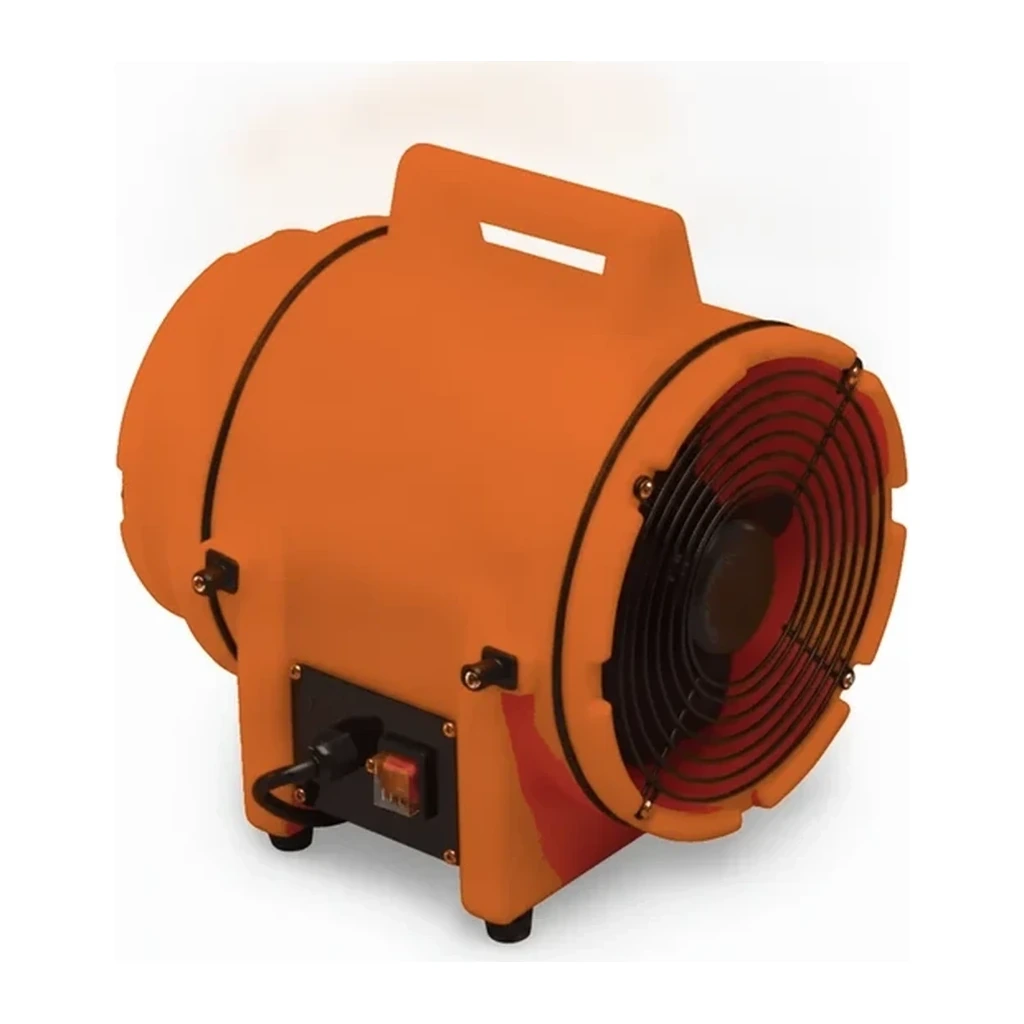
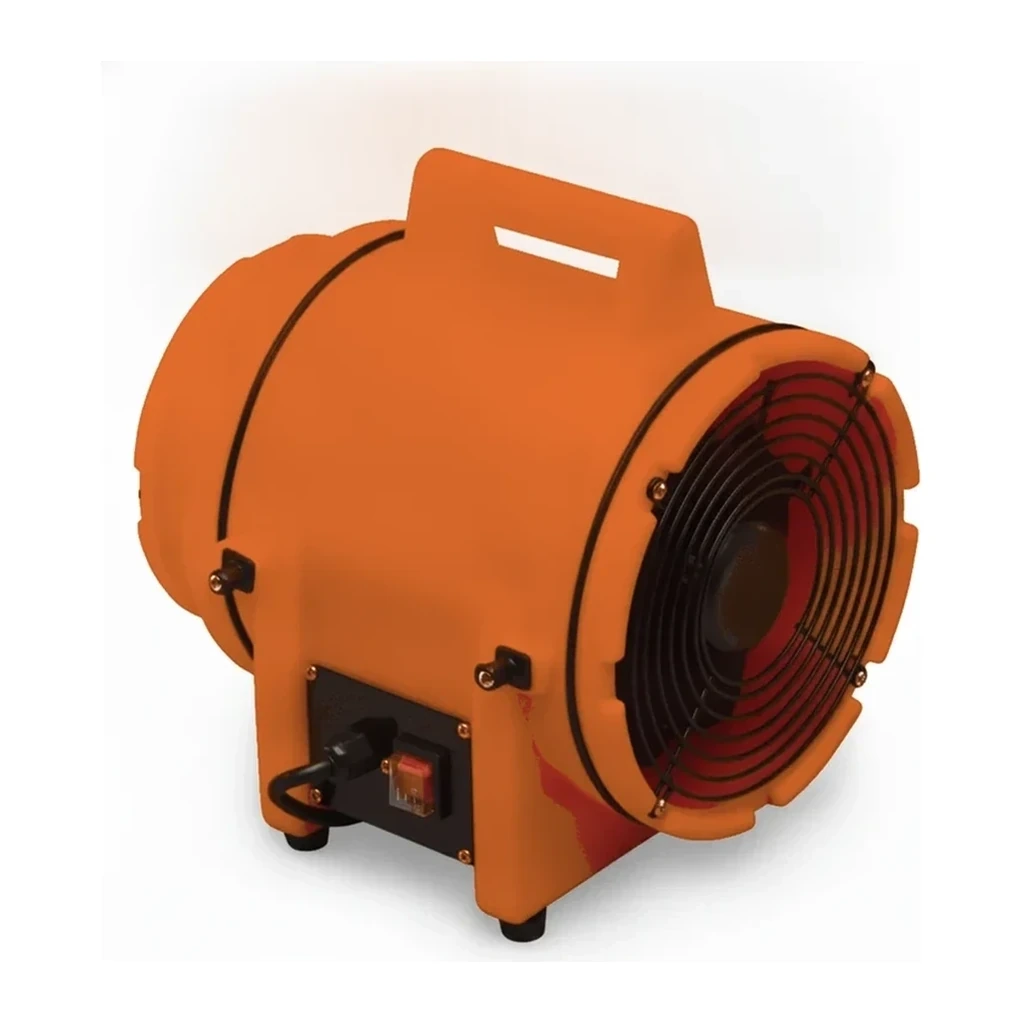
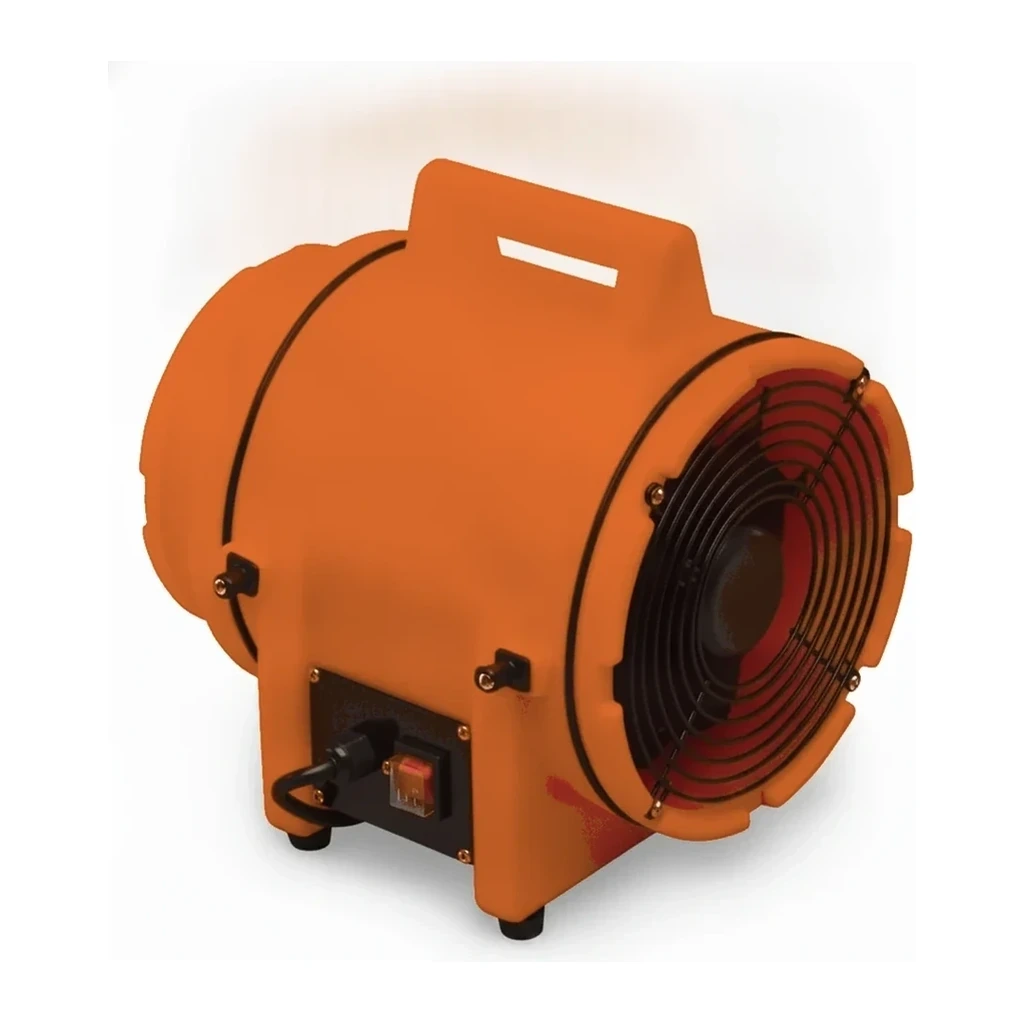
Up to 1,000 cfm Confined Space Ventilator
Up to 1,000 cfm confined space ventilators supply forced air to manholes, vaults, and small tanks where short duct runs and limited air volume changes are sufficient. This is the smallest rung on the confined space ventilator ladder, designed for entry-level ventilation requirements. For larger spaces or longer duct runs, the industry steps up to 1,000-2,000 cfm units.
Cat classes
Pick a size class: capacity and reach differ across the range.
Key specifications
| Specification | Typical range | What it means |
|---|---|---|
| Airflow capacity | Up to 1,000 cfm | Maximum volumetric flow rate for ventilating the confined space. |
| Duct diameter | 8–12 in (20.3–30.5 cm) | Fits standard flexible ducting for manhole and vault entry points. |
| Power configuration | 115V or 230V single-phase | Standard electrical service required for most models in this size class. |
| Unit weight | 30–60 lb (13.6–27.2 kg) | Light enough for one-person transport to the work site. |
How to choose
This size class is appropriate for ventilating manholes, small vaults, and tanks with volumes under approximately 3,000 cubic feet, or where duct runs remain under 25 feet. It provides sufficient air changes for single-entry portals with minimal static pressure loss. For larger confined spaces, deeper vaults, or duct runs exceeding 25 feet, the 1,000-2,000 cfm Confined Space Ventilator class delivers higher flow rates and overcomes greater static resistance. This smallest class is chosen when space constraints, power availability, or the ventilation volume required do not justify a larger unit.
What this size handles
- Manhole entry ventilation for utility inspection and maintenance
- Vault ventilation for telecommunications or electrical equipment access
- Small underground storage tank purging before hot work
- Sewer lateral entry where a single access point requires air supply
- Trench box ventilation on shallow excavations with limited headroom
- Small pump station wet well ventilation during pump servicing
Safety & operation
- Air monitoring is required before and during ventilation; ventilators do not replace atmospheric testing
- Ducting must be positioned to avoid recirculating contaminated air back into the confined space
- Units must be grounded and protected from water ingress in wet or flooded environments
- Ventilator intake must draw from a clean air source, free of exhaust fumes or other contaminants
Transport & logistics
- One person carries the unit to the work site; weight typically 30-60 lb
- Fits in a service van or pickup bed without specialized securing
- Flexible ducting transports separately, often coiled in 25 ft sections
Power & supply
- Most models operate on standard 115V single-phase power from a site circuit or portable generator
- Some higher-output models in this class require 230V single-phase service
- Cord lengths typically 10-25 ft; extension cords must meet amperage and grounding requirements
Frequently asked
How is airflow capacity (cfm) determined for confined space ventilation?
What limits the effective duct length for this size class?
Can this size class be used for exhaust ventilation instead of supply?
Related equipment
Browse by manufacturer
Sources
Every specification is verified against the manufacturer's published data, with the source linked for reference.
Up to 1,000 cfm Confined Space Ventilator
2 models · Every spec cited to source