
Aerator
An aerator is a turf care machine that penetrates soil with tines or spoons to extract cores or create channels, relieving compaction and improving water, air, and nutrient infiltration. The equipment ranges from compact walk-behind units for residential lawns to wide tow-behind models for athletic fields and golf courses. Core aerators, which remove plugs of soil, represent the most common configuration in professional turf management.
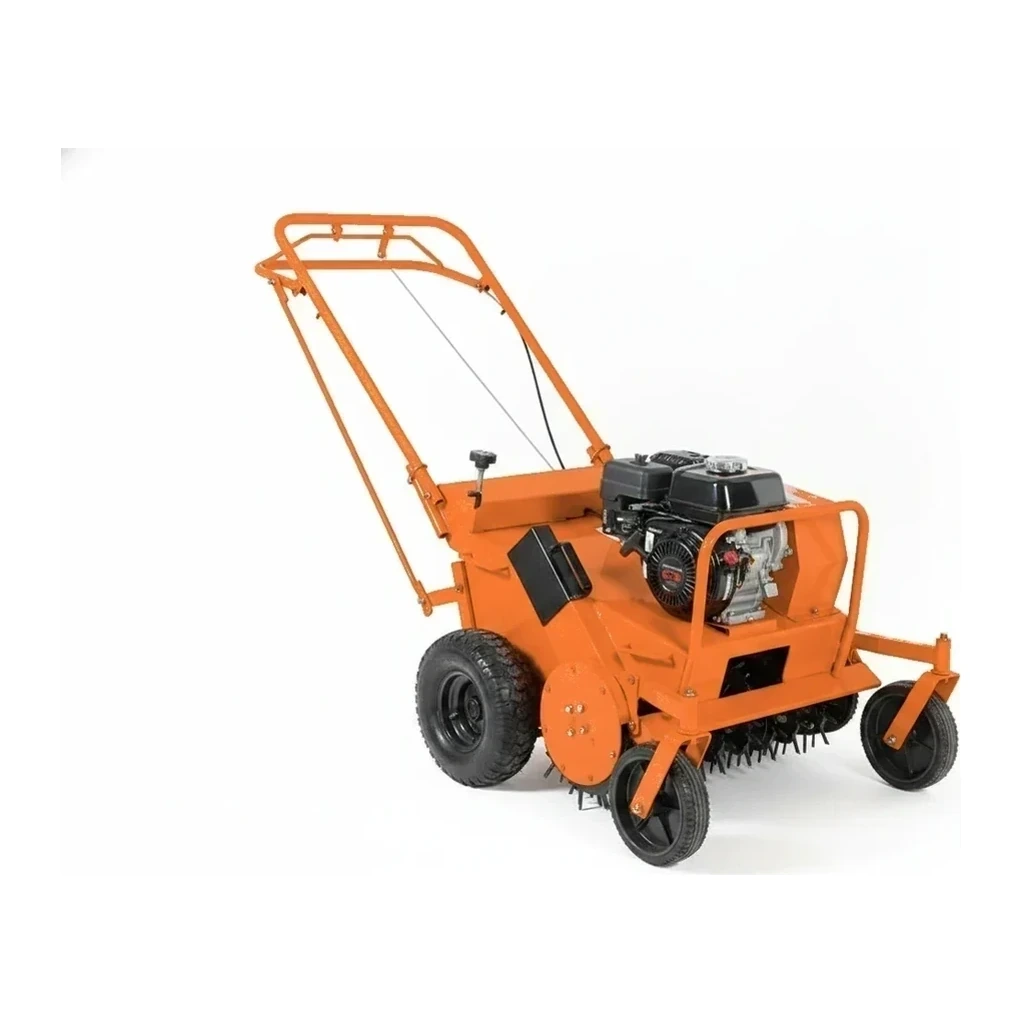
How it works
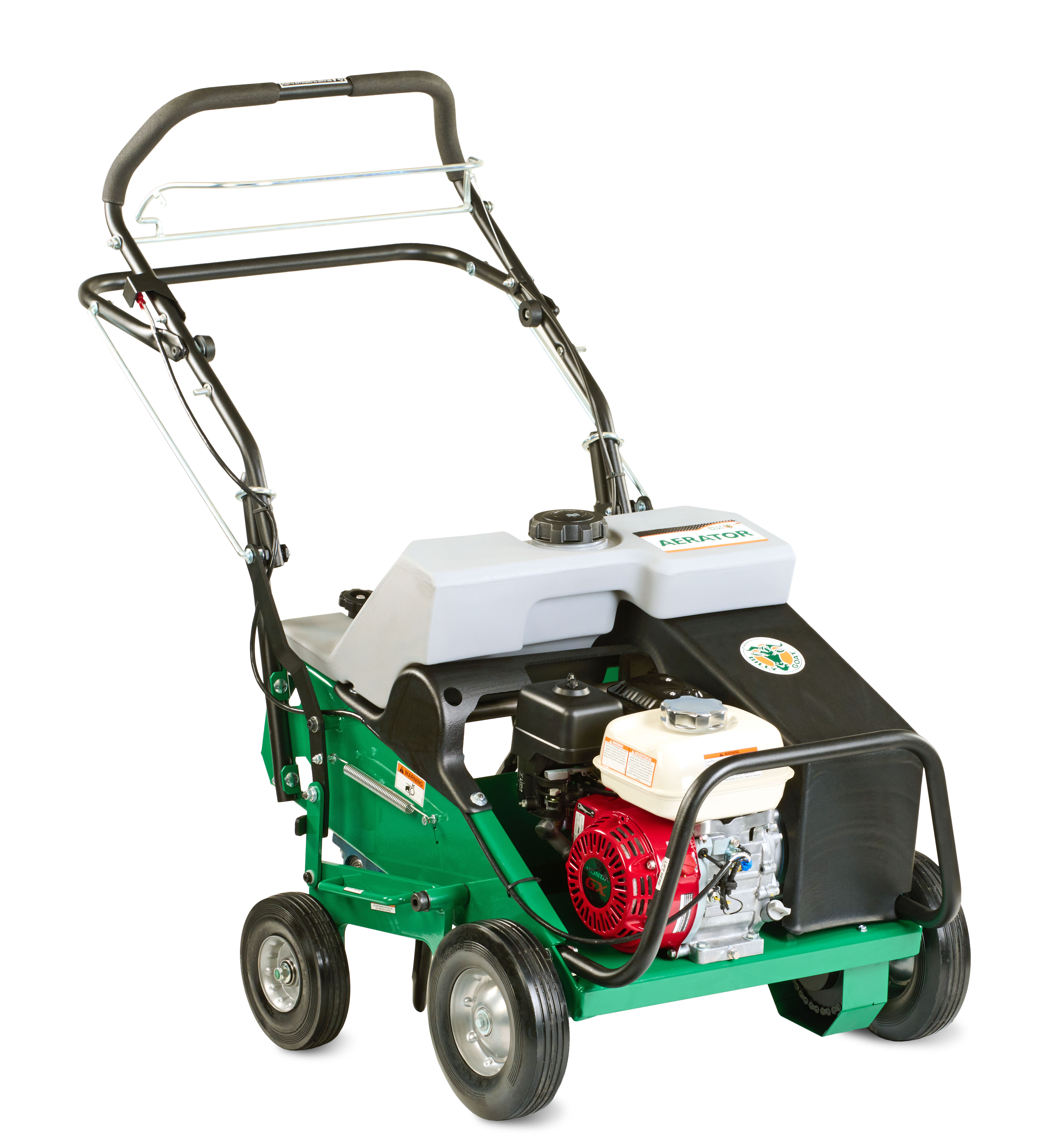
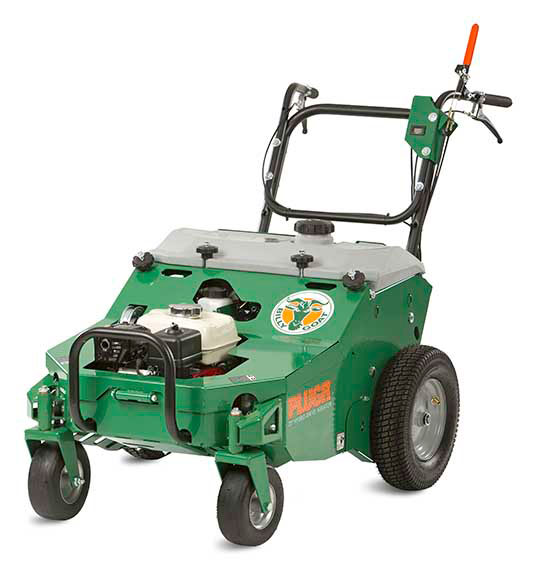
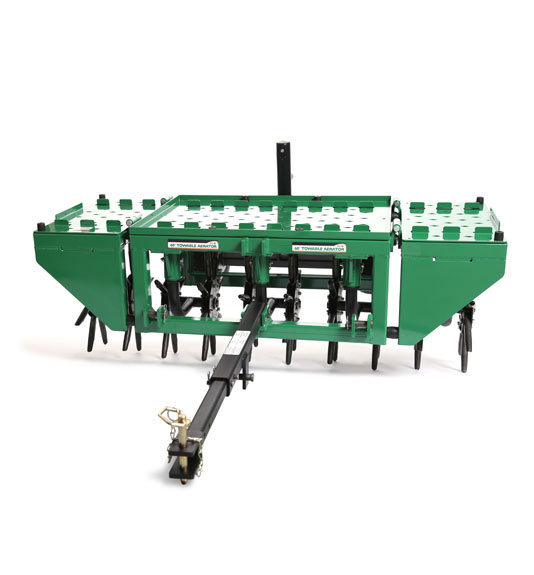
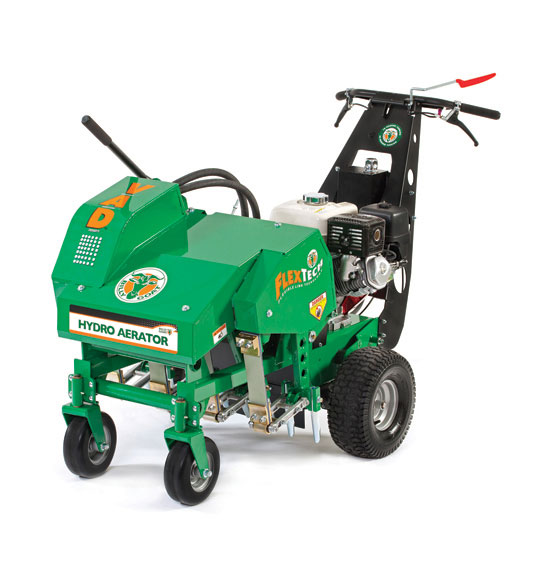
The machine drives rotating tines, hollow spoons, or solid spikes into the turf, typically to depths of 2-4 inches. Core aerators use hollow tines that extract cylindrical plugs of soil and deposit them on the surface, while solid-tine models simply pierce the ground. The tine assembly rotates as the machine advances, creating a pattern of holes across the treatment area. Walk-behind models use self-propelled drive systems or manual push operation, while tow-behind units attach to tractors or utility vehicles. Adjustable tine depth, spacing, and penetration frequency allow operators to match aeration intensity to soil conditions and turf species. Water-fillable weights or ballast trays increase tine penetration in compacted or clay soils.
Types & variants
- Walk-Behind Aerator
- Self-propelled or push models with working widths under 32 in, designed for residential lawns and small commercial properties; features include transport wheels and foldable handles for loading.
- Ride-On Aerator
- Operator platform or seat with working widths typically 32-50 in, delivering higher productivity on sports fields, parks, and large commercial sites.
- Tow-Behind Aerator
- Trailer-style units in widths from 32 in to over 50 in that attach to tractors or utility vehicles, used for production-scale aeration of golf courses, campuses, and athletic complexes.
- Core Aerator
- Uses hollow tines to extract and deposit soil plugs on the surface, the industry standard for relieving deep compaction and promoting long-term soil health.
- Solid-Tine Aerator
- Employs solid spikes to create channels without removing soil, suited to sandy soils or maintenance aeration where core removal is undesirable.
- Deep-Tine Aerator
- Specialized units with extended tines reaching 6-12 in depths, used on athletic fields and high-traffic turf requiring aggressive decompaction.
Key specifications
| Specification | Typical range | What it means |
|---|---|---|
| Working Width | Varies by type | Primary sizing dimension determining coverage rate and productivity; ranges from walk-behind models under 22 in to tow-behind production units over 50 in. |
| Tine Depth | 2–4 in (5.1–10.2 cm) | Penetration depth into soil; adjustable on most models to match soil conditions and turf management objectives. |
| Tine Spacing | 2-4 in centers | Distance between penetration points; closer spacing increases soil disruption and surface coverage per pass. |
| Power Source | Gas engine or PTO | Walk-behind and ride-on units typically use gas engines; tow-behind models may operate via ground-drive or tractor PTO. |
| Tine Diameter | 0.5–0.8 in (12.7–19.0 mm) | Hollow tine inside diameter determines core size and soil volume removed per penetration. |
How the industry sizes it
The industry sizes aerators primarily by working width measured in inches, with four application-driven bands. Walk-behind units of 0-22 in suit residential lawns and constrained access through 36 in gates. Wide walk-behind or self-propelled models of 22-32 in address larger lawns and small commercial turf. Wide-area ride-on or tow-behind aerators of 32-50 in serve sports fields, parks, and common areas. Production tow-behind units over 50 in are specified for golf fairways, campuses, and operations measuring productivity in acres per hour.
Applications
- Residential lawn aeration to relieve compaction from foot traffic and improve drought tolerance
- Sports field and athletic complex maintenance to restore drainage and playing surface quality
- Golf course fairway and rough management for water infiltration and root development
- Park and municipal common area turf renovation programs
- Commercial property landscaping maintenance to sustain turf health in high-traffic zones
- Sod farm and turf production operations for pre-harvest soil conditioning
Safety & operation
- Operators maintain stable footing on slopes and wet turf where traction is reduced and machine control may be compromised
- Underground utility and irrigation line locations are verified before aeration to prevent tine strikes on buried infrastructure
- Rotating tine assemblies pose entanglement hazards; guards remain in place and loose clothing is secured during operation
- Ballast and weight tray loading follows manufacturer specifications to prevent tip-over on slopes or during transport
- Engine shutdown and spark plug disconnection precede tine maintenance, cleaning, or adjustment to prevent accidental start
Standards & certifications
- ANSI/OPEI B71.9 · B71.9
- Safety specifications for commercial turf care equipment including aerators, covering guarding, controls, and operator protection.
- OSHA · 29 CFR 1910
- General industry standards for powered equipment operation, including machine guarding and personal protective equipment requirements.
Frequently asked
What is the difference between core aeration and solid-tine aeration?
How is aerator working width related to productivity?
What factors determine appropriate tine depth and spacing?
Are tow-behind aerators ground-driven or PTO-powered?
Related equipment
Browse by manufacturer
Sources
Every specification is verified against the manufacturer's published data, with the source linked for reference.
All models
36 models · Every spec cited to source