

Overseeder
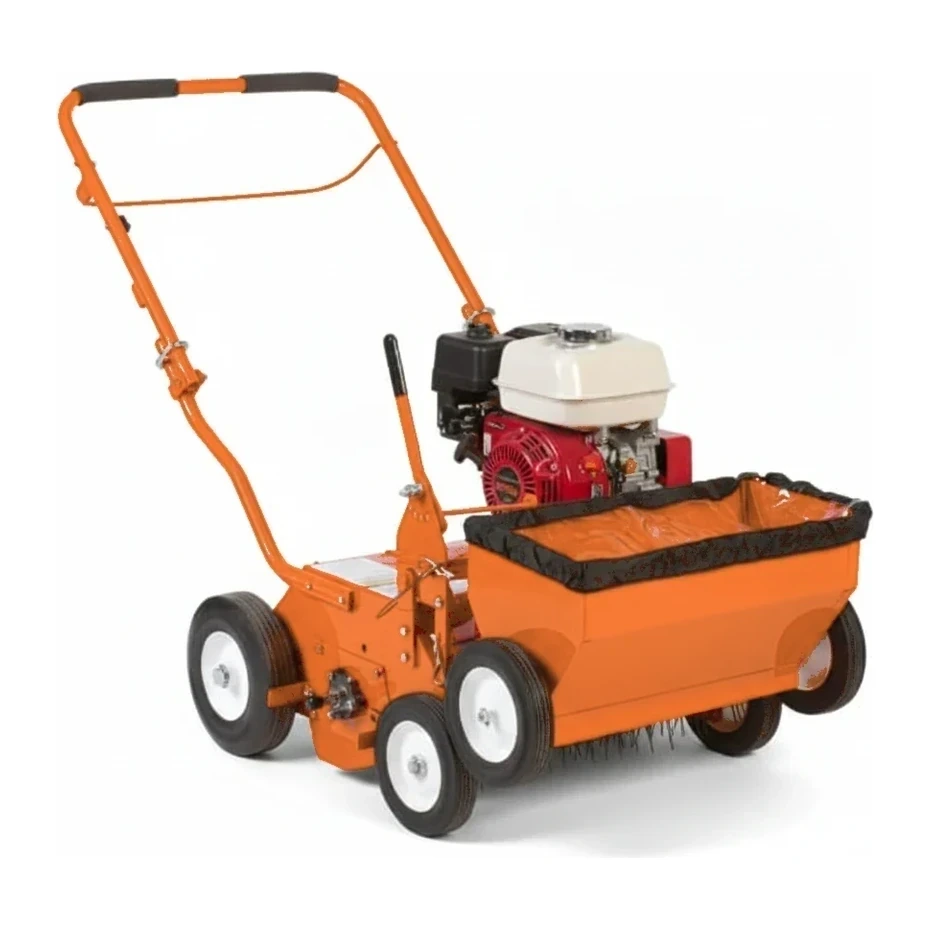
An overseeder is a turf renovation machine that cuts narrow slits or grooves into existing turf and deposits seed directly into the soil in a single pass. Also known as slit seeders, slice seeders, or turf renovators, these machines ensure seed-to-soil contact for improved germination rates when thickening or repairing lawns, athletic fields, and other turf areas. Overseeders range from walk-behind units for residential use to large tractor-drawn models for commercial-scale applications.
How it works
Overseeders use rotating disc blades or fixed knife assemblies to slice vertical grooves into the turf canopy and soil surface, typically spaced 1 to 3 inches apart. As the blades create slits, a metered seed hopper dispenses grass seed directly into the openings, ensuring the seed is placed at the optimal depth and protected from surface competition. The machine's weight and blade angle control slit depth, while the seed drop rate is adjusted via mechanical or electronic metering systems. Some models incorporate aerating tines or vertical mowing features before seeding, combining multiple turf renovation steps in one pass. The slits close naturally after seeding or may be lightly tamped by trailing wheels, securing seed in place and improving moisture retention around the seed bed.
Types & variants
- Walk-Behind Slit Seeder
- Self-propelled or push-type units 18-32 inches wide with single-operator control, designed for residential lawns and small commercial turf areas.
- Tow-Behind Overseeder
- Trailer-style units pulled by tractors or utility vehicles, typically 36-60 inches wide, for athletic fields, parks, and large-scale turf renovation.
- Disc Seeder
- Uses rotating disc blades to create slits; common in both walk-behind and tow-behind configurations for aggressive soil penetration.
- Aeraseeder
- Combination unit that aerates soil with tines or cores before or during seeding, addressing compaction and seeding in one operation.
- Tractor-Mounted Overseeder
- Heavy-duty PTO or 3-point hitch mounted models for golf courses, sod farms, and campus-scale turf renovation work.
Key specifications
| Specification | Typical range | What it means |
|---|---|---|
| Seeding Width | 18-72+ in | Working width determines daily coverage area and suitability for residential, commercial, or production-scale work. |
| Slit Depth | 0.2–1.5 in (6.3–38.1 mm) | Adjustable blade penetration controls seed placement depth for various grass species and soil conditions. |
| Slit Spacing | 1–3 in (25.4–76.2 mm) | Distance between seed rows affects coverage density and turf fill rate during renovation. |
| Seed Hopper Capacity | 20–200 lb (9.1–90.7 kg) | Larger hoppers reduce refill frequency on extensive jobs; capacity scales with machine width. |
| Power Source | Engine or Tow | Walk-behind models use gas engines; tow-behind units rely on towing vehicle or tractor PTO for blade drive. |
How the industry sizes it
The industry sizes overseeders by seeding width measured in inches, reflecting the machine's effective coverage per pass. Walk-behind slit seeders under 22 inches suit single residential lawns and repair work. Wide walk-behind units in the 22-32 inch range handle full lawn renovations and small commercial properties efficiently. Wide-area and tow-behind models from 32-50 inches address sports fields, parks, and HOA turf. Tractor-drawn production seeders exceeding 50 inches serve golf course fairways, campuses, and sod farm-scale operations. Width selection balances daily acreage requirements with site access and maneuverability constraints.
Applications
- Residential lawn renovation and bare spot repair
- Athletic field overseeding for turf density and wear recovery
- Golf course fairway and rough renovation programs
- Park and municipal turf thickening and species conversion
- Commercial property and HOA common area turf improvement
- Sod farm and seed production field establishment
Safety & operation
- Rotating blades and discs present cutting hazards; operators must keep hands and feet clear of seeding mechanism during operation
- Heavy machines require proper footing and awareness of slope conditions to prevent loss of control or rollover on grades
- Seed dust and debris can create respiratory exposure; dust suppression and appropriate PPE are recommended
- Transport and lifting of seed hoppers demand proper manual handling techniques to avoid back and shoulder strain
- Underground utilities must be located before seeding operations, as blades penetrate soil and may contact shallow lines
Standards & certifications
- OPEI · Outdoor Power Equipment Institute
- Industry association providing safety and performance standards for outdoor power equipment including turf renovation machinery.
- ASABE · ASABE S352.2
- Agricultural equipment safety standards applicable to tractor-mounted and PTO-driven overseeding equipment.
- ANSI · ANSI B71 series
- Safety standards for commercial turf care equipment covering guarding, controls, and operator protection.
- EPA · Tier 4 / CARB
- Emission standards applicable to engines on self-propelled and tractor-mounted overseeder models.
Frequently asked
What is the difference between an overseeder and a broadcast spreader?
How does seeding width affect productivity?
Can overseeders handle hilly or uneven terrain?
What maintenance do overseeders require between jobs?
Related equipment
Browse by manufacturer
Sources
Every specification is verified against the manufacturer's published data, with the source linked for reference.
All models
32 models · Every spec cited to source