

Electric Scissor Lift
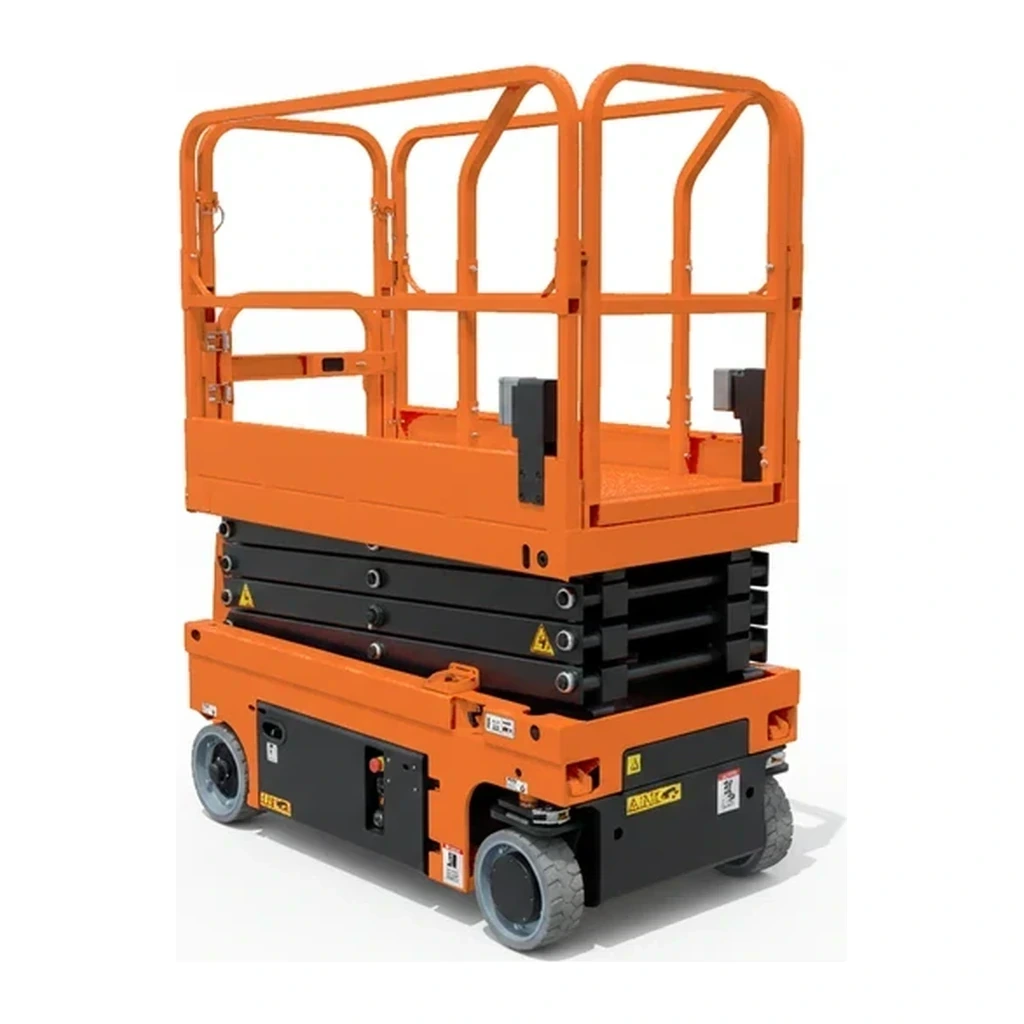
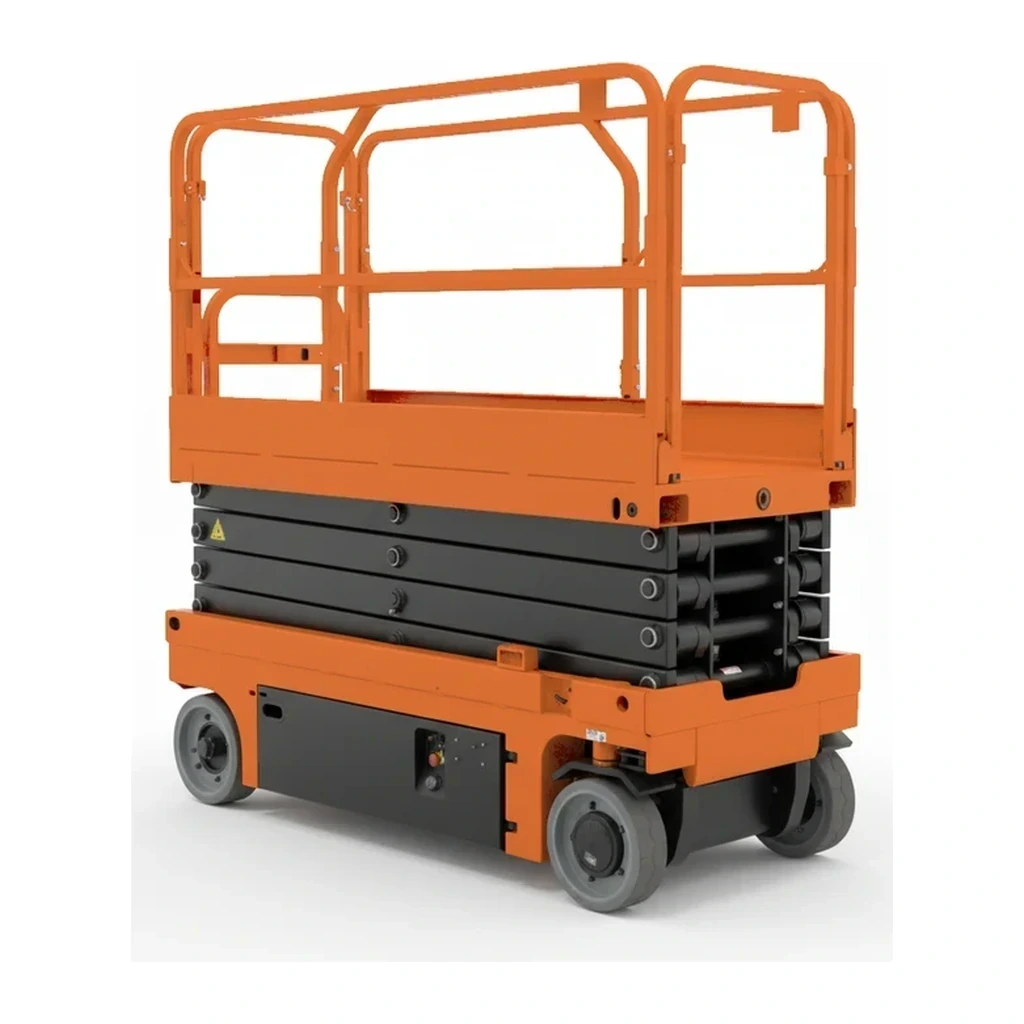
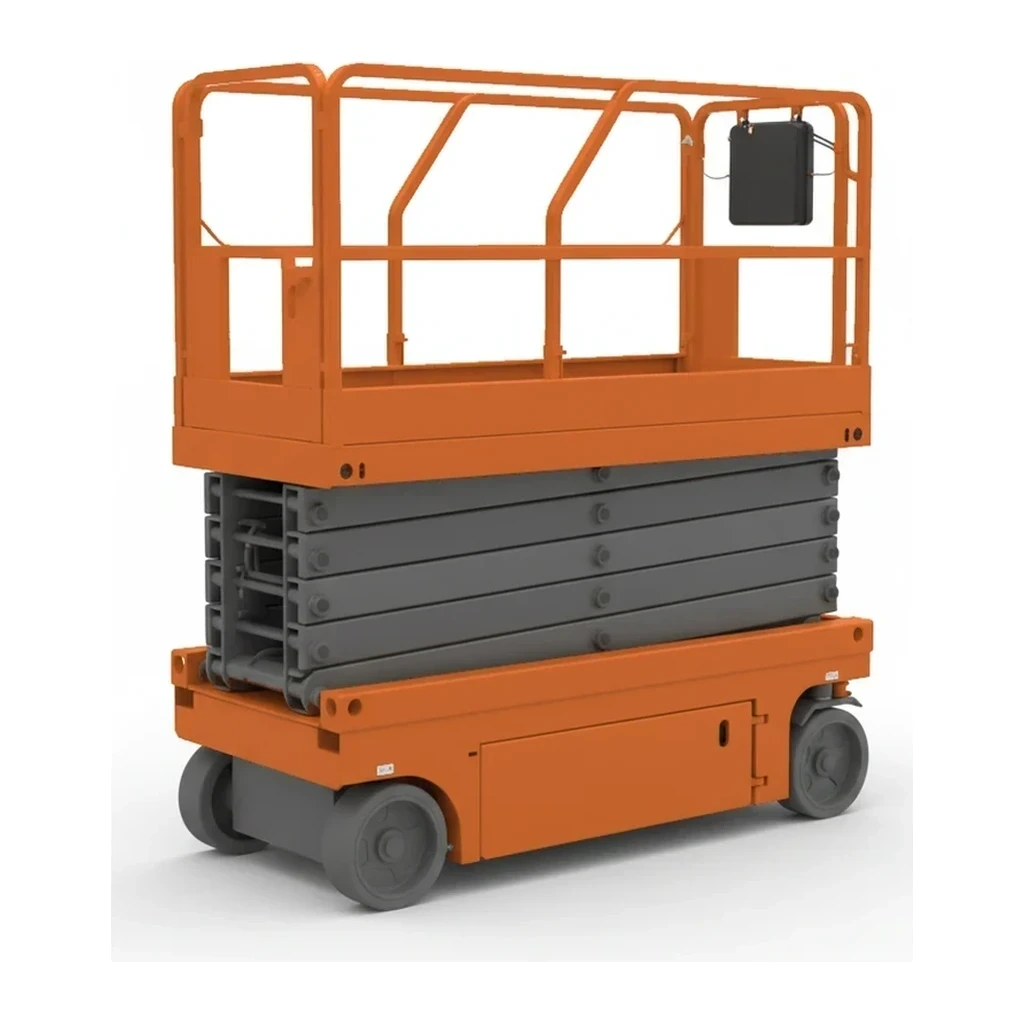
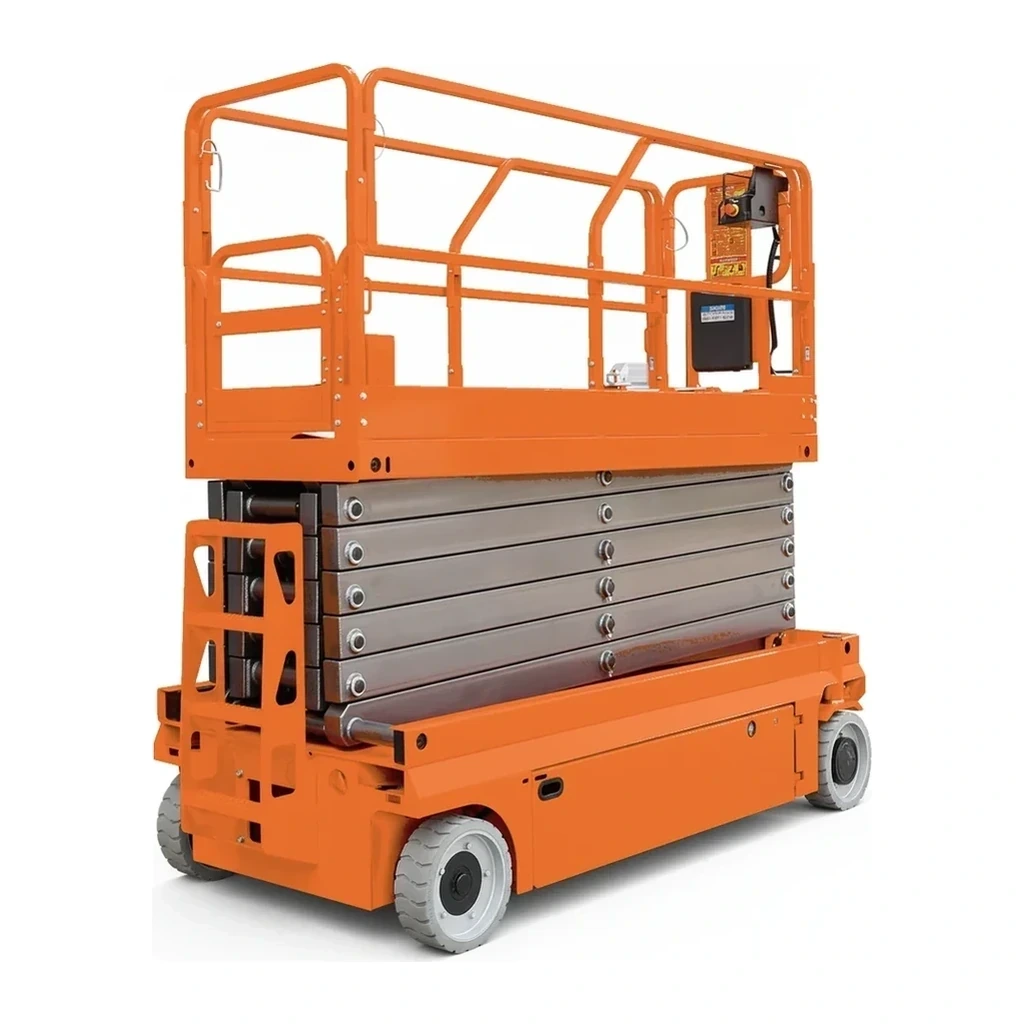
An electric scissor lift is a battery-powered mobile elevating work platform (MEWP) that raises a guardrail-enclosed deck straight up on a folding scissor mechanism. It is the standard machine for indoor work at height in the construction, facilities, and rental industries, valued for zero exhaust emissions, low noise, and non-marking tires that suit finished floors.
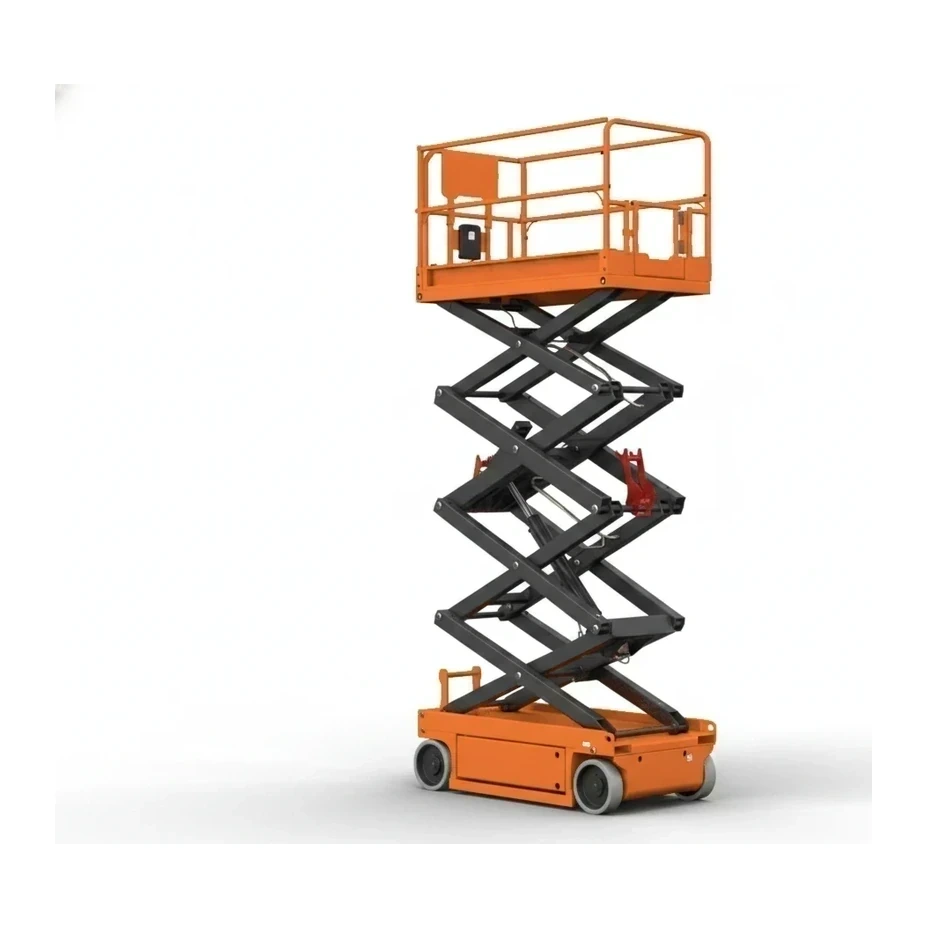
Cat classes
Pick a size class — capacity and reach differ across the range.
How it works
A battery bank feeds an electric drive system and a hydraulic pump (or, on newer all-electric models, electric actuators). When the operator commands lift from the platform controls, hydraulic cylinders push the crossed scissor arms apart, extending the stack vertically and raising the deck. Lowering is typically gravity-assisted and metered by valves, which conserves battery charge. The operator drives the machine from the platform, steering the front wheels through the same control console. Pothole protection bars deploy below the chassis as the platform rises, and interlocks cut drive speed or motion when the deck is elevated or the machine is out of level. Most models include a sliding deck extension to reach over obstacles at the working level.
Types & variants
- Slab electric scissor lift
- The mainstream configuration for flat, paved, or finished surfaces. Solid non-marking tires, compact chassis, and platform heights concentrated in the common size bands.
- Compact and micro scissors
- Narrow-chassis units at the small end of the class, built to pass standard doorways and work in tight aisles, corridors, and occupied buildings.
- All-electric drive models
- Machines that replace hydraulic drive and steer functions with electric motors and actuators, extending battery duty cycles and reducing hydraulic leak points on sensitive floors.
- High-reach electric scissors
- Larger units at the top of the class, with working heights extending into the 40+ ft range, for high-bay and atrium interiors.
- Extension-deck configurations
- Models with one or two roll-out deck extensions that add horizontal coverage at height without repositioning the chassis.
Key specifications
| Specification | Typical range | What it means |
|---|---|---|
| Platform height | 3.7–41.0 ft (1.1–12.5 m) across listed models | The vertical distance from the ground to the platform floor. Working height adds the operator's standing reach on top of this figure. |
| Platform capacity | 200–1,000 kg (440–2,200 lb) | The combined weight of people, tools, and materials the deck can carry. Deck extensions usually carry a lower separate rating. |
| Stowed drive speed | 2.0–7.2 km/h | Travel speed with the platform lowered. Speed is automatically restricted when the platform is elevated. |
| Gradeability | 17–50% | The maximum slope the machine can climb while stowed, relevant for ramps and loading. It is not a rating for operating elevated on a slope. |
| Overall width | 2.3–7.2 ft (0.7–2.2 m) | Determines which doorways, aisles, and elevator cars the machine can pass through. Narrow units at the low end fit standard single doors. |
How the industry sizes it
The industry sizes electric scissor lifts by platform height, grouped into bands: the 19 ft scissor (up to 20 ft), the 26 ft scissor (20–27 ft), the 32 ft class (27–34 ft), and 40 ft and up (34+ ft). Band choice is driven by ceiling height and the tallest task point, then refined by deck size, platform capacity, and overall width against doorways and floor loading. Under the MEWP classification in ANSI A92 and CSA B354, scissor lifts are Group A machines (platform stays within the tipping envelope) and most self-propelled models are Type 3 (can travel while elevated).
Applications
- Ceiling grid, lighting, and finish work in offices, retail, and institutional interiors
- Electrical, HVAC, sprinkler, and cable-tray installation in commercial buildings
- Warehouse racking installation, maintenance, and high-bay housekeeping
- Painting, drywall, and cladding work at height on finished floors
- Facility maintenance in occupied buildings where exhaust and noise are prohibited
- Store fit-outs and tenant improvements on tight schedules
Safety & operation
- Operators require MEWP training and machine-specific familiarization before use, consistent with ANSI A92.24 and CSA B354 training standards.
- Electric scissor lifts are designed for firm, level surfaces; out-of-level and pothole-protection interlocks must never be bypassed.
- Guardrails are the primary fall protection on scissor lifts; occupants must keep both feet on the deck and never climb or lean over rails to gain reach.
- Indoor-rated models and larger deck extensions can carry reduced or zero wind ratings; outdoor use must follow the manufacturer's wind and occupancy limits.
- A pre-use inspection and a workplace risk assessment (floor loading, overhead obstructions, openings) are required each shift under ANSI A92.22 safe-use practice.
Standards & certifications
- ANSI/SAIA · A92.20 / A92.22 / A92.24
- The U.S. MEWP suite covering design, safe use, and training requirements for scissor lifts.
- OSHA · 29 CFR 1926.451/452(w)
- OSHA regulates scissor lifts on construction sites as mobile scaffolds under the scaffold standard.
- CSA · B354.6 / B354.7 / B354.8
- Canadian MEWP design, safe-use, and training standards, harmonized with the ISO 16368 family.
Frequently asked
What is the difference between an electric scissor lift and a rough terrain scissor lift?
Do operators need certification to use an electric scissor lift?
Is a harness required on a scissor lift?
Can electric scissor lifts be used outdoors?
Compare popular models
Find by spec →Normalised to the same units. A dash means the figure was not published.
| Model | Working height | Platform capacity |
|---|---|---|
| Genie GS-2632 | 32 ft (9.8 m) | 1,102 lb (500 kg) |
| Haulotte Compact 10N DUAL | 33.1 ft (10.1 m) | 551 lb (250 kg) |
| JLG ES1932 | 19 ft (5.8 m) | 507 lb (230 kg) |
| JLG ES2632 | 25 ft (7.6 m) | 507 lb (230 kg) |
| JLG ES3246 | 32 ft (9.8 m) | 705 lb (320 kg) |
| JLG ES2646 Electric Scissor Lift | 26 ft (7.9 m) | 1,199 lb (544 kg) |
Related equipment
Browse by manufacturer
Sources
Every specification is verified against the manufacturer's published data, with the source linked for reference.
All models
511 models · Page 3 of 11 · Every spec cited to source