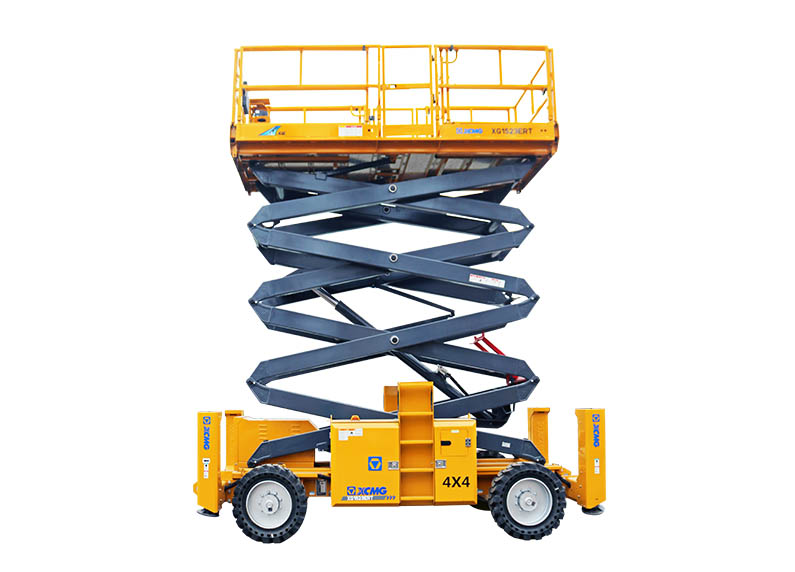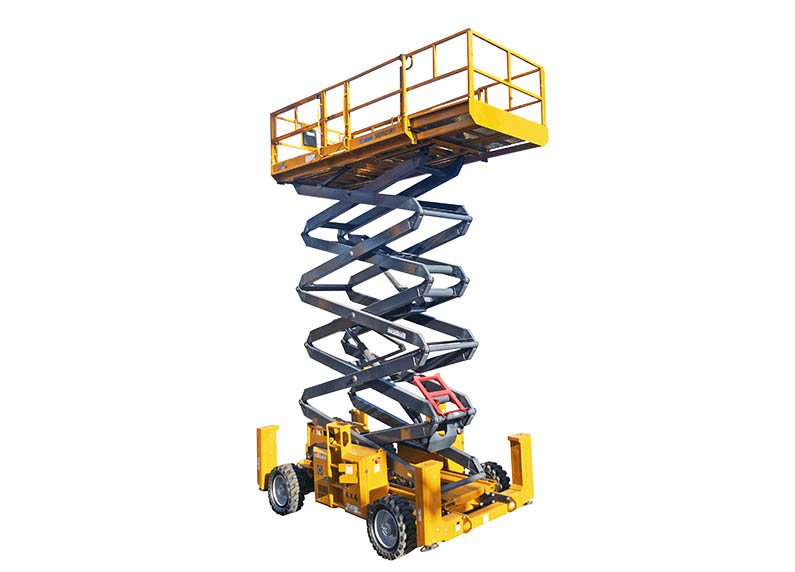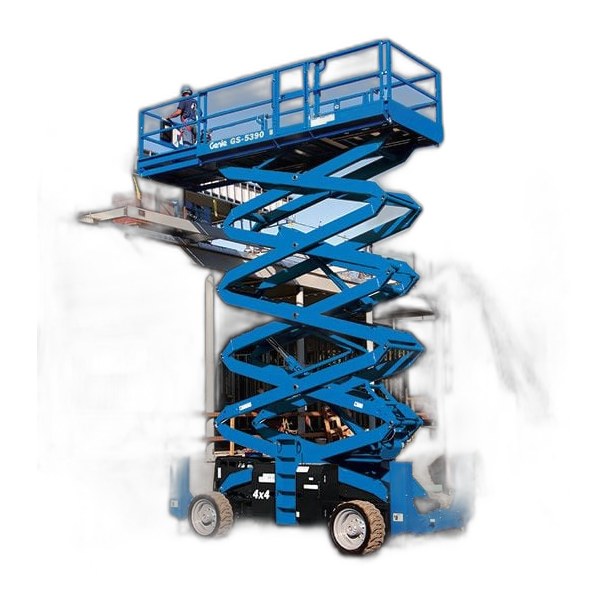

45-55 ft Rough Terrain Scissor Lift
The 45-55 ft rough terrain scissor lift class delivers working heights near 50 feet over uneven ground, serving tall exterior construction and high framing work. This size sits at the upper end of the rough terrain scissor spectrum, above the 34-45 ft class and below the 55+ ft class. Two models from JLG and Genie define this band.
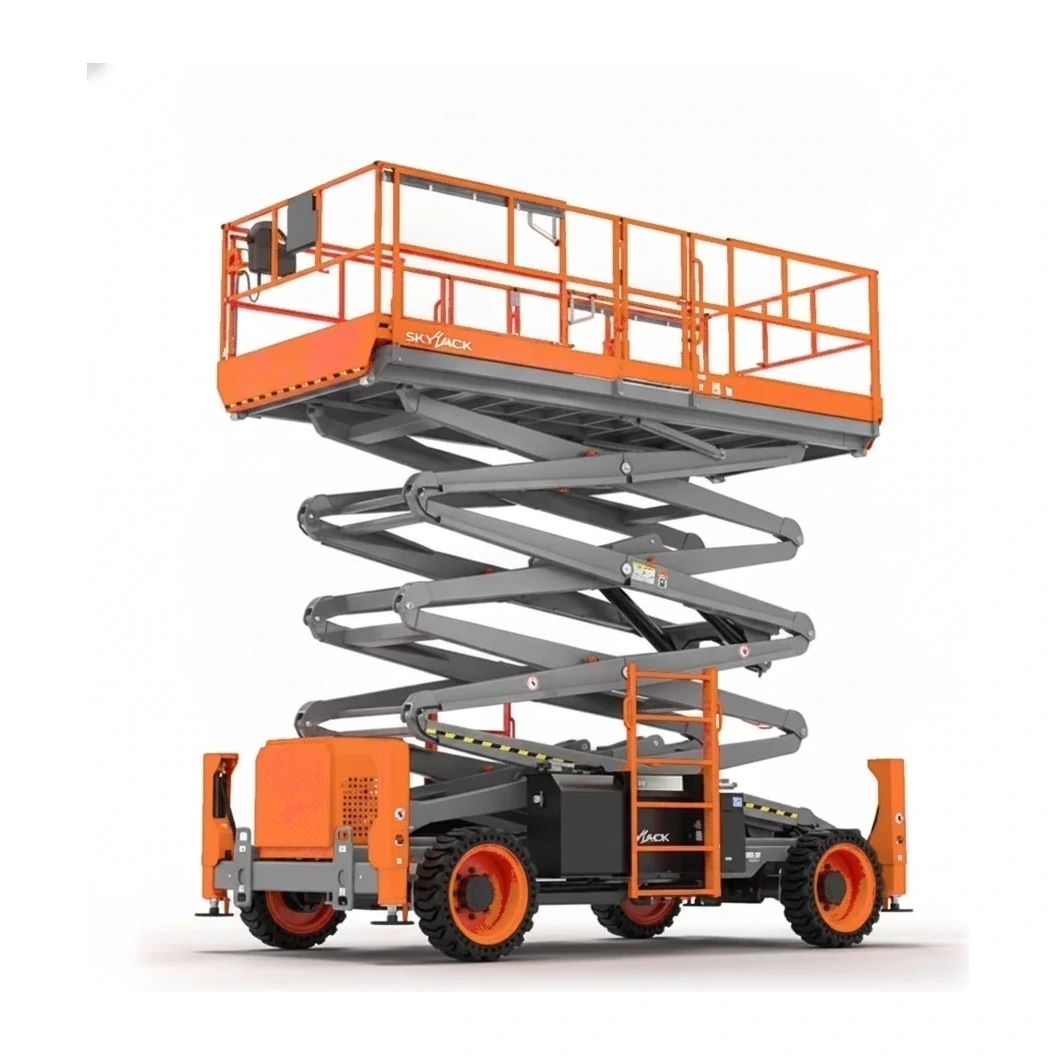
Cat classes
Pick a size class: capacity and reach differ across the range.
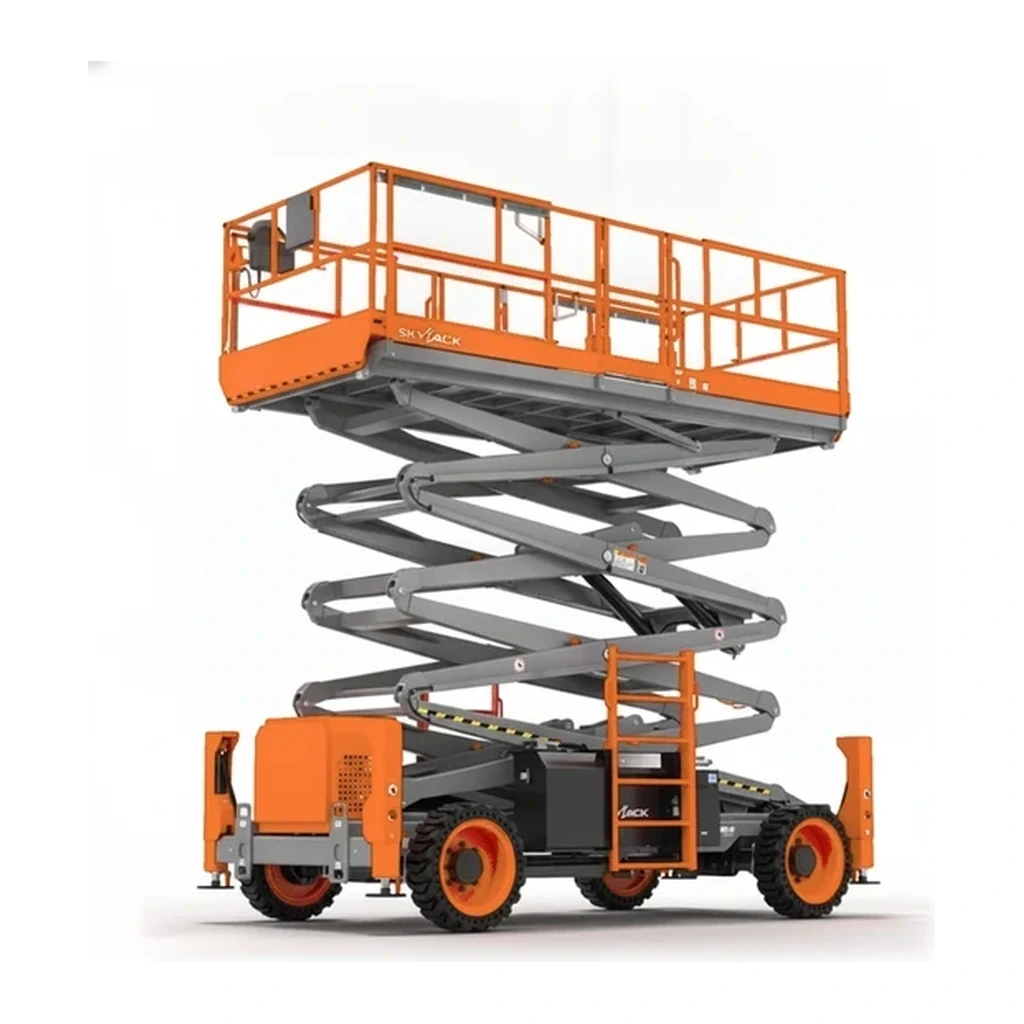
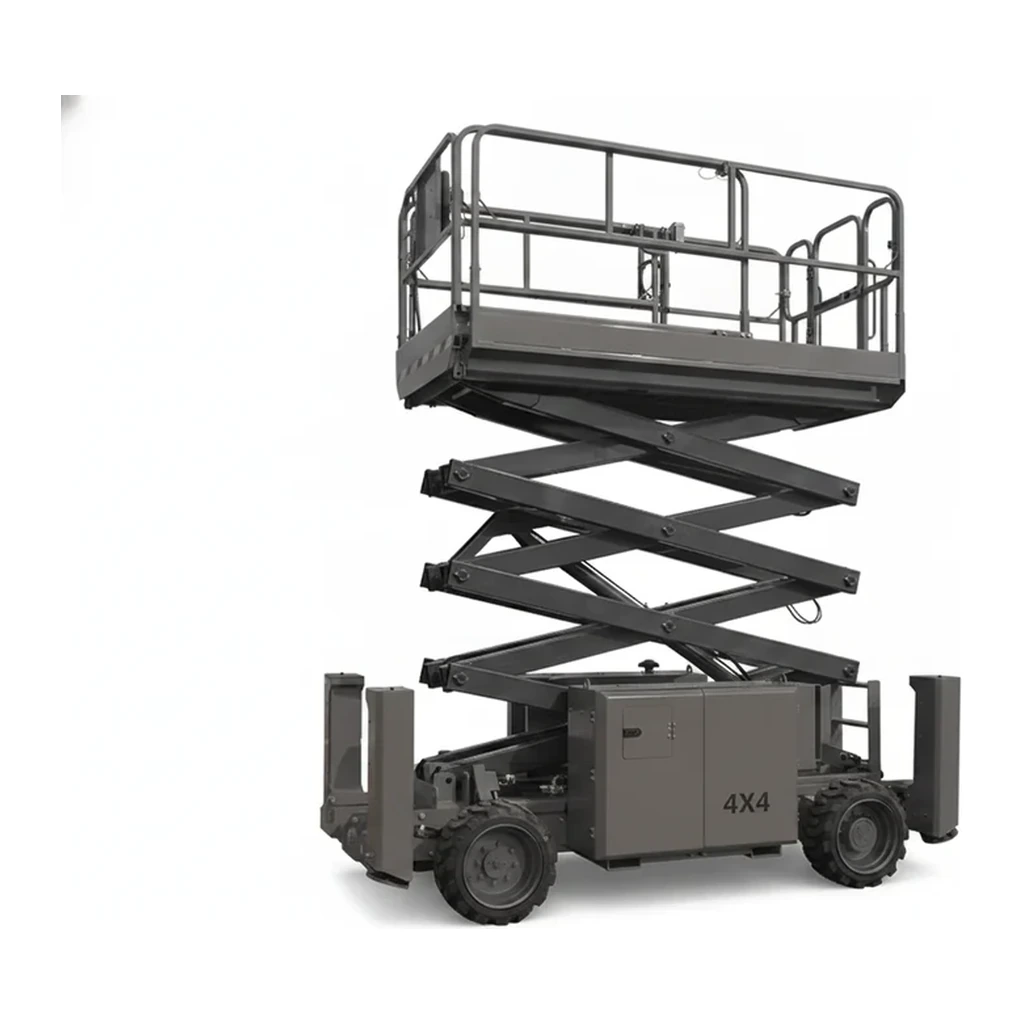
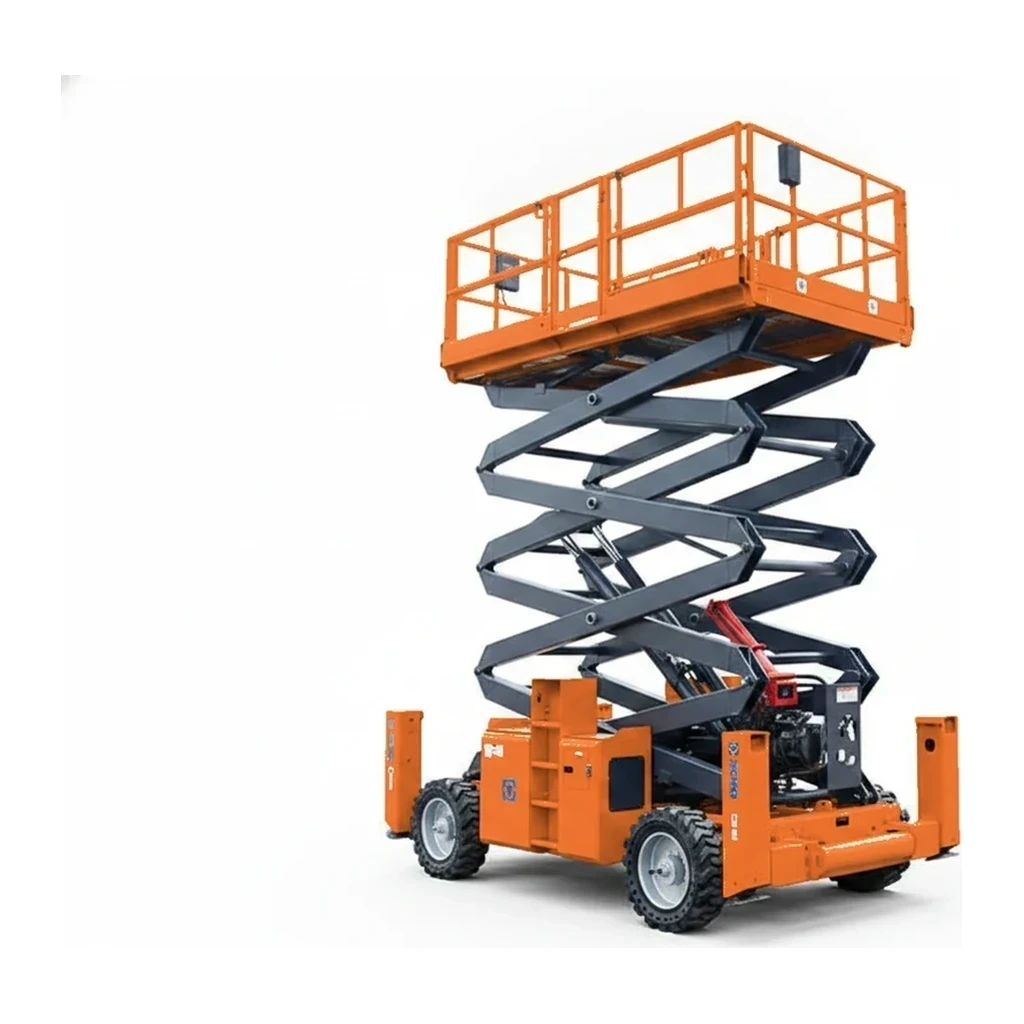
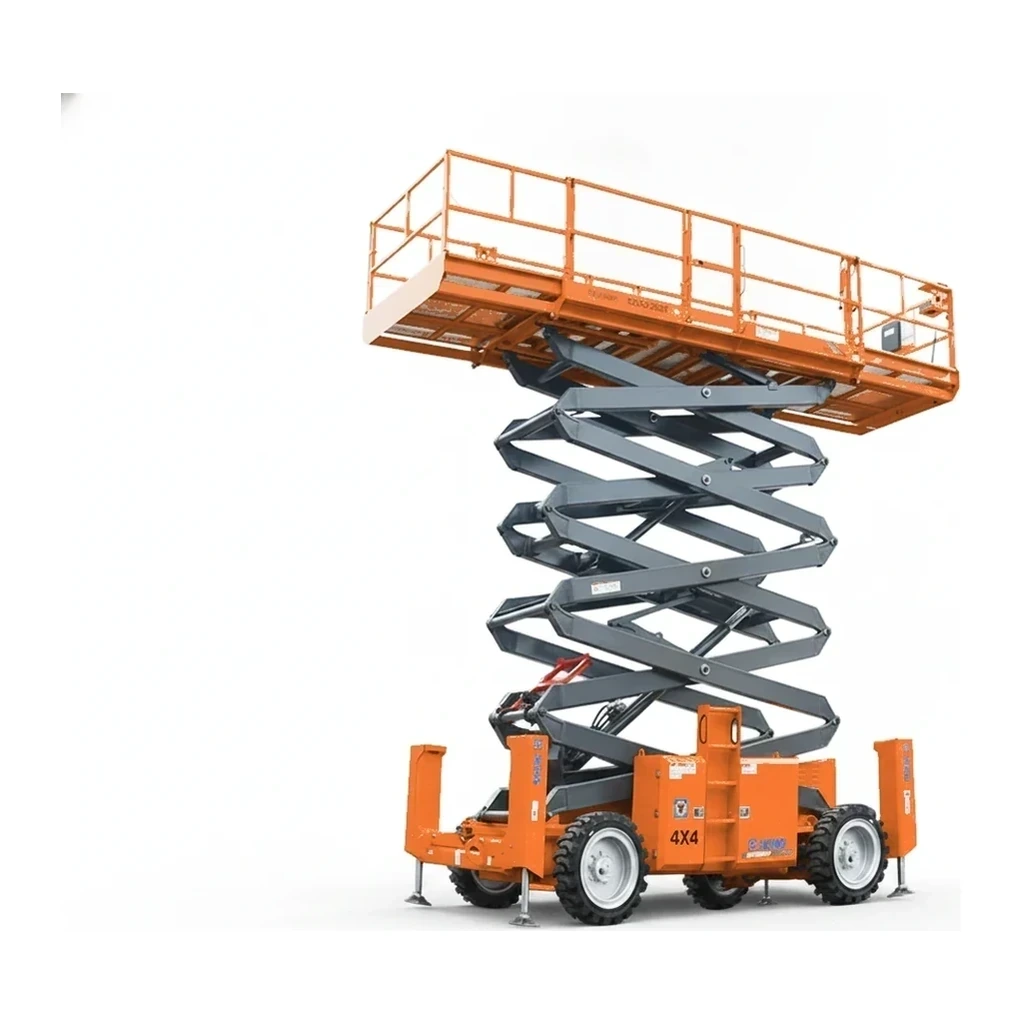
Key specifications
| Specification | Typical range | What it means |
|---|---|---|
| Platform Height | 45–55 ft (13.7–16.8 m) | Maximum working height; actual reach extends approximately 6 feet above platform with operator standing. |
| Deck Capacity | 500–1,000 lbs (227–454 kg) | Total load including operators, materials, and tools on the platform. |
| Base Width | 81–96 in (206–244 cm) | Stability footprint increases with height; wider bases manage tall mast loads on slopes. |
How to choose
The 45-55 ft class is appropriate when exterior work reaches above four stories or structural elements exceed the reach of smaller machines. The 34-45 ft Rough Terrain Scissor Lift handles most two- and three-story exterior work more efficiently, with narrower footprints and lighter weight. When platform height approaches or exceeds 55 feet—such as five-story facades or industrial high-bay structure—the 55+ ft Rough Terrain Scissor Lift class provides the necessary elevation. Site gradeability, overhead clearance, and the height of repetitive tasks determine the optimal band.
What this size handles
- Exterior sheathing and cladding installation on four-story tilt-up buildings
- Steel erection and bolting at 40–50 ft elevations on unfinished slabs
- High-wall framing and truss setting in commercial wood-frame construction
- Facade maintenance and window glazing on mid-rise structures with no paved access
- Electrical and HVAC rough-in near ceiling height in industrial shells over 40 ft clear
- Masonry work and architectural precast panel placement on tall exterior walls
Safety & operation
- Ground conditions and slope stability are critical; maximum gradeability ratings apply only to firm, uniform surfaces.
- Wind loading increases significantly at heights above 45 feet; work may be restricted in high-wind conditions per manufacturer and site safety protocols.
- Fall protection, guardrails, and entry gates are standard; operators and occupants must observe platform capacity limits at all times.
- Site coordination is essential to avoid overhead obstructions, power lines, and underground utilities during travel and positioning.
Transport & logistics
- Machines in this class typically require heavy-duty tilt-deck or low-boy trailers due to weight and height when stowed.
- Transport width and weight often mandate commercial towing equipment and may require oversize permits depending on jurisdiction.
Power & supply
- Diesel engines power most units in this class, providing the hydraulic flow for lift and drive functions without external connections.
- Fuel capacity supports full-day operation; refueling logistics depend on site access and machine positioning.
Frequently asked
What distinguishes the 45-55 ft class from the 34-45 ft class?
When does the 55+ ft class become necessary?
How does slope capability change at this height?
Compare popular models
Find by spec →Normalised to the same units. A dash means the figure was not published.
| Model | Working height | Platform capacity |
|---|---|---|
| JLG ERT4769 | 47 ft (14.3 m) | 800 lb (363 kg) |
| Genie GS-5390 | - | 1,499 lb (680 kg) |
| JLG RT4769 | 47 ft (14.3 m) | 800 lb (363 kg) |
| JLG RT5394 | 53 ft (16.2 m) | 1,499 lb (680 kg) |
| XCMG XG1523ERT | - | - |
| XCMG XG1523RT | - | - |
Related equipment
Browse by manufacturer
Sources
Every specification is verified against the manufacturer's published data, with the source linked for reference.
45-55 ft Rough Terrain Scissor Lift
7 models · Every spec cited to source