

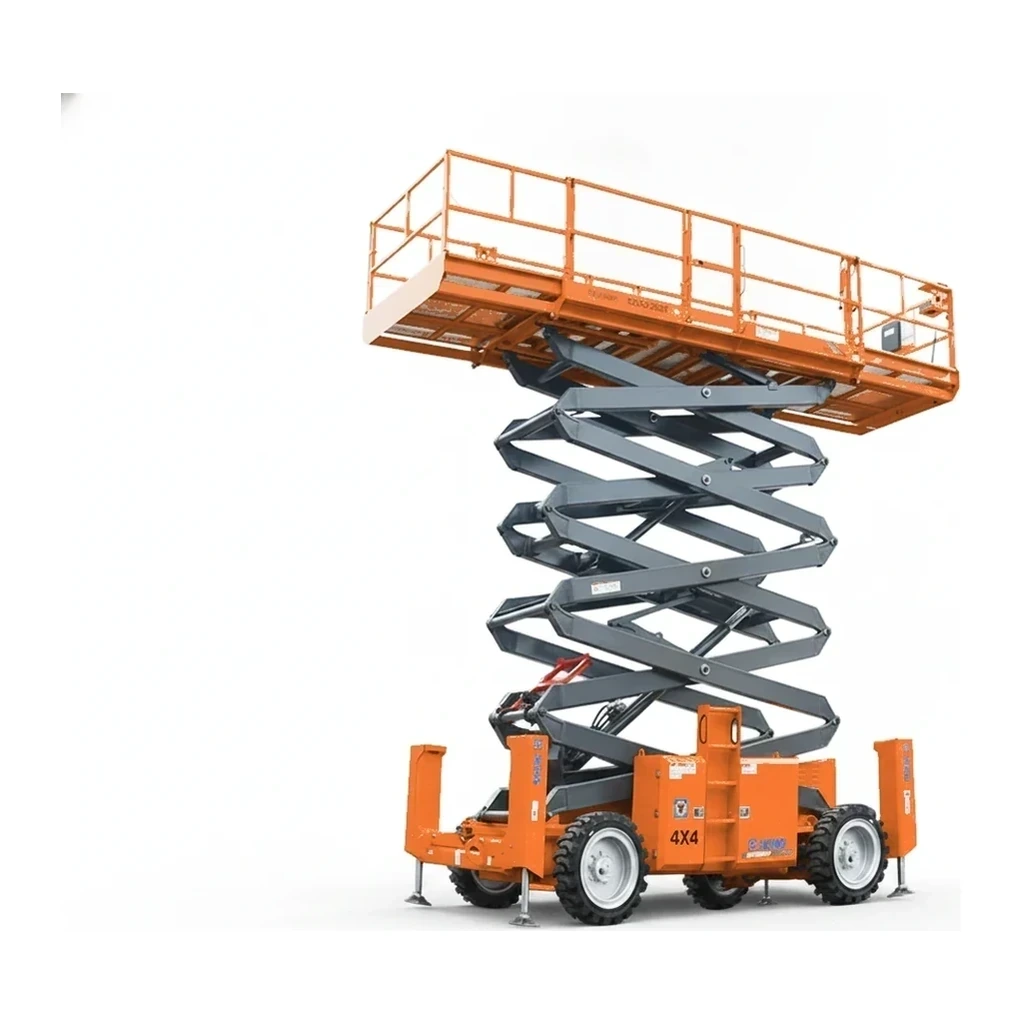
Up to 34 ft Rough Terrain Scissor Lift
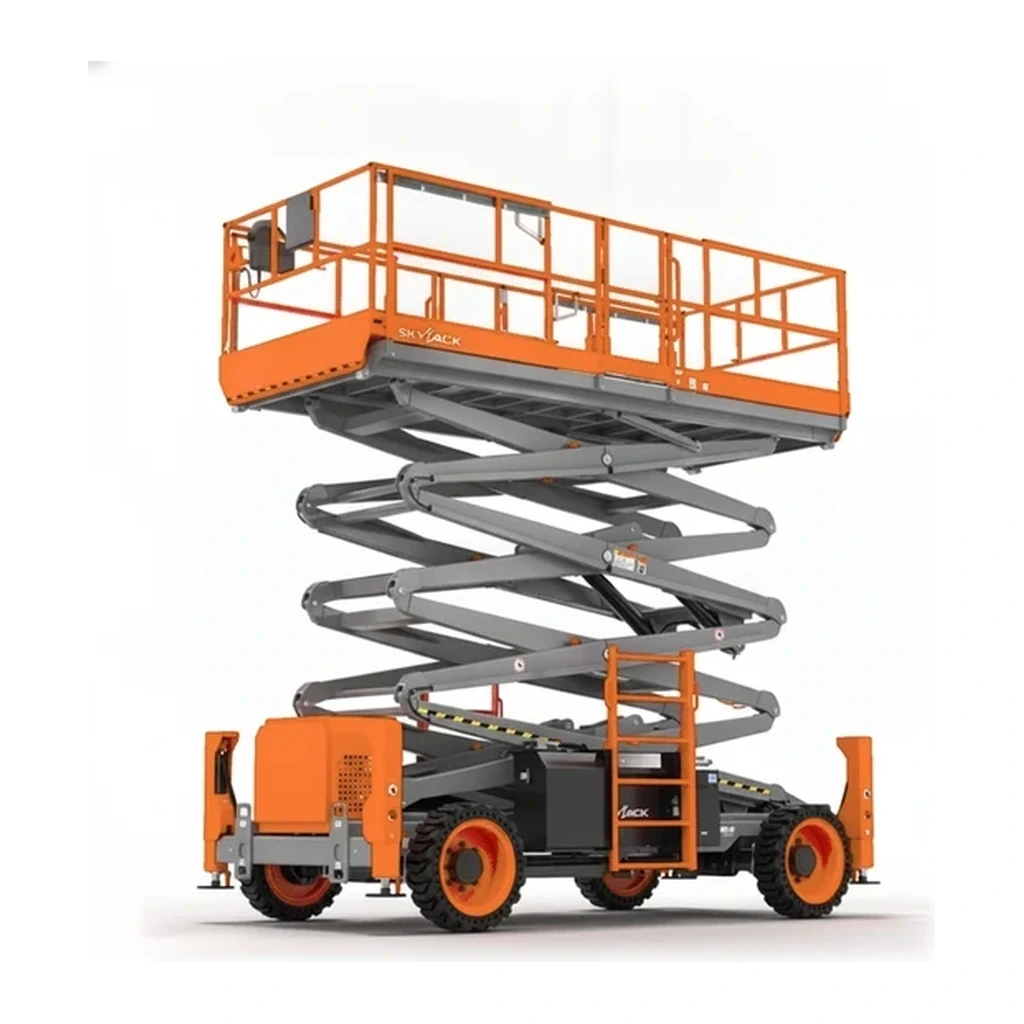
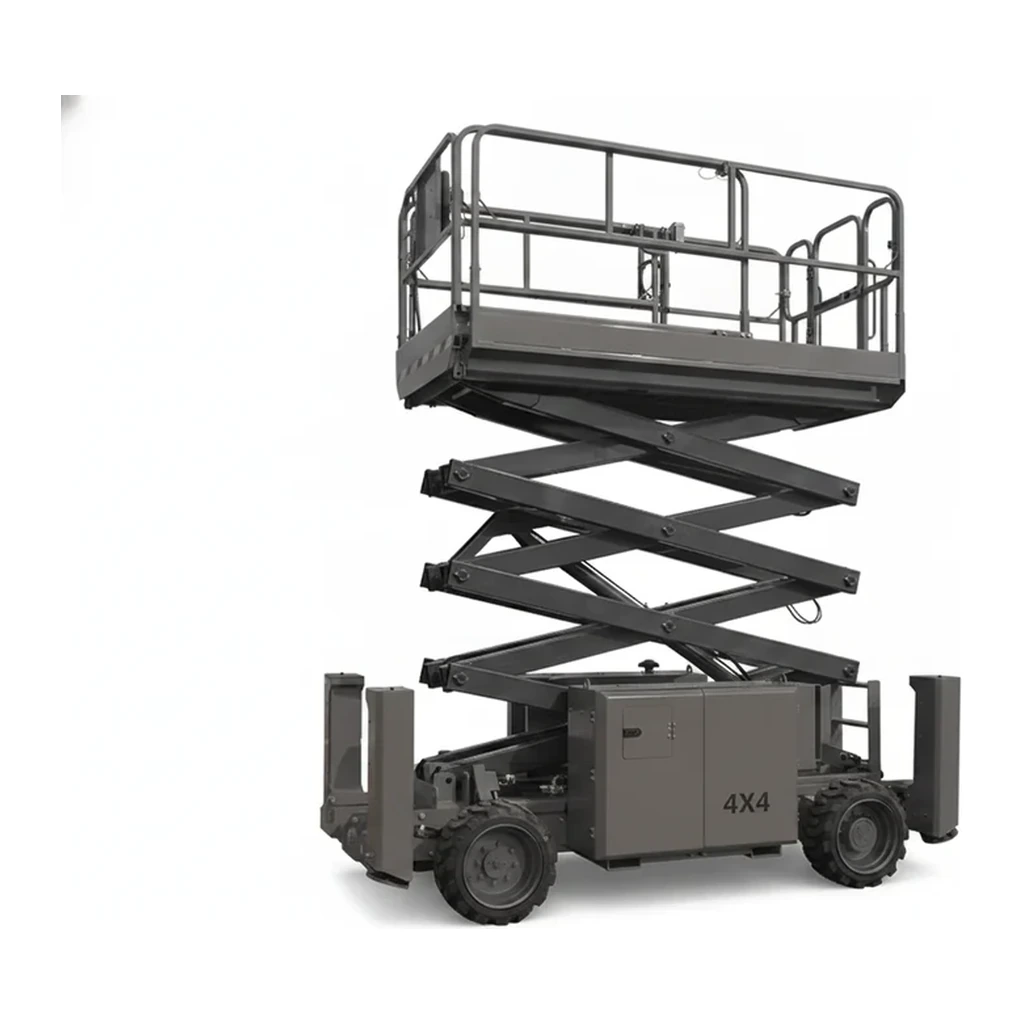
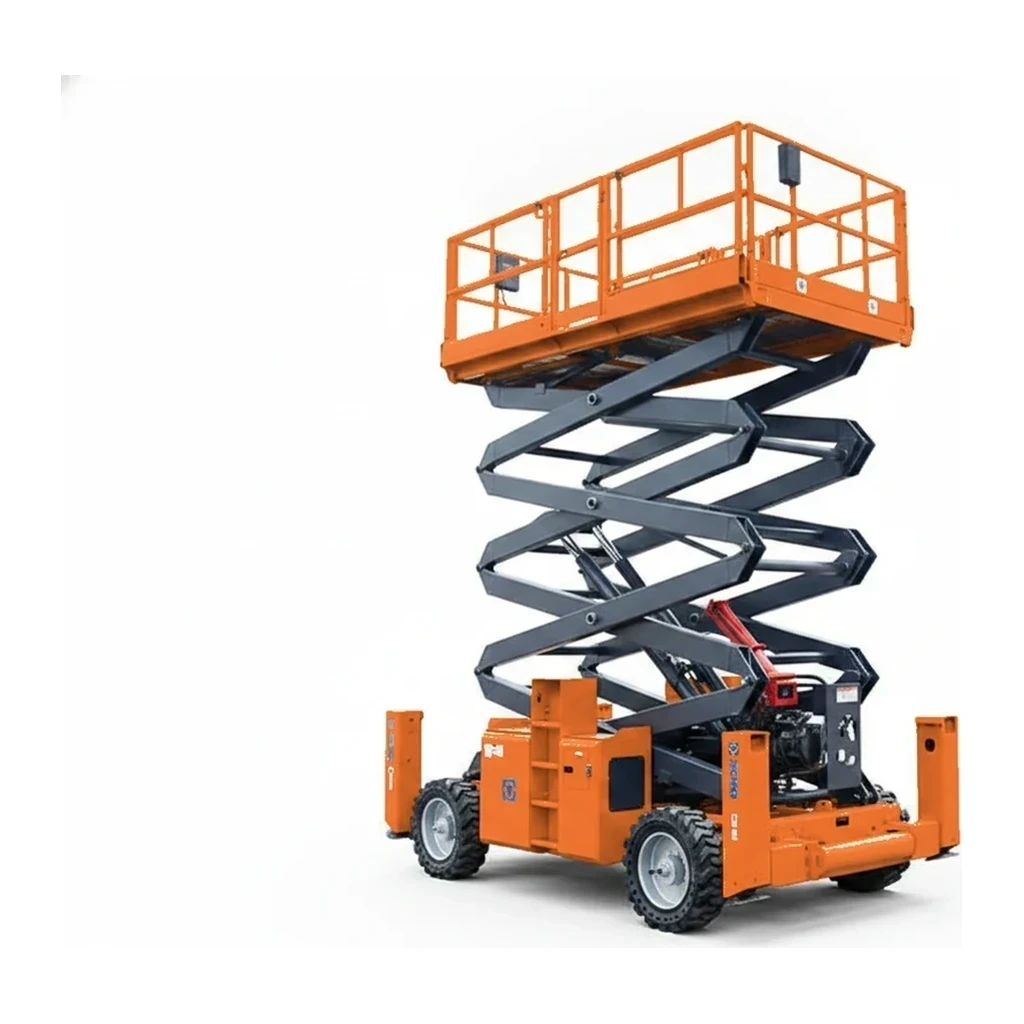
Up to 34 ft rough terrain scissor lifts are designed for exterior work on unprepared surfaces, dirt, gravel, grass, and slopes, where slab-type scissors would bog down or trigger tilt protection. This band delivers platform heights to approximately 32 ft and combines all-terrain tires, oscillating axles, and diesel or dual-fuel powertrains to navigate sites without hardstanding. This is the entry tier of the rough terrain scissor ladder, above which the 34-45 ft Rough Terrain Scissor Lift extends reach and capacity for taller structures.
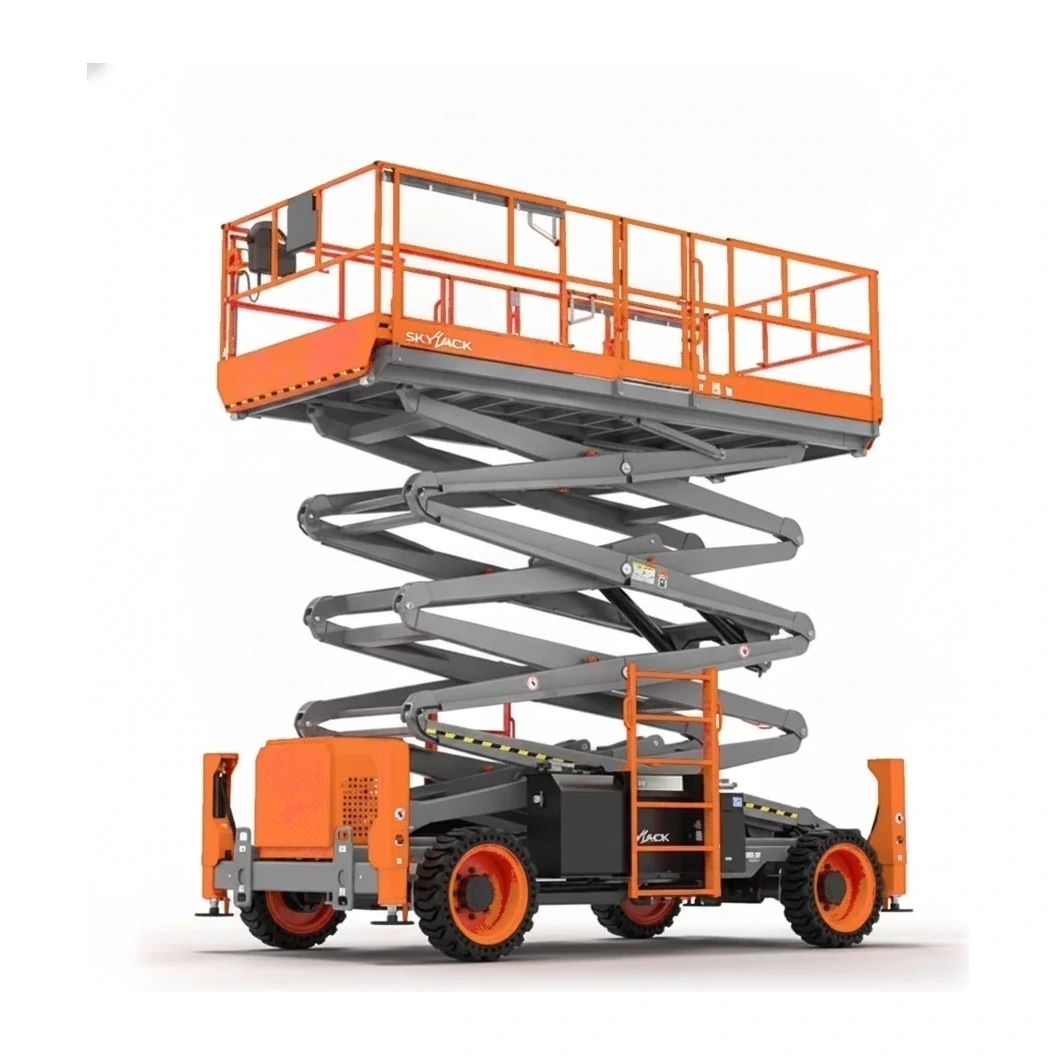
Cat classes
Pick a size class: capacity and reach differ across the range.
Key specifications
| Specification | Typical range | What it means |
|---|---|---|
| Working height | 5.6–35.3 ft (1.7–10.8 m) | Maximum working height from ground truth range; assumes operator reach above deck. |
| Platform capacity | 926–5,512 lb (420–2,500 kg) | Rated load varies by model; heavier-duty frames support masonry tools and multiple operators. |
| Gradeability | 25-50% | Maximum slope the machine can drive on when stowed; terrain capability varies by tire and drivetrain. |
| Operating weight | 1,830–26,059 lb (830–11,820 kg) | Machine mass influences transport requirements and ground bearing pressure on soft sites. |
| Engine power | 16.0-61.1 hp | Diesel or dual-fuel engines provide propulsion and hydraulic power independent of mains supply. |
How to choose
This size band suits exterior work at heights below approximately 34 ft on unprepared ground: building envelopes, canopies, signage, and light structural tasks on gravel or dirt pads. When the work sits above this range or requires greater reach over obstacles, the 34-45 ft Rough Terrain Scissor Lift offers extended elevation and typically heavier counterweights for stability. For jobs on poured slabs, asphalt, or finished floors where tilt sensitivity is not a constraint, electric slab scissors deliver quieter operation, narrower frames, and lower transport weights.
What this size handles
- Exterior cladding and façade installation on two- to three-story buildings over unpaved perimeters
- Roofing and gutter work on commercial structures with gravel or dirt staging areas
- Signage installation and maintenance on retail centers with sloped parking lots
- Electrical and HVAC rough-in on construction sites lacking finished concrete pads
- Tree trimming and landscape lighting on golf courses, parks, and resort properties
- Masonry and stone veneer work on residential developments with uncompacted fill
Safety & operation
- Oscillating axles and tilt sensors prevent operation on slopes exceeding the machine's gradeability rating; operators must verify ground conditions before ascent.
- Wider wheelbases and lower centers of gravity than slab scissors improve stability on uneven terrain, but lateral shifts in soft soil still demand caution.
- Outriggers are not standard; stability depends on chassis design and adherence to manufacturer load charts for sloped or unlevel surfaces.
- Engine exhaust and noise levels require consideration of site ventilation and proximity to occupied structures; emission standards vary by jurisdiction and model year.
Transport & logistics
- Machines in this range typically require a 10,000-14,000 lb capacity tandem-axle trailer or larger; heavier models approach 12 metric tons and necessitate tri-axle equipment trailers.
- Towing a loaded trailer demands a heavy-duty pickup or medium-duty truck rated for the combined gross weight, often exceeding 7 metric tons.
- Loading via walk-on ramps or hydraulic tilt decks; confirm deck width accommodates machine widths of 1.8-2.3 m and that ramp angle does not exceed gradeability limits.
Power & supply
- Most models run on diesel fuel; tank capacities of 37.9-113.6 liters support a full workday of intermittent lifting and driving.
- Dual-fuel variants accept propane as an alternative, reducing emissions on environmentally sensitive or enclosed outdoor sites.
- No external electrical connection required; onboard engine powers hydraulic pump and drive motors independently.
Frequently asked
What distinguishes rough terrain scissors from slab scissors in this height range?
How much ground bearing pressure do machines in this class exert?
Can this size navigate through standard doorways or gates?
Compare popular models
Find by spec →Normalised to the same units. A dash means the figure was not published.
| Model | Working height | Platform capacity |
|---|---|---|
| JLG ERT2669 | 26.2 ft (8.0 m) | 1,499 lb (680 kg) |
| JLG RT2669 | 26.2 ft (8.0 m) | 1,499 lb (680 kg) |
| JLG RT3369 | 32 ft (9.8 m) | 1,001 lb (454 kg) |
| Genie GS-3390 | - | 2,500 lb (1,134 kg) |
| Haulotte Compact 10 DX | - | - |
| JLG ERT3369 | 32 ft (9.8 m) | 1,001 lb (454 kg) |
Related equipment
Browse by manufacturer
Sources
Every specification is verified against the manufacturer's published data, with the source linked for reference.
Up to 34 ft Rough Terrain Scissor Lift
51 models · Page 2 of 2 · Every spec cited to source