
Boom Lifts
Boom lifts place workers up and out — over obstructions and into positions no vertical lift reaches. Articulating booms are the catalog's largest class, with telescopic, spider, mast, towable, and tracked variants covering reach profiles from atrium floors to 180-ft steel.
How it works
The boom elevates and extends hydraulically from a rotating turret while the platform self-levels; articulating designs add a riser and jib that steer the basket around structure. Load and reach interact — capacity envelopes govern where the basket may go — and both fall-restraint anchorage and operator familiarization are integral to use.
Types & variants
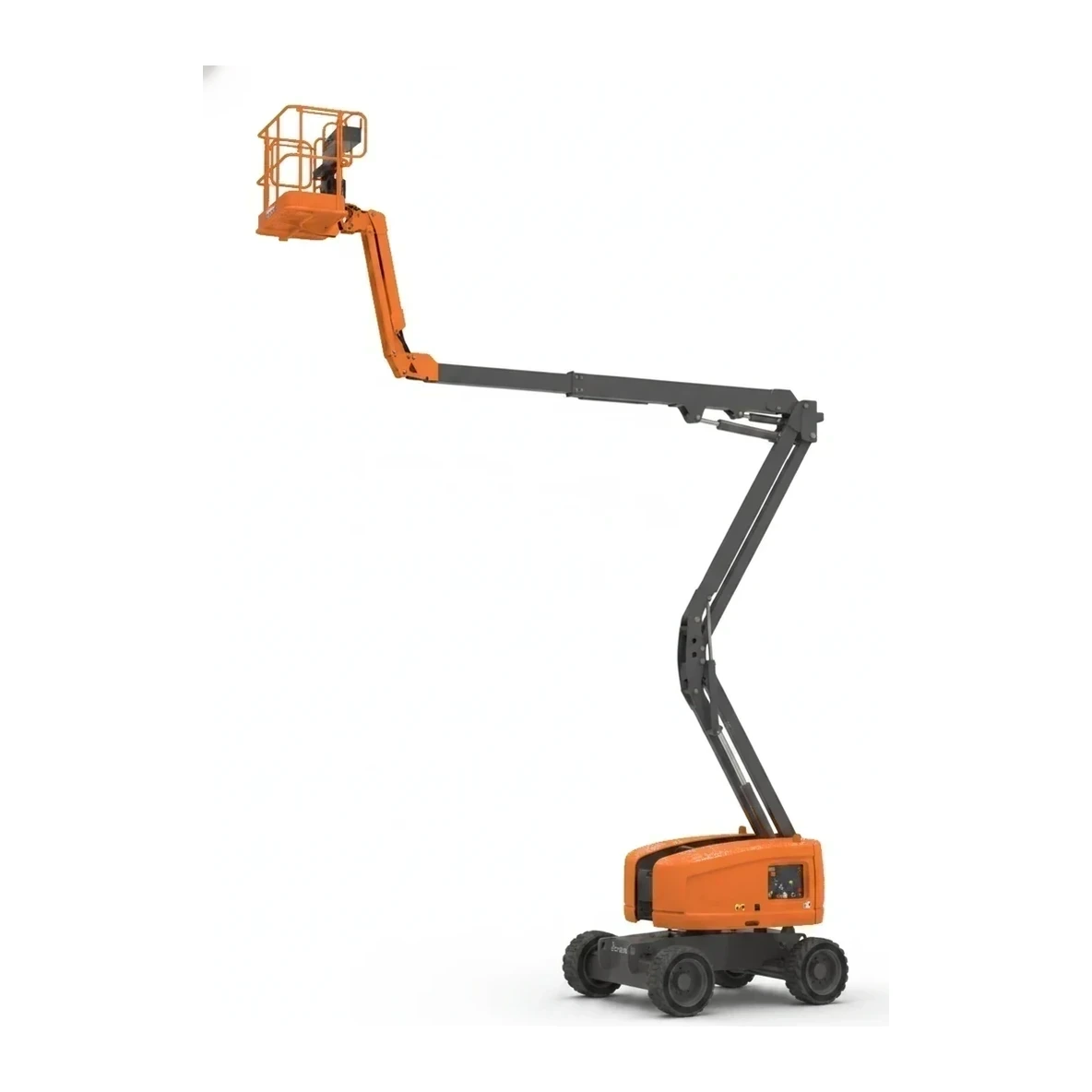
- Articulating Boom Lift
- Boom lift with jointed sections that reach up and over obstructions.
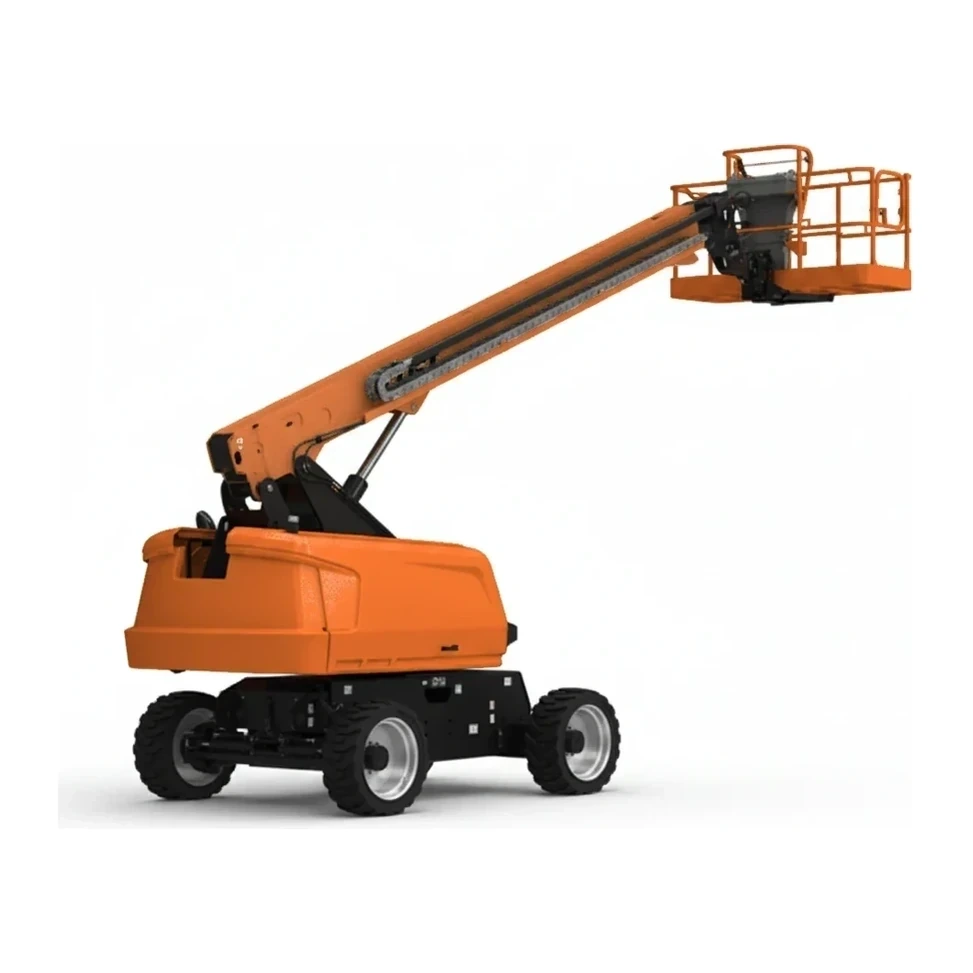
- Telescopic Boom Lift
- Straight-boom lift with maximum horizontal outreach and platform height.
- Atrium/Spider Lift
- Tracked compact lift with outriggers that passes through doorways and works on delicate floors.
- Mast Boom Lift
- Compact vertical-mast lift with a short jib for aisle and warehouse work.
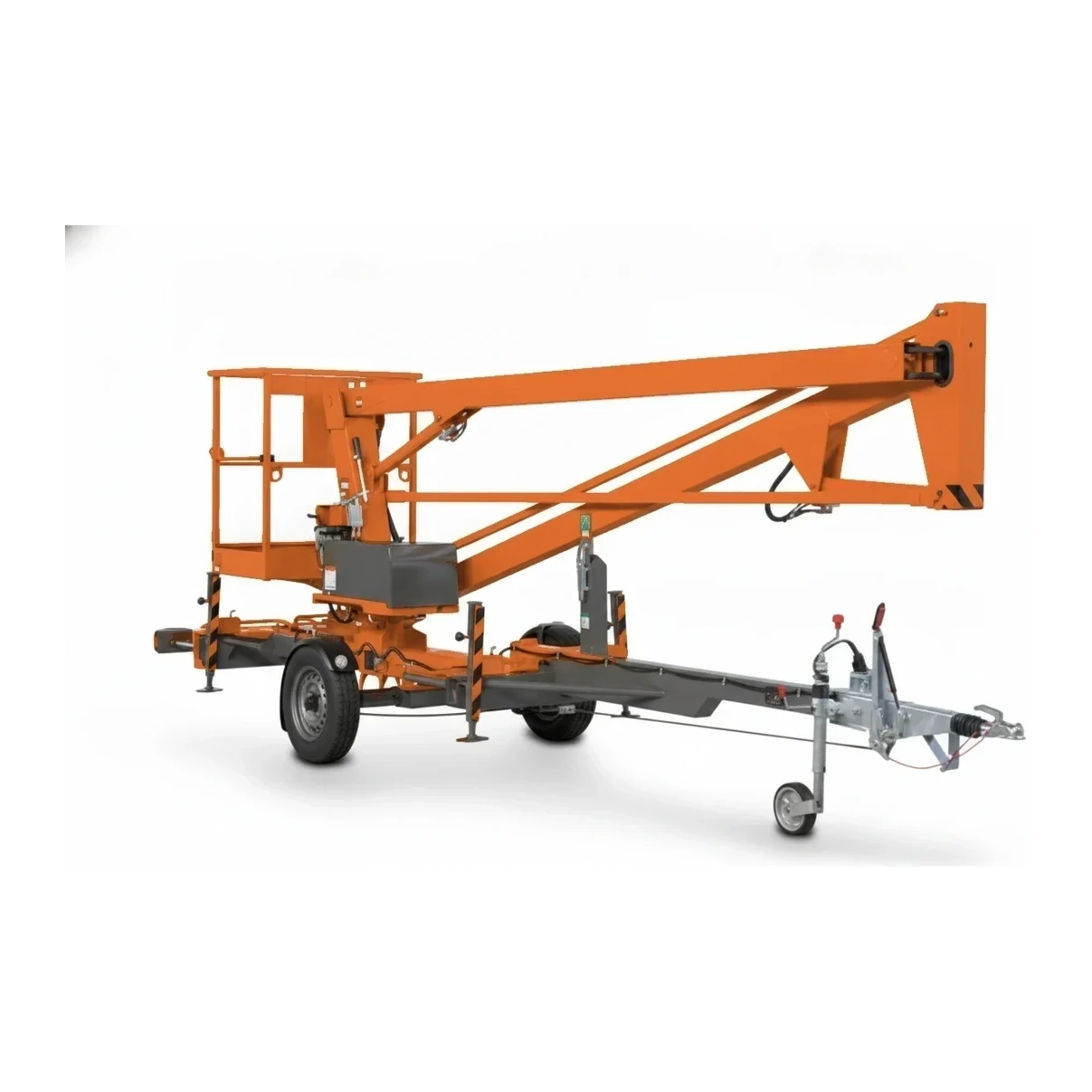
- Towable Boom Lift
- Trailer-mounted boom lift that tows behind a pickup and sets up on outriggers.
- Tracked Boom Lift
- Boom lift on rubber tracks for soft or uneven ground.
How to choose
The reach profile decides the family: up-and-over work favors articulating booms, pure height and outreach favor telescopic, interior and floor-sensitive work favors spider and mast machines, and occasional-use sites tow a towable. Working height, horizontal outreach, and platform capacity are read together from range diagrams rather than headline numbers.
Standards & certifications
- ANSI/SAIA · A92.20/.22/.24
- Design, safe-use, and training standards for mobile elevating work platforms.
- CSA · B354 series
- Canadian design and safe-use standards for mobile elevating work platforms.