

Telescopic Boom Lift
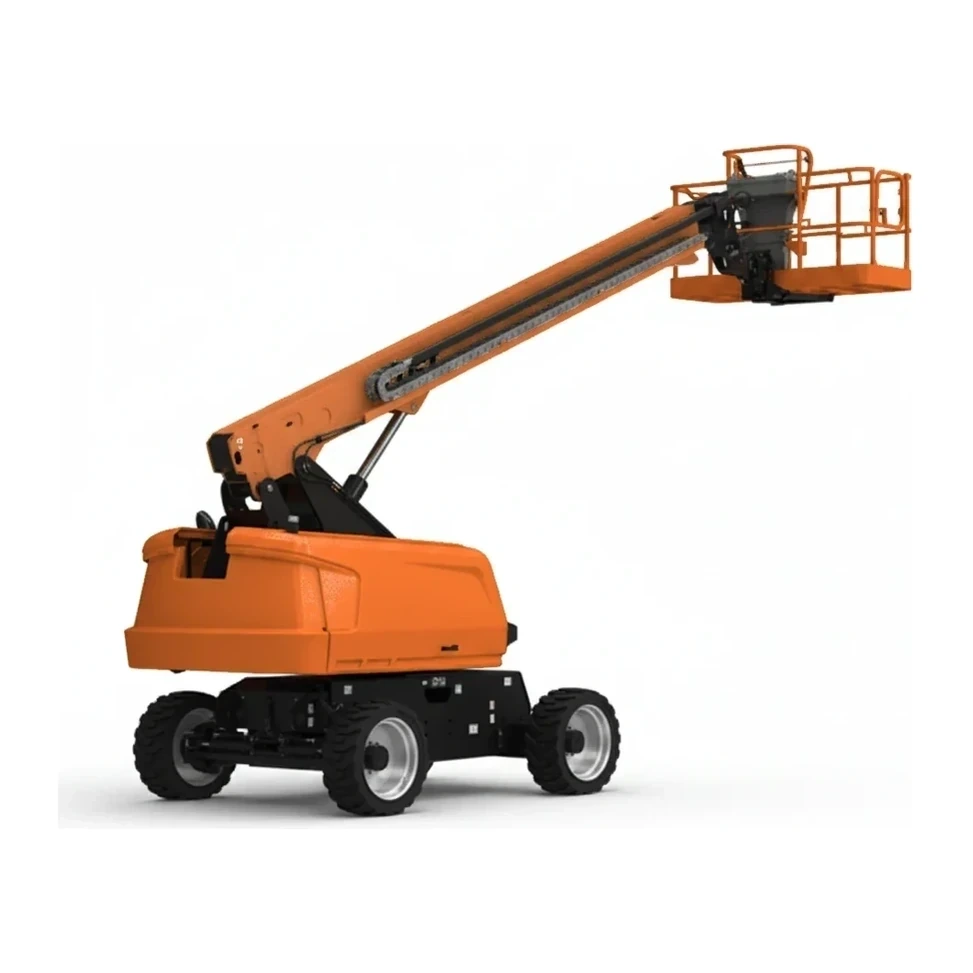
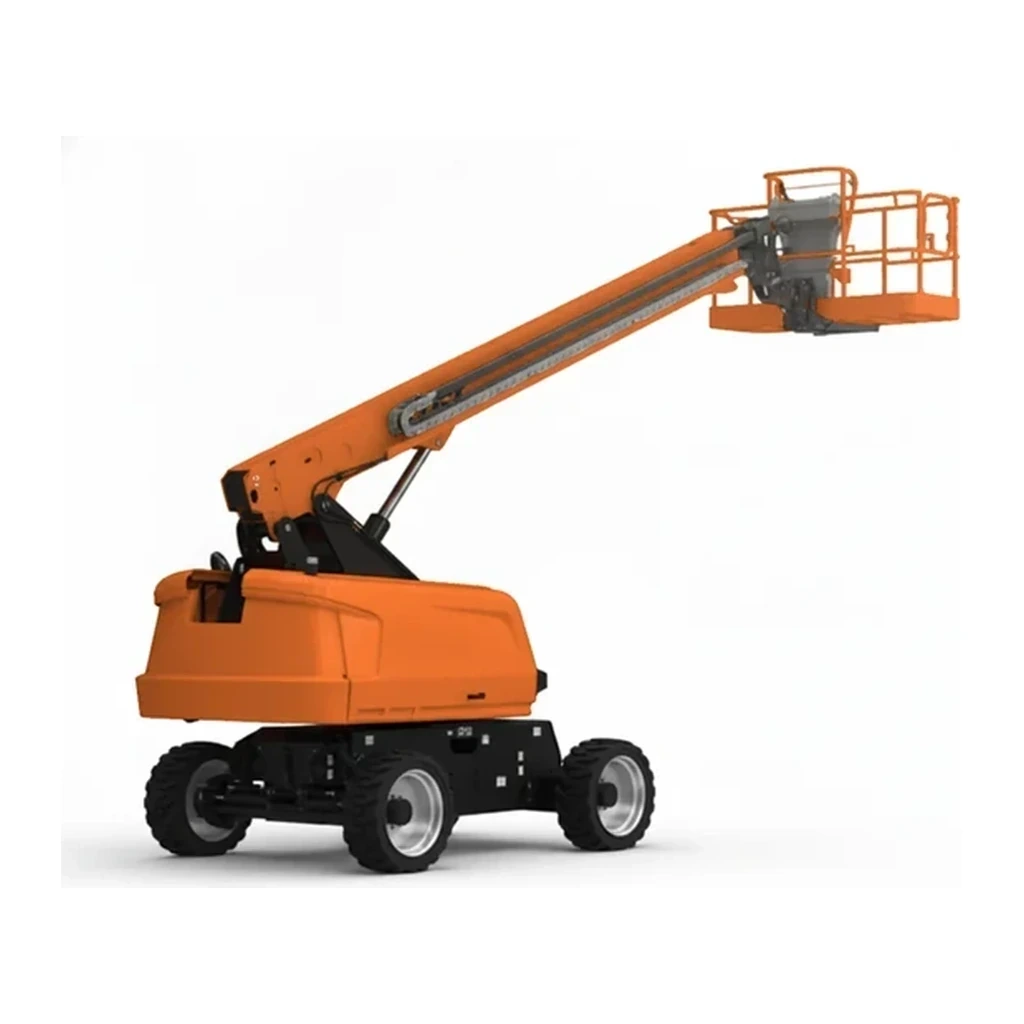
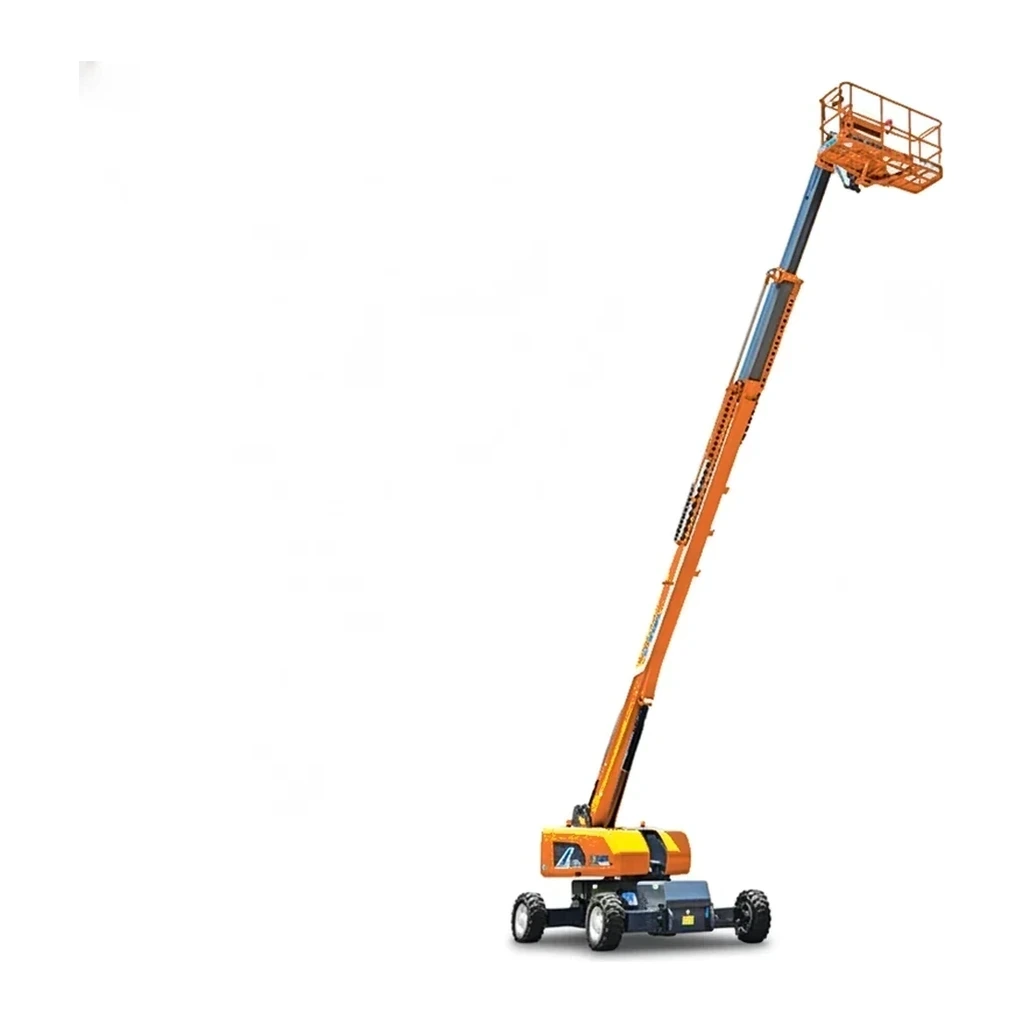
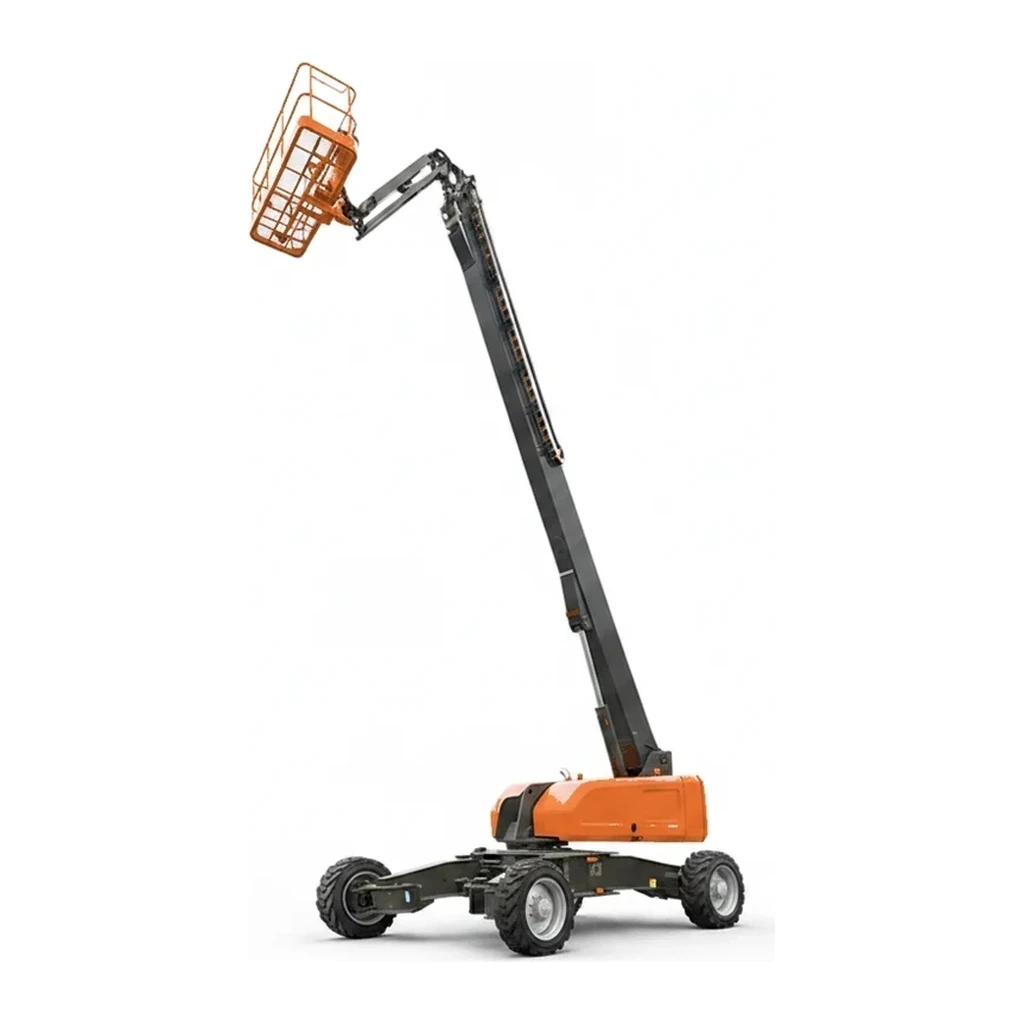
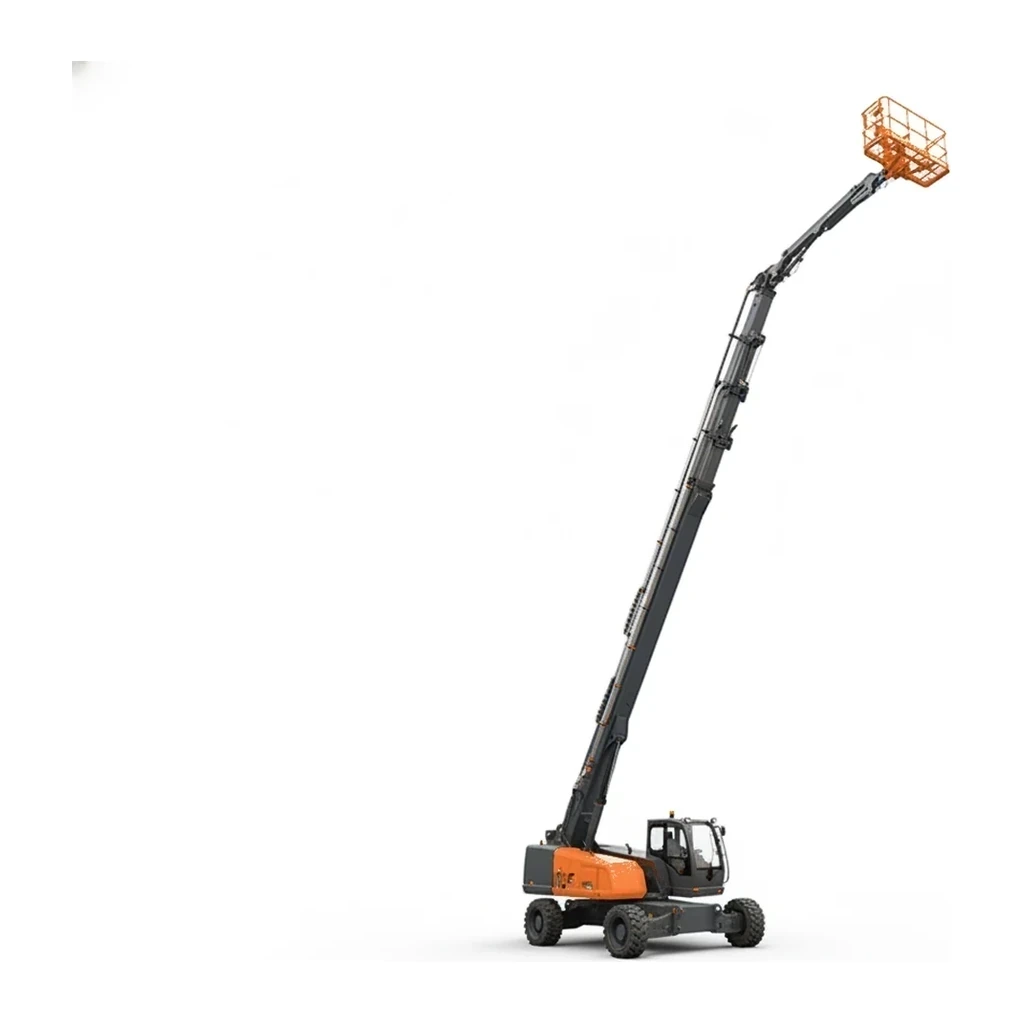
A telescopic boom lift is a mobile elevating work platform whose straight, multi-section boom extends in-line from a rotating turntable, delivering the greatest height and horizontal outreach of any self-propelled MEWP class. It is the long-reach workhorse of construction and industrial-maintenance industries, used wherever the platform must travel far from where the chassis can park.
Cat classes
Pick a size class: capacity and reach differ across the range.
How it works
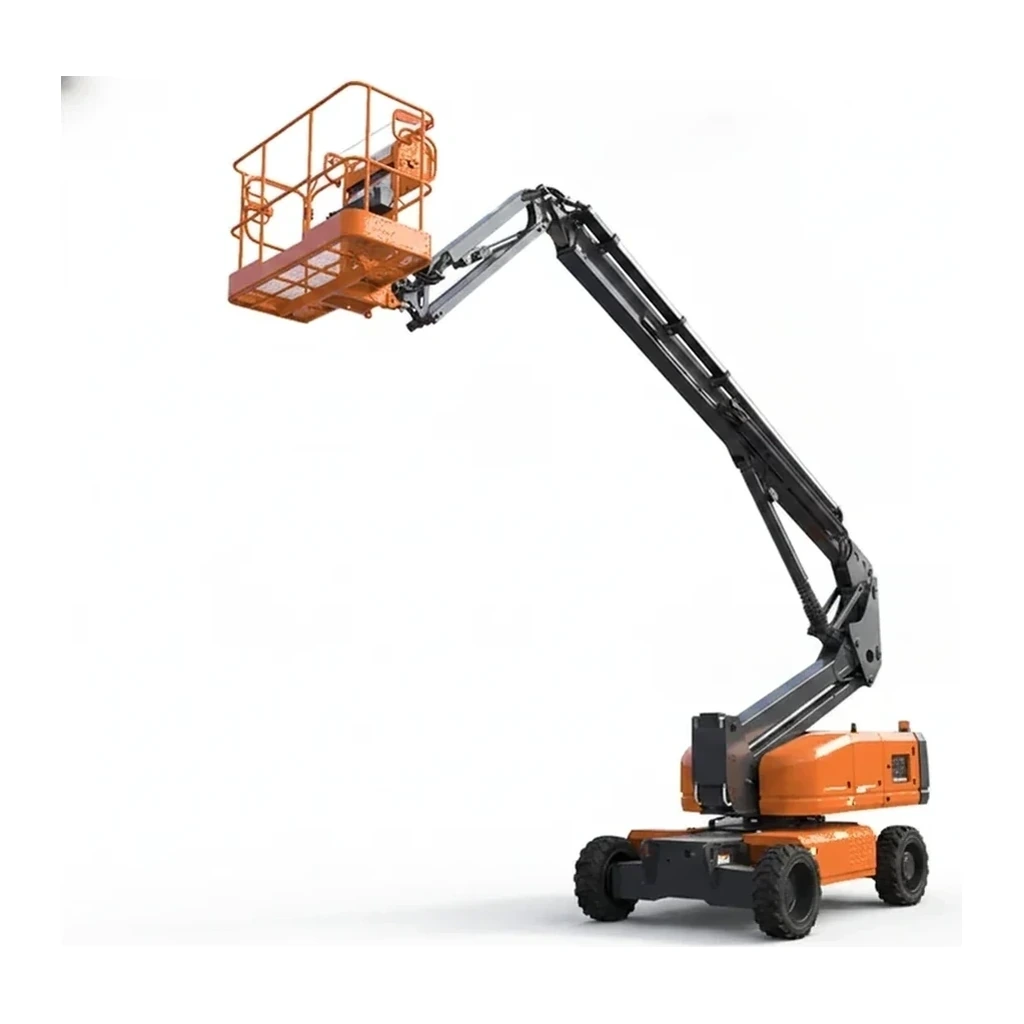
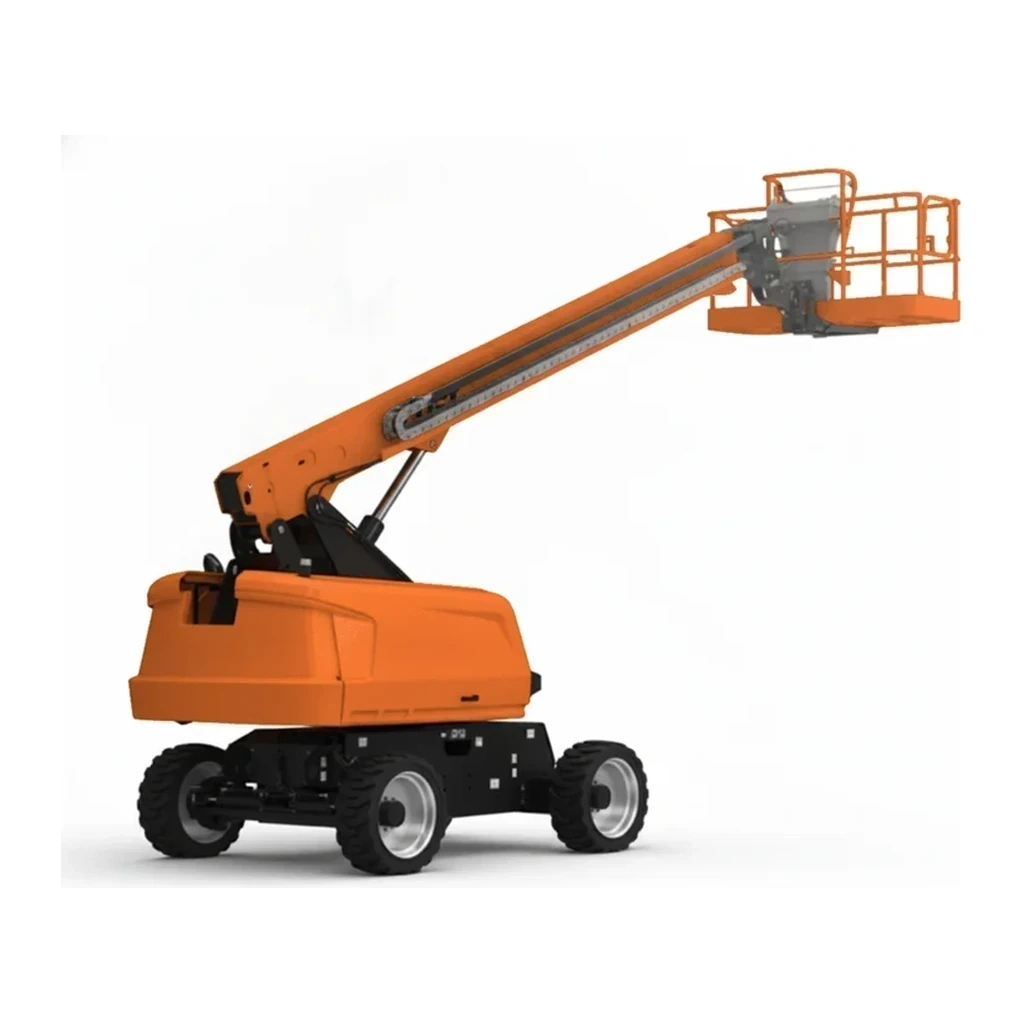
Nested boom sections extend telescopically on internal cables or cylinders, while a main lift cylinder raises the boom and the turntable slews it through a full circle over the chassis. A jib on many models adds fine articulation at the platform, and load-moment sensing continuously compares boom angle, extension, and basket load against the machine's stability envelope, restricting motion at the limits. Counterweight and a wide 4WD chassis provide stability without outriggers on most models, with an oscillating axle keeping wheels loaded over rough ground. Diesel engines (5.0–250.0 hp across listed models) power drive and hydraulics on the rough-terrain units that dominate the class. The operator drives from the platform, including repositioning at height where rated; ground controls provide override and emergency lowering.
Types & variants
- Rough terrain telescopic booms
- 4WD diesel machines for open sites — the standard configuration across the up-to-50, 50-70, and 70-90 ft bands.
- Super-boom class
- Machines in the 90-130, 130-160, and 160+ ft bands with multi-stage booms and axle-extend chassis for the tallest routine access work.
- Jib-equipped configurations
- Models adding an articulating jib and platform rotate for final positioning at the work point.
- High-capacity platform models
- Units with reinforced platforms and elevated capacity ratings for multi-worker crews and heavier tooling.
Key specifications
| Specification | Typical range | What it means |
|---|---|---|
| Working height | 21.8–91.1 ft (6.6–27.8 m) | The class's headline spec; size bands run from up to 50 ft through 160+ ft. |
| Maximum horizontal reach | 8.2–62 ft (2.5–18.9 m) | Straight-boom geometry converts height into outreach efficiently, letting the platform work far from the parked chassis. |
| Engine power | 5.0–250.0 hp | Drives 4WD travel on rough ground and hydraulic performance; power scales with machine size across the bands. |
| Fuel capacity | 76.0–300.0 gal | Indicates duty-cycle endurance between refuelings on remote or large sites. |
| Platform capacity | 324–3,999 lb (147–1,814 kg) | Rated load at full envelope; varies with boom configuration and extension. |
How the industry sizes it
Telescopic booms are sized by working height in bands — up to 50, 50-70, 70-90, 90-130, 130-160, and 160+ ft — with the range diagram governing what height-plus-outreach combinations are usable at a given basket load. Machine weight climbs steeply through the bands, so transport class, site access, and ground bearing are planned alongside reach. In MEWP classification, telescopic booms are Group B, Type 3 machines, carrying the boom fall-protection and training requirements.
Applications
- Steel erection and structural work on mid- and high-rise construction
- Building envelope construction and maintenance: cladding, glazing, and facade repair
- Bridge, overpass, and infrastructure inspection and rehabilitation
- Stadium, arena, and high-bay industrial maintenance at extreme height
- Telecom, utility, and tower work where long straight reach replaces staging
- Refinery, plant, and tank-farm access over congested ground
Safety & operation
- Every platform occupant wears a full-body harness attached to a designated anchor — boom whip and envelope motion can eject unrestrained workers even without a tip-over.
- Operators require MEWP operator training plus model familiarization per ANSI A92.24; super-boom models add transport-position, axle-extend, and envelope-management procedures.
- Wind exposure grows with height; manufacturer wind limits and the effects of sheet materials in the basket govern elevated work outdoors.
- Ground bearing under each wheel must be verified — counterweighted machines at the top bands concentrate very large loads, and voids or backfill can fail under a repositioning machine.
- Minimum approach distances to energized lines must be maintained, with dedicated spotting when booming near services.
Standards & certifications
- ANSI/SAIA · A92.20 / A92.22 / A92.24
- U.S. MEWP design, safe-use, and training standards for boom-supported platforms.
- OSHA · 29 CFR 1926.453
- Aerial lift requirements on construction sites, including boom-platform fall protection.
- CSA · B354.6 / B354.7 / B354.8
- Canadian MEWP design, safe-use, and training standards.
Frequently asked
Telescopic or articulating boom — how is the choice made?
How high can telescopic boom lifts reach?
Do telescopic booms need outriggers?
What fall protection is required on a telescopic boom?
Compare popular models
Find by spec →Normalised to the same units. A dash means the figure was not published.
| Model | Working height | Platform capacity |
|---|---|---|
| Haulotte HT23 RTJ PRO | - | 507 lb (230 kg) |
| Haulotte HT43 RTJ PRO | - | 507 lb (230 kg) |
| JLG EC600SJP | 60 ft (18.3 m) | 500 lb (227 kg) |
| JLG H600SJP | 60.3 ft (18.4 m) | 500 lb (227 kg) |
| JLG 460SJC | 45.4 ft (13.8 m) | 600 lb (272 kg) |
| JLG 400S | 40 ft (12.2 m) | 1,001 lb (454 kg) |
Related equipment
Browse by manufacturer
Sources
Every specification is verified against the manufacturer's published data, with the source linked for reference.