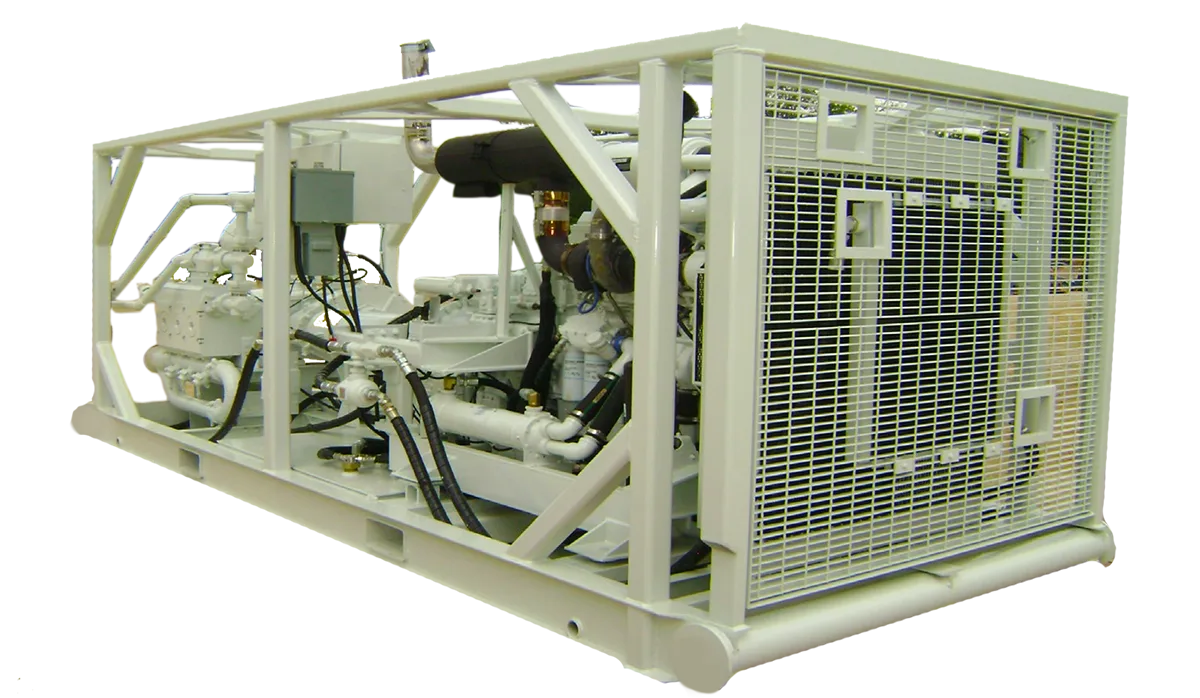
Diaphragm Pump
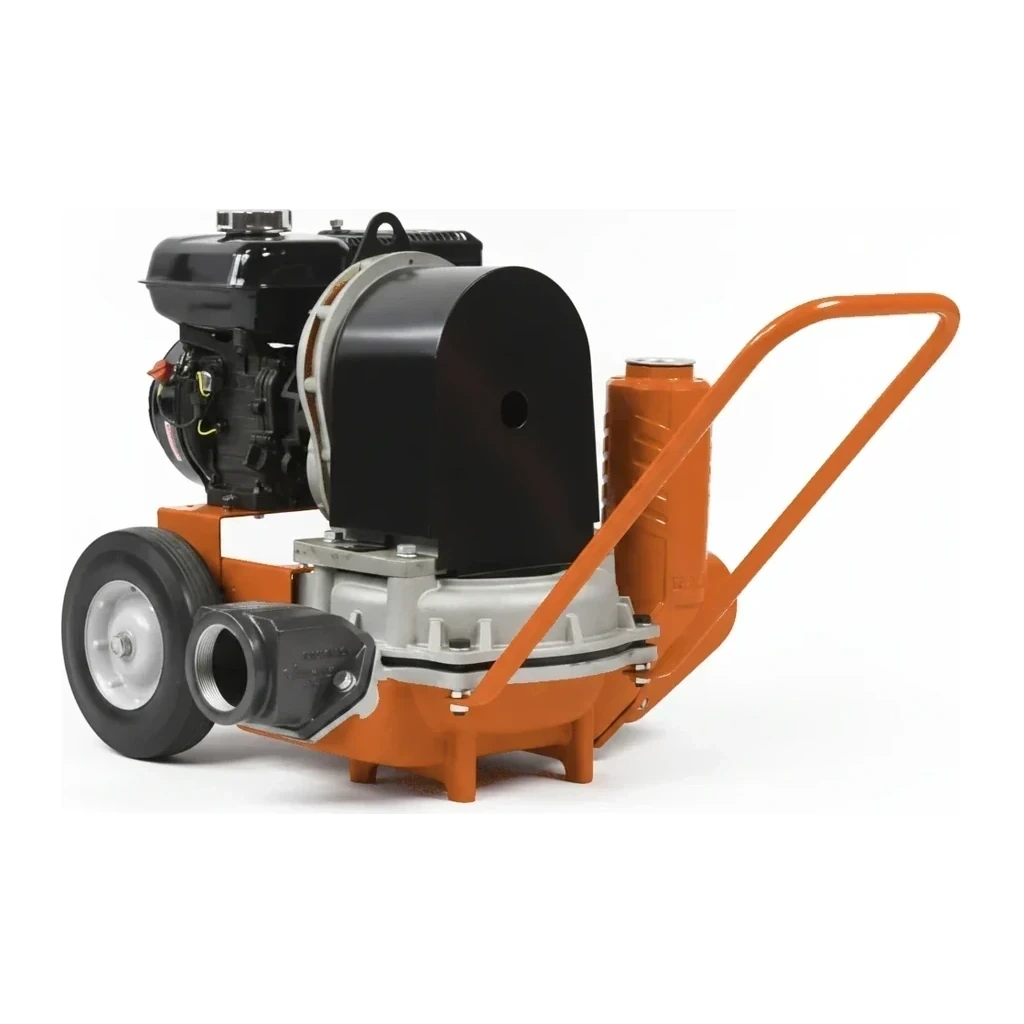
A diaphragm pump is a positive-displacement pump that moves water by flexing a rubber diaphragm back and forth inside a chamber. Because it has no high-speed impeller, it handles mud, sludge, and debris-laden water that would clog or destroy a centrifugal pump. It can also run dry without damage, which suits seepage and slow-inflow conditions.
How it works
An engine or motor drives a connecting rod that pulls the diaphragm up, drawing water through a one-way inlet valve into the chamber. On the down stroke the diaphragm pushes that water out through a discharge valve. The cycle repeats several times per second, producing a steady pulsing flow. Because each stroke displaces a fixed volume, output is largely independent of the material being pumped. This is why diaphragm pumps are the standard choice for 'mud hog' duty: slurry, leaf-laden water, and seepage with high solids content.
Types & variants
- Single-diaphragm engine-driven
- The common construction-site configuration; one chamber, gas or diesel engine, wheeled frame.
- Double-diaphragm
- Two chambers working alternately smooth out the flow pulses and increase capacity.
- Air-operated (AODD)
- Driven by compressed air rather than an engine; suited to fumes-sensitive or flammable environments.
- Electric-drive diaphragm
- Motor-driven units for indoor or emissions-restricted work areas.
Key specifications
| Specification | Typical range | What it means |
|---|---|---|
| Discharge diameter (in) | 1 to 8 in across cataloged size bands; 2 in and 3 in are the standard contractor sizes | Sets hose compatibility and the maximum solids the valves can pass. |
| Max head (ft) | Roughly 13 to 50 ft across cataloged models | Diaphragm pumps are low-head by design; they move sludge steadily rather than lifting water high. |
| Engine power (hp) | About 7.5 to 28 hp on cataloged engine-driven models | Larger diaphragms and higher stroke rates need more power. |
How the industry sizes it
Diaphragm pumps are sized by discharge diameter and expected inflow. Because flow per stroke is fixed, a small unit keeps pace with slow seepage while larger diameters handle heavier sludge volumes. Sites with steady heavy inflow of relatively clean water are usually better served by a trash pump; the diaphragm pump earns its place when the water is thick, the inflow is intermittent, or dry-running is unavoidable.
Applications
- Dewatering excavations with muddy, silt-laden seepage
- Pumping sludge and slurry from pits, ponds, and vaults
- Keeping footings and trench bottoms dry during slow inflow
- Draining water with leaves, sand, or small debris
- Standby seepage control where the pump may run dry for stretches
Safety & operation
- Secure suction and discharge hoses; the pulsing flow makes unsecured lines walk and whip.
- Ventilate engine exhaust away from trenches and confined work areas.
- Shut down and relieve pressure before clearing a blocked valve or hose.
- Wear eye protection when opening chambers that may hold pressurized sludge.
Standards & certifications
- OSHA · 29 CFR 1926.651(h)
- Water accumulation in excavations must be controlled before and during entry; diaphragm pumps are a common compliance tool.
- OSHA · 29 CFR 1926 Subpart P
- Trench dewatering equipment placement must not undermine protective systems or spoil-pile setbacks.
- EPA · NPDES / Construction General Permit
- Sediment-laden discharge generally requires filtration or settling before release.
Frequently asked
Can a diaphragm pump run dry?
Why is flow lower than a trash pump of the same size?
What size handles typical trench seepage?
Compare popular models
Find by spec →Normalised to the same units. A dash means the figure was not published.
| Model | Flow rate | Max head | Engine power |
|---|---|---|---|
| Grundfos UPS2 Series | 34 gpm | 41 ft (12.5 m) | - |
| Grundfos UPS4 GO 25-65 130 | 17 gpm | 21.3 ft (6.5 m) | - |
| Grundfos UPS 15-50N | 14 gpm | 16.4 ft (5.0 m) | - |
| Imer Step-Up 120 | 4 gpm | - | 8 hp |
| Imer Prestige 300 | 14 gpm | - | 24 hp |
| Imer Booster 20 | 3 gpm | - | 28 hp |
Related equipment
Browse by manufacturer
Sources
Every specification is verified against the manufacturer's published data, with the source linked for reference.
All models
79 models · Page 2 of 2 · Every spec cited to source