

Enclosed Cargo Trailer
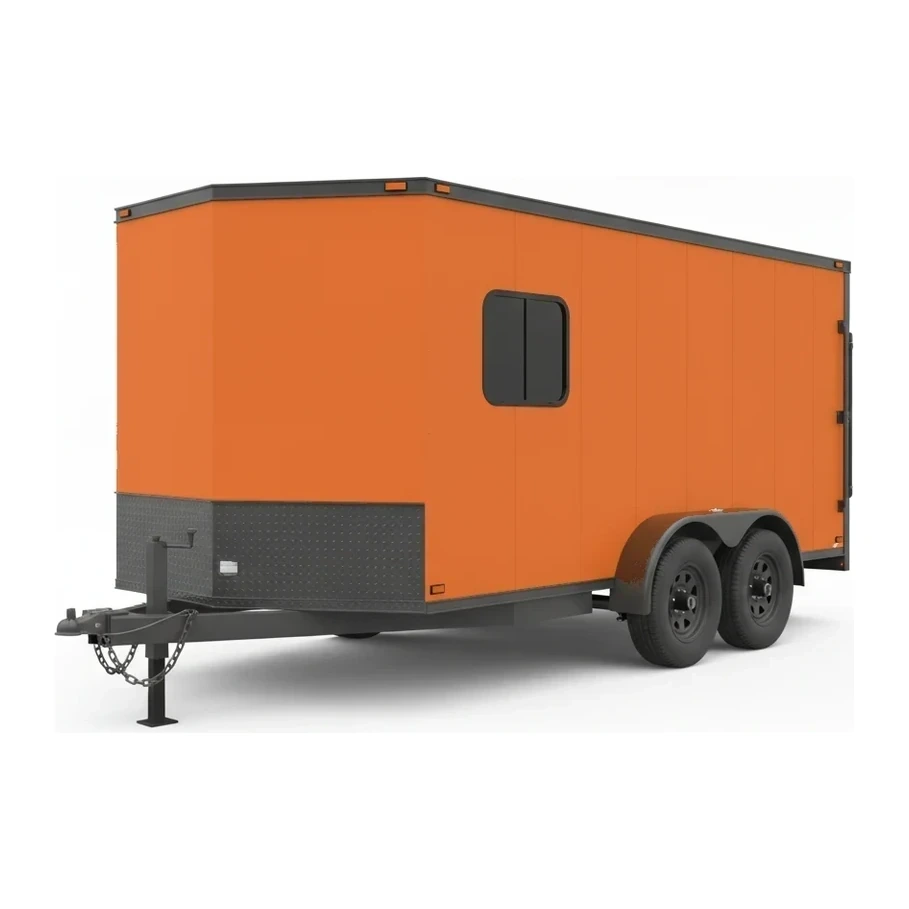
An enclosed cargo trailer is a fully covered, box-style trailer designed to transport tools, equipment, and materials in a weather-protected environment. These trailers feature rigid walls, a roof, and rear or side access doors, providing security and shelter for contents during transit. They are widely used across construction, trades, moving, and event industries for secure mobile storage and transport.
How it works
Enclosed cargo trailers couple to a towing vehicle via a ball hitch or pintle connection and are pulled on public roads or jobsites. The enclosed box body, typically constructed from aluminum or steel with plywood or composite interior walls, shields contents from weather and theft. Single-axle models under 12 ft handle lighter loads, while tandem-axle configurations from 12-28 ft distribute weight across four wheels for greater stability and capacity. Most models feature rear ramp doors or barn-style swing doors for loading, with interior tie-down points and optional shelving or E-track systems. V-nose designs reduce wind resistance and add interior storage space at the front. Braking systems range from surge brakes on lighter trailers to electric or hydraulic brakes on heavier tandem units, activated by the towing vehicle's brake controller.
Types & variants
- Single-Axle Enclosed Trailer
- Compact 6-12 ft models with one axle, suited for lighter loads and maneuverability behind smaller tow vehicles; commonly used for small tool kits and short-haul transport.
- Tandem-Axle Cargo Trailer
- Standard 12-20 ft trailers with two axles for increased load capacity and stability; the workhorse for contractors and trades needing secure mobile tool storage.
- V-Nose Trailer
- Features an angled front nose rather than flat front, reducing aerodynamic drag and adding interior storage space; popular for highway towing and extended transport.
- Contractor/Tool Trailer
- Purpose-built with reinforced floors, built-in shelving, and electrical outlets for mobile workshops; designed for trades requiring organized, climate-controlled tool access.
- Gooseneck Enclosed Trailer
- Large-capacity trailers with a gooseneck hitch mounting in the truck bed for improved weight distribution and stability; used for heavy equipment or full shop relocations.
Key specifications
| Specification | Typical range | What it means |
|---|---|---|
| Load Capacity | 1,764–11,905 lb (800–5,400 kg) | Maximum weight the trailer can safely carry, governed by axle rating and frame construction; dictates suitability for tools versus full equipment loads. |
| Length | 6–28 ft (1.8–8.5 m) | Interior cargo length from front wall to rear door; primary sizing dimension determining volume and what equipment or materials fit inside. |
| Axle Configuration | Single or tandem | Number of axles affects load distribution, stability, and legal towing limits; tandem axles required for longer trailers and heavier payloads. |
| Interior Height | 5.5–7 ft (1.7–2.1 m) | Vertical clearance inside the trailer; determines whether users can stand upright and what height of equipment can be loaded. |
| Gross Vehicle Weight Rating (GVWR) | 3,086–15,432 lb (1,400–7,000 kg) | Maximum allowable combined weight of trailer plus payload; critical for legal towing compliance and vehicle matching. |
How the industry sizes it
The rental industry sizes enclosed cargo trailers primarily by interior length in feet, ranging from compact 6 ft single-axle units through standard 12-20 ft tandem models to large 24-28 ft trailers. Single-axle trailers up to 12 ft suit lighter tool loads and towing behind smaller vehicles, while 12-20 ft tandem-axle trailers represent the most common configuration for contractors and trades. Trailers 20 ft and longer serve full residential moves, mobile shop setups, and heavy equipment transport. Load capacity in kilograms or pounds provides a secondary sizing metric, correlating with axle count and frame construction.
Applications
- Secure transport and mobile storage of contractor tools, power equipment, and consumables between jobsites
- Residential and commercial moving of household goods and office furniture with weather protection
- Mobile workshop and service vehicle conversion for trades requiring organized, lockable tool access
- Event equipment transport including tents, staging, lighting, and sound gear to temporary venues
- Construction site material delivery and on-site storage for weather-sensitive items and small parts
- Landscaping and grounds maintenance equipment transport with protection from elements and theft
Safety & operation
- Verify towing vehicle's rated towing capacity and tongue weight limits match or exceed trailer's GVWR and tongue weight specifications
- Distribute cargo weight evenly with 10-15% of total load on the tongue to prevent trailer sway and maintain steering control
- Ensure trailer brake system is properly connected and functioning; electric brake controllers must be adjusted to trailer load
- Check tire pressure, lug nut torque, coupler security, and safety chains before each tow; verify lighting and signals operate correctly
- Load cargo low and centered, securing all items with straps or tie-downs to prevent shifting during transit and maintain vehicle stability
Standards & certifications
- FMVSS · Federal Motor Vehicle Safety Standards
- U.S. Department of Transportation standards governing trailer lighting, braking, and safety equipment for road-legal operation.
- SAE · SAE J2807
- Society of Automotive Engineers recommended practices for trailer towing capacity ratings and performance testing.
- NATM · North American Trailer Manufacturers
- Industry association providing voluntary standards for trailer construction, load ratings, and quality benchmarks.
- DOT · 49 CFR Part 393
- Federal regulations covering trailer parts and accessories, including brake systems, coupling devices, and lighting requirements for commercial use.
Frequently asked
What towing vehicle is required for a tandem-axle enclosed cargo trailer?
How does load capacity differ between single-axle and tandem-axle models?
What is the advantage of a V-nose design over a flat-front trailer?
Are enclosed cargo trailers suitable for climate-sensitive materials?
Related equipment
Browse by manufacturer
Sources
Every specification is verified against the manufacturer's published data, with the source linked for reference.
All models
6 models · Every spec cited to source