

Dump Trailer
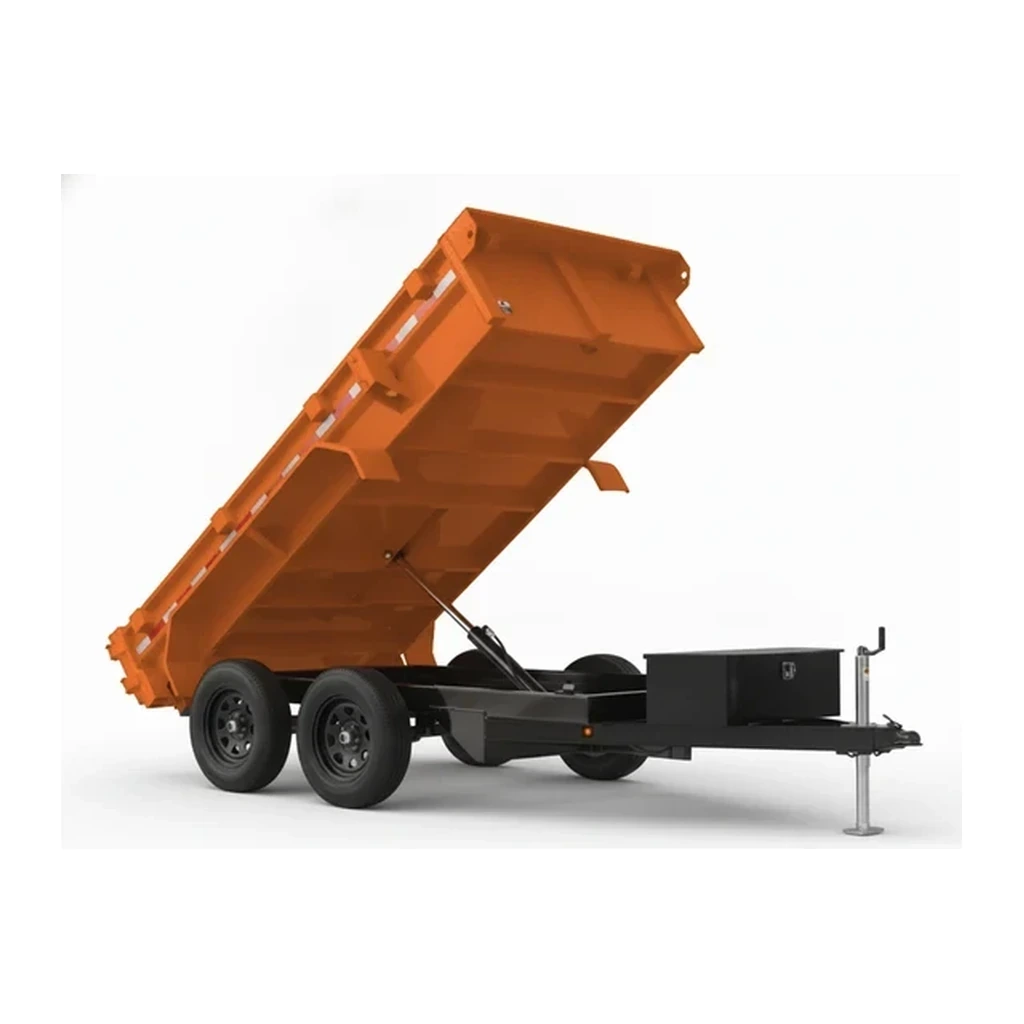
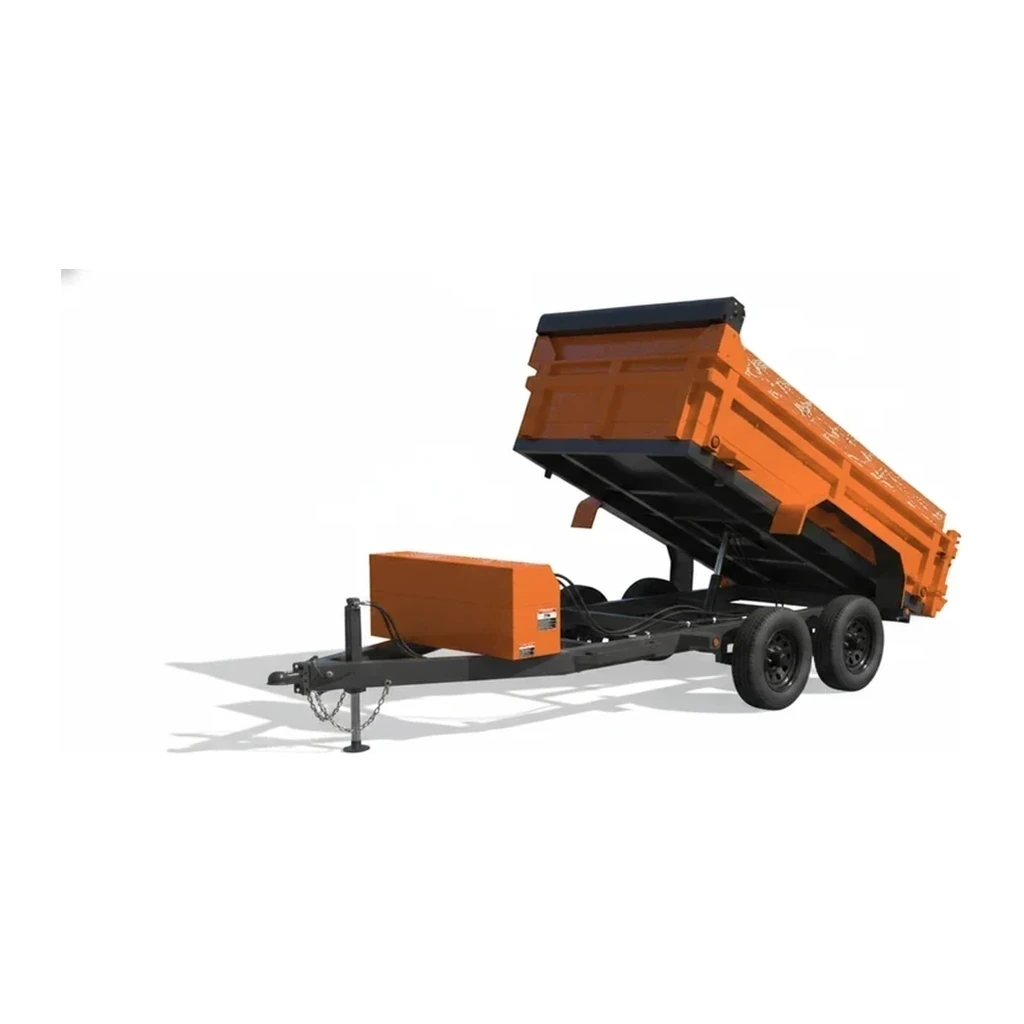
A dump trailer is a towed trailer with a hydraulically tilting bed that discharges loose material through a rear gate. It provides dump-truck functionality without a dedicated chassis. Cataloged capacity bands run from under 7,000 lb to beyond 14,000 lb.
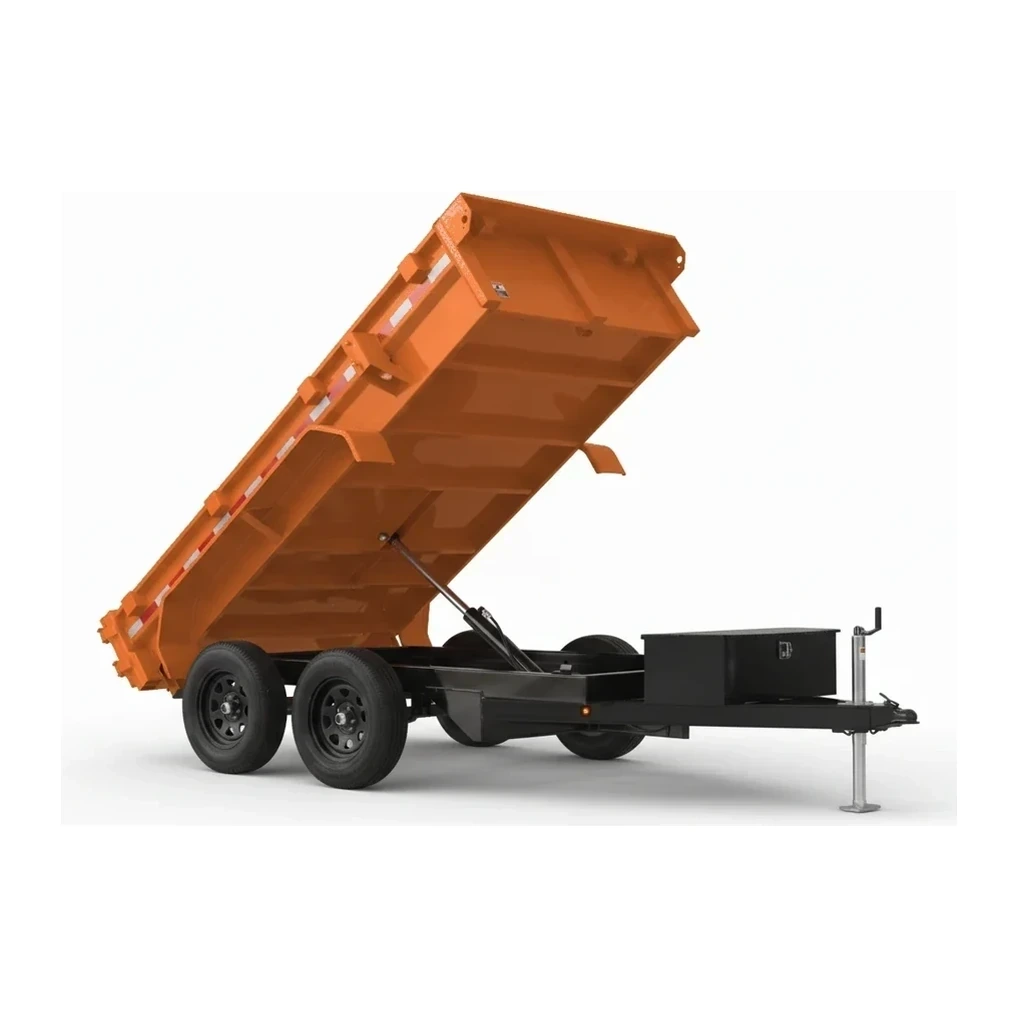
Cat classes
Pick a size class: capacity and reach differ across the range.
How it works
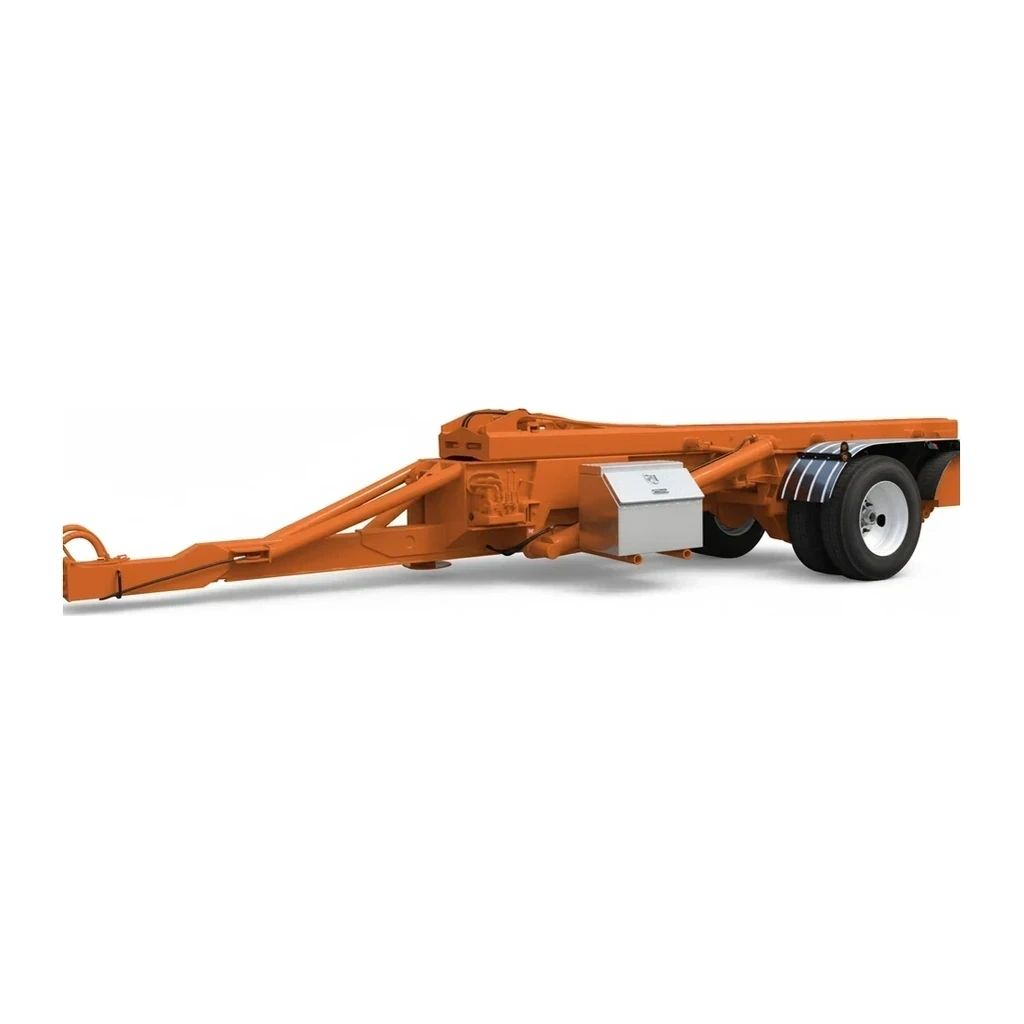
A battery-powered hydraulic pump drives one or more cylinders, scissor, telescopic, or dual-ram, that raise the bed front until material slides out the rear gate. Gates swing, spread, or double-act for controlled placement. The battery recharges from the tow vehicle circuit or an onboard charger, with solar maintainers common. Capacity is a gross-weight budget: trailer tare weight subtracts from GVWR to give payload, and dense materials like gravel reach the limit long before the box is volumetrically full.
Types & variants
- Light bumper-pull dump trailers
- Up to 7,000 lb units for landscape and cleanup loads behind half-ton trucks.
- Tandem-axle bumper-pull trailers
- The 7,000-14,000 lb band, the workhorse class behind heavy-duty pickups.
- Gooseneck and heavy dump trailers
- 14,000+ lb units with bed-mounted coupling for stability and high-volume hauling.
Key specifications
| Specification | Typical range | What it means |
|---|---|---|
| Capacity band (lb) | Up to 7,000, 7,000-14,000, and 14,000+ lb | The gross-weight class that determines tow vehicle and licensing. |
| Load capacity | 550-27,216 kg across cataloged models | What the trailer actually carries after its own weight. |
| Hydraulic lift configuration | Scissor, telescopic, or dual-ram per model | Scissor lifts handle uneven loads best; power determines full-load tipping. |
How the industry sizes it
Dump trailers are sized by material weight per trip against the tow vehicle's rating: a half-ton truck stays in the up-to-7,000 lb band, heavy-duty pickups run the 7,000-14,000 lb class, and units beyond 14,000 lb assume trucks and licensing to match. Dense aggregate hits weight limits at a fraction of bed volume: sizing by weight, not volume, is the rule.
Applications
- Hauling soil, gravel, and aggregate
- Demolition and renovation debris removal
- Landscape material delivery and green-waste hauling
- Storm cleanup and land-clearing debris
- Asphalt millings and road-work material moves
Safety & operation
- Dump only on firm, level ground; a raised bed lifts the center of gravity dramatically.
- Stand clear of the gate during discharge: material releases suddenly.
- Connect breakaway cable and verify electric brakes before towing.
- Never exceed the tongue or coupler rating when loading forward-heavy.
Standards & certifications
- FMCSA · 49 CFR 393
- Brake, lighting, and securement requirements for trailers in commercial service.
- NHTSA · FMVSS 108
- Federal lighting and conspicuity requirements for trailers.
- FMCSA · 49 CFR 383
- Class A CDL applies when the combination exceeds 26,000 lb GCWR with a trailer over 10,000 lb GVWR.
Frequently asked
What tow vehicle does each band require?
Why does a dump trailer reach its weight limit before filling the bed?
Do dump trailers require a CDL?
Related equipment
Browse by manufacturer
Sources
Every specification is verified against the manufacturer's published data, with the source linked for reference.