
Vacuum Trailer
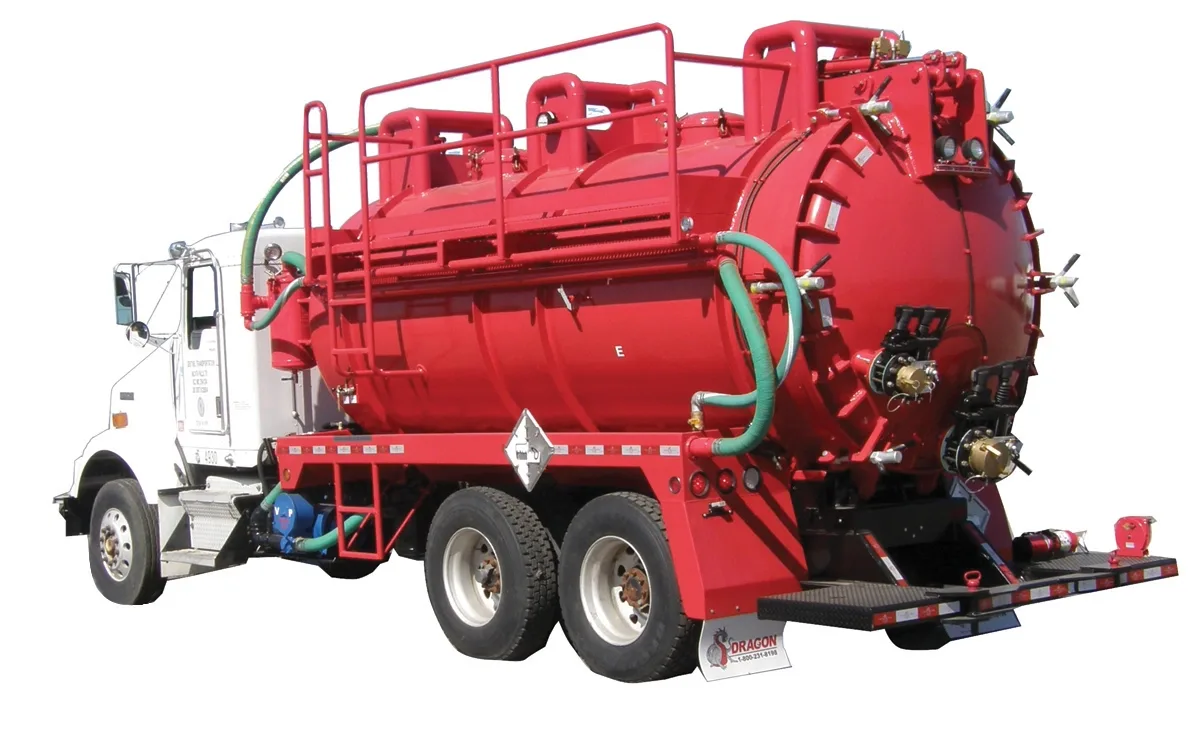
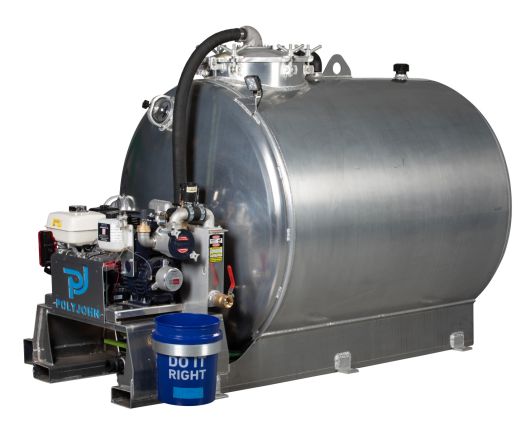
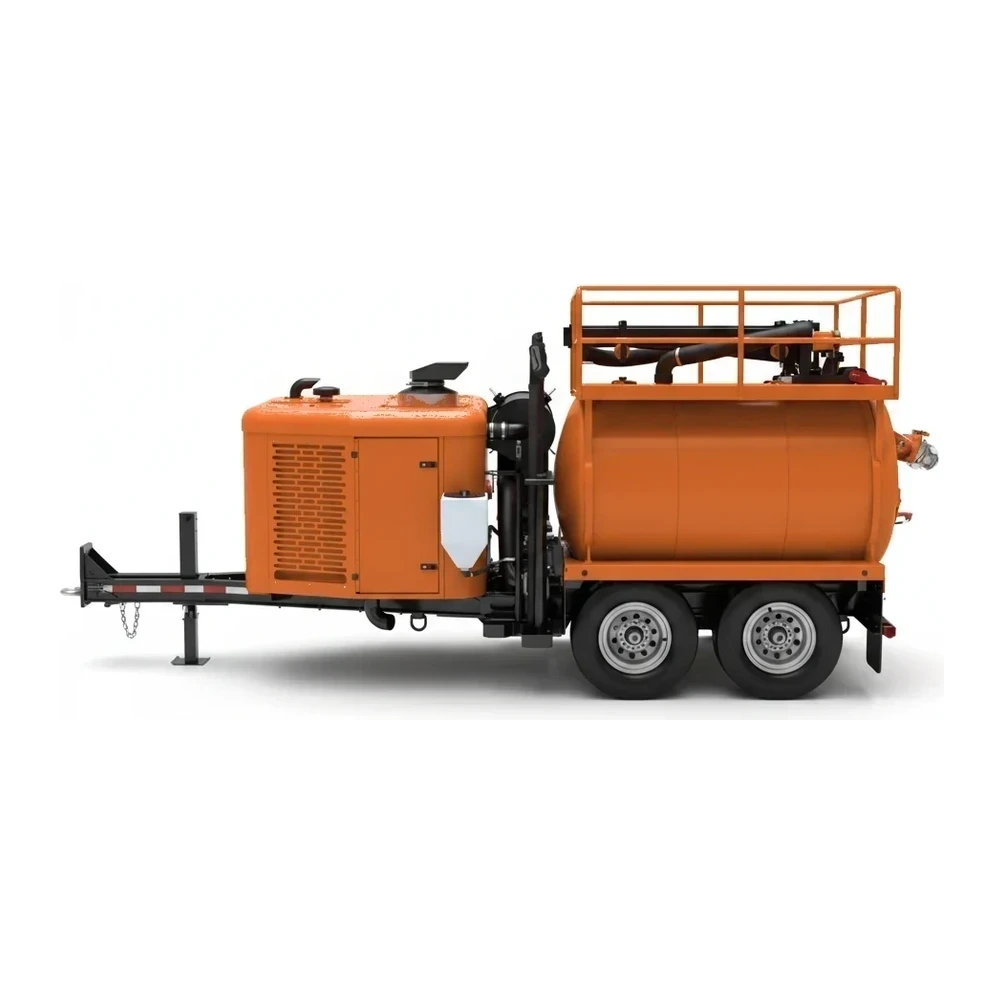
A vacuum trailer mounts a sealed tank and vacuum pump on a towed chassis, collecting liquid waste or slurry without a dedicated truck. Duties include portable sanitation service, hydro excavation, and industrial clean-up. Cataloged tanks band at 0-500, 500-1000, and 1000+ gal.
How it works
An engine- or PTO-driven vacuum pump evacuates the tank; atmospheric pressure pushes waste or slurry up the suction hose into it. A primary shutoff float stops flow before material reaches the pump, and a secondary trap protects it. Tanks discharge by gravity or by reversing the pump to pressure-off-load at approved disposal points. Towed behind a pickup or service truck, the trailer serves work a full vacuum truck cannot justify: light loads, tight access, potholing, daylighting utilities, and multi-stop service routes.
Types & variants
- Small towable vacs (0-500 gal)
- For potholing, sump and confined-space clean-up, and portable toilet routes.
- Standard hydro-excavation trailers (500-1000 gal)
- For daylighting utilities without a vac truck.
- Large towable vacs (1000+ gal)
- For sustained slurry and industrial clean-up work.
- Fresh/waste combination trailers
- Split tanks carry rinse water alongside the waste compartment.
Key specifications
| Specification | Typical range | What it means |
|---|---|---|
| Tank capacity (gal) | Cataloged bands: 0-500, 500-1000, 1000+ gal | Stops per trip before disposal; liquid weight governs the towing budget. |
| Payload capacity | 470 to 4,494 kg (1,040 to 9,910 lb) across cataloged models | Waste weight the axles carry: water-based waste runs 8.34 lb per gallon. |
| Vacuum pump rating | Per model | Sets suction lift and how fast tanks pump down at each stop. |
How the industry sizes it
Vacuum trailers are sized by gallon capacity and application. The 0-500 gal band handles portable toilet routes, potholing, and confined-space clean-up behind a standard pickup. The 500-1000 gal band covers hydro excavation and utility daylighting work. The 1000+ gal band supports sustained slurry and industrial clean-up. Tow-vehicle ratings are checked against full-tank weight: a 1000 gal tank holds over 8,300 lb of water-based waste alone.
Applications
- Portable toilet pumping and service routes
- Hydro excavation and utility daylighting
- Potholing and confined-space clean-up
- Small septic tank pumping
- Grease trap service at low volumes
- Slurry and industrial clean-up
Safety & operation
- Hepatitis and PPE protocols apply to sanitation waste handling.
- Never enter or lean into a waste tank; hydrogen sulfide accumulates lethally.
- Tow with the tank's surge in mind: partial liquid loads shift hard in braking.
- Relieve tank vacuum or pressure before opening lids and fittings.
Standards & certifications
- FMCSA · 49 CFR 393
- Trailer brake, lighting, and connection requirements in commercial service.
- OSHA · 29 CFR 1910.146
- Waste tanks are permit-required confined spaces during internal cleaning.
- State/local health authorities · Septage hauler licensing
- Waste transport and disposal require hauler permits in most jurisdictions.
Frequently asked
What tow vehicle does a vacuum trailer need?
Why choose a trailer over a vacuum truck?
Where does collected waste go?
Related equipment
Browse by manufacturer
Sources
Every specification is verified against the manufacturer's published data, with the source linked for reference.
All models
32 models · Every spec cited to source