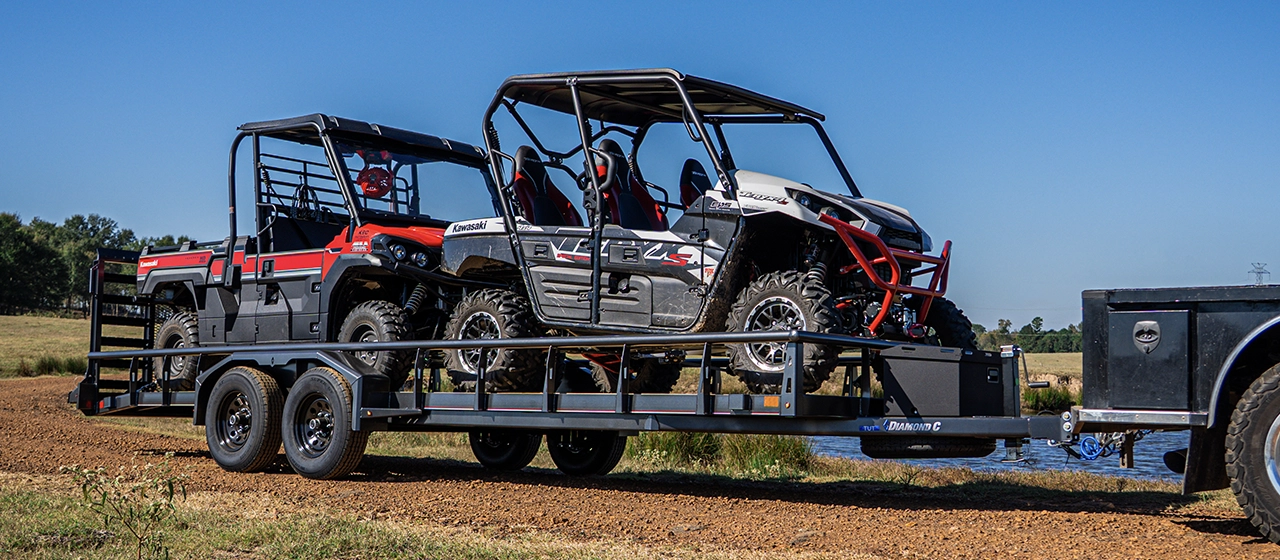

7,000-14,000 lb Utility Trailer
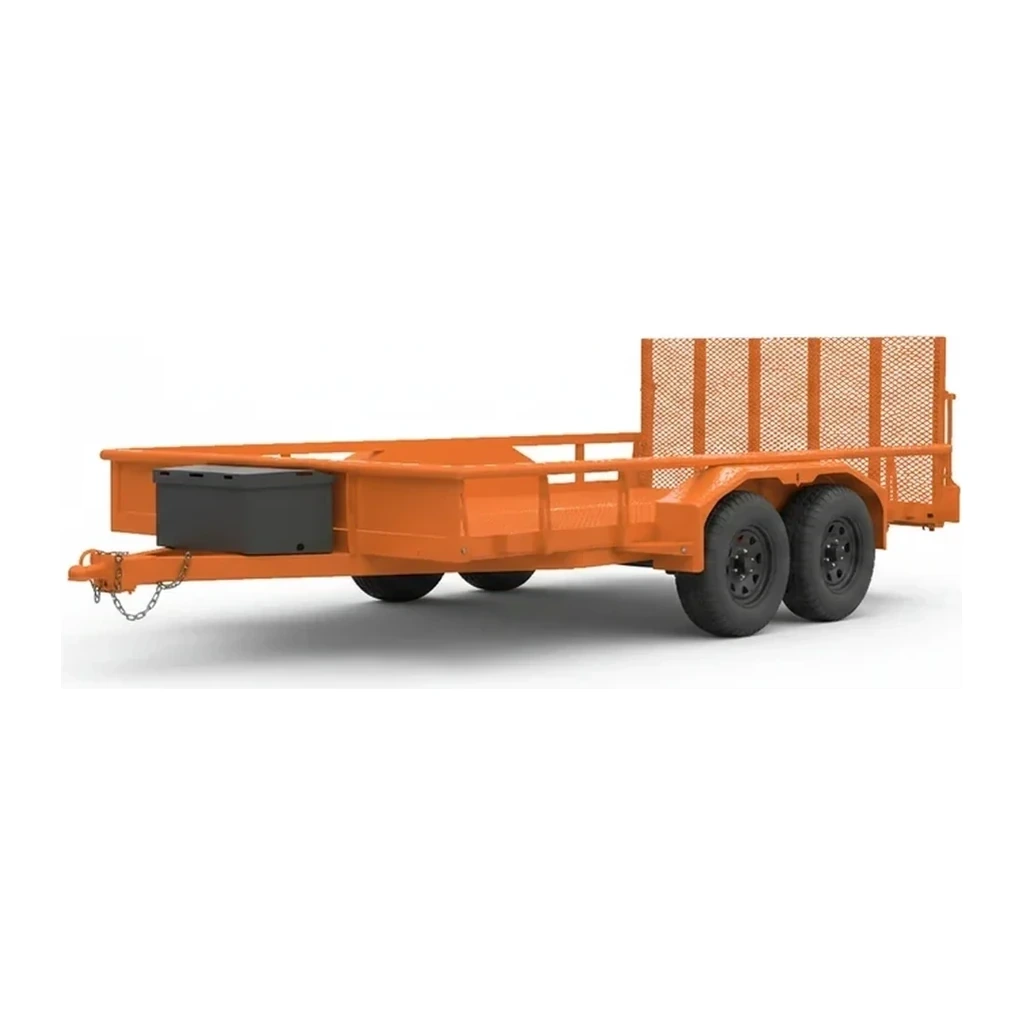
The 7,000-14,000 lb utility trailer class encompasses tandem-axle flatbed and landscape trailers designed for bulk material hauling, pallet transport, and light equipment movement. These trailers bridge the gap between single-axle light-duty units and heavy equipment trailers, offering payload capacities from 3,563 to 6,350 kg across models from manufacturers including Lamar Trailers, Sure-Trac, Kaufman Trailers, Diamond C, and Big Tex Trailers. The tandem-axle configuration provides stability and weight distribution necessary for heavier loads while remaining within towing capacities of 3/4-ton and 1-ton pickup trucks.
Cat classes
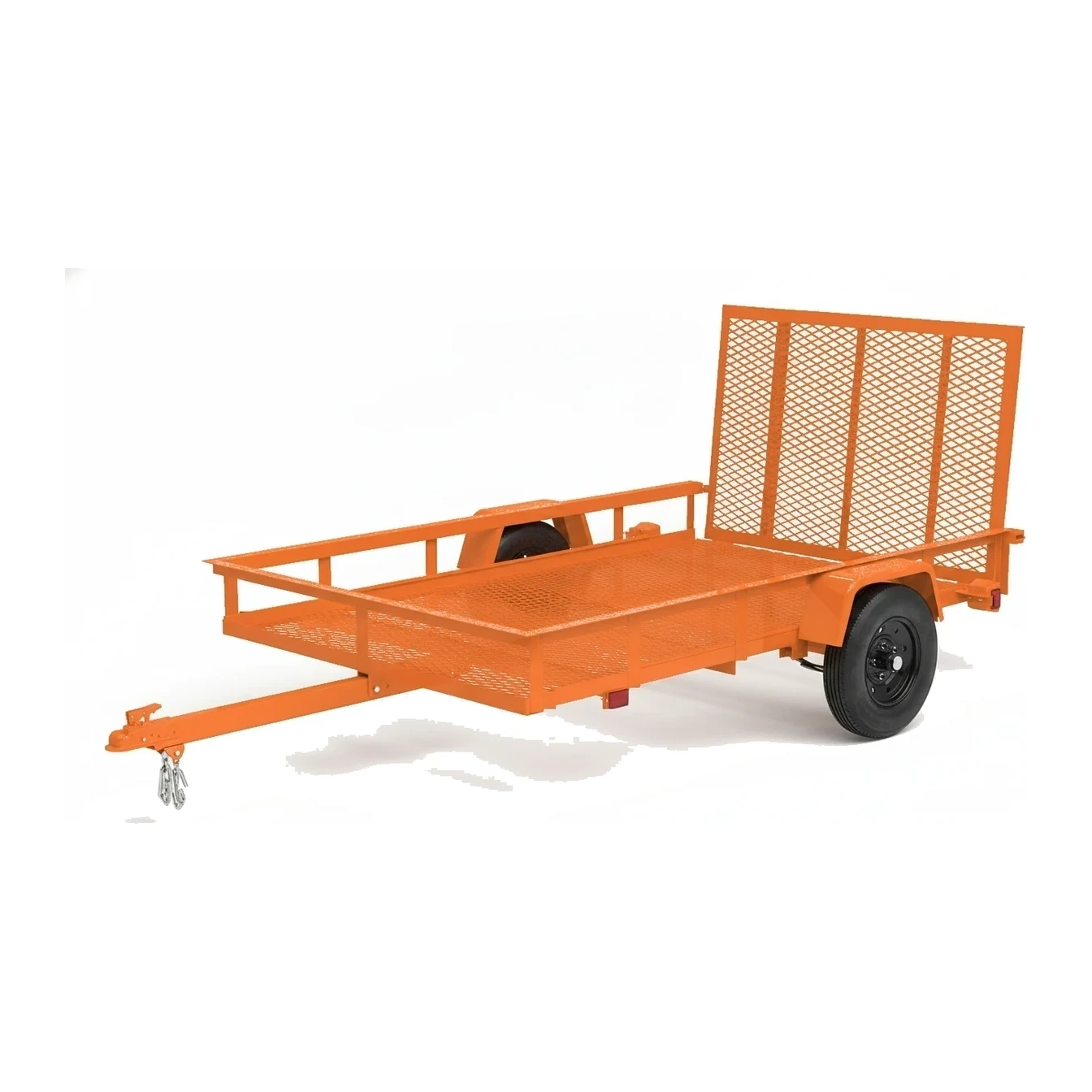
Pick a size class: capacity and reach differ across the range.
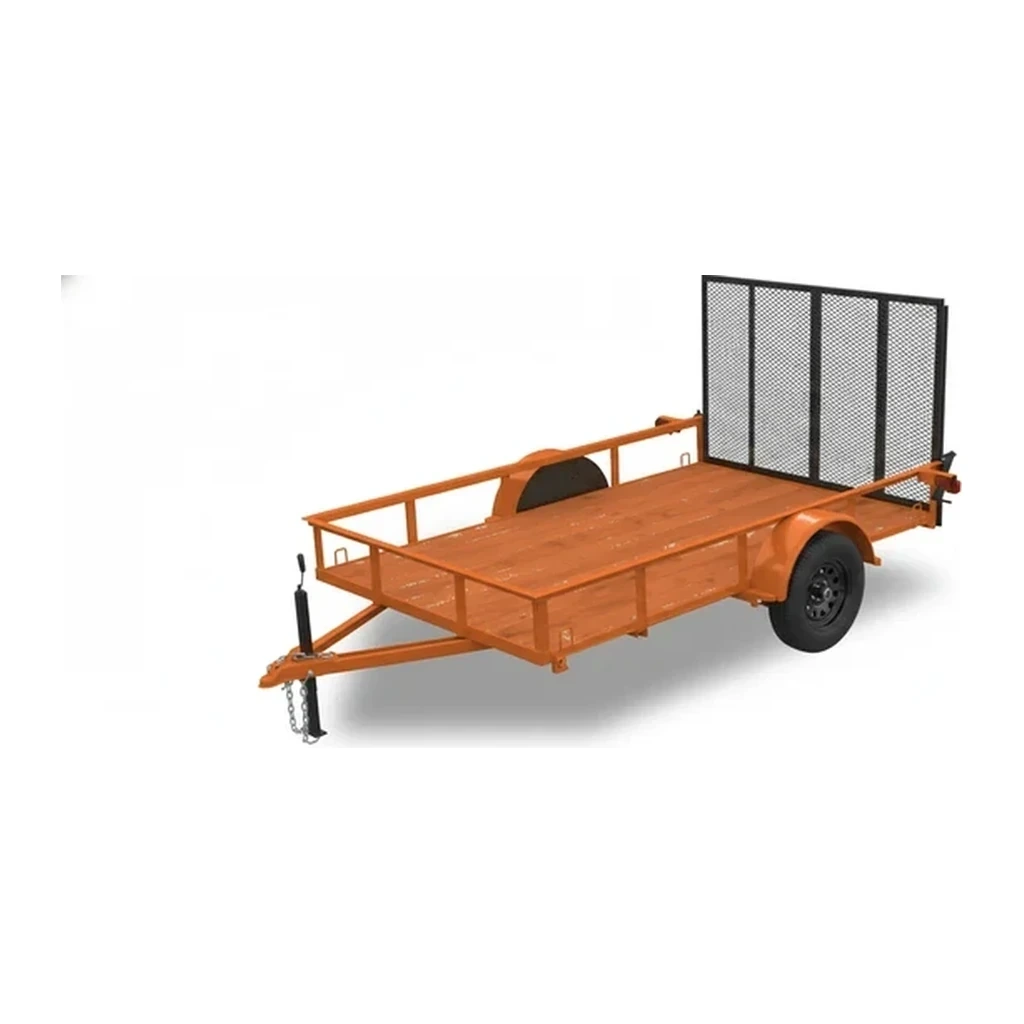
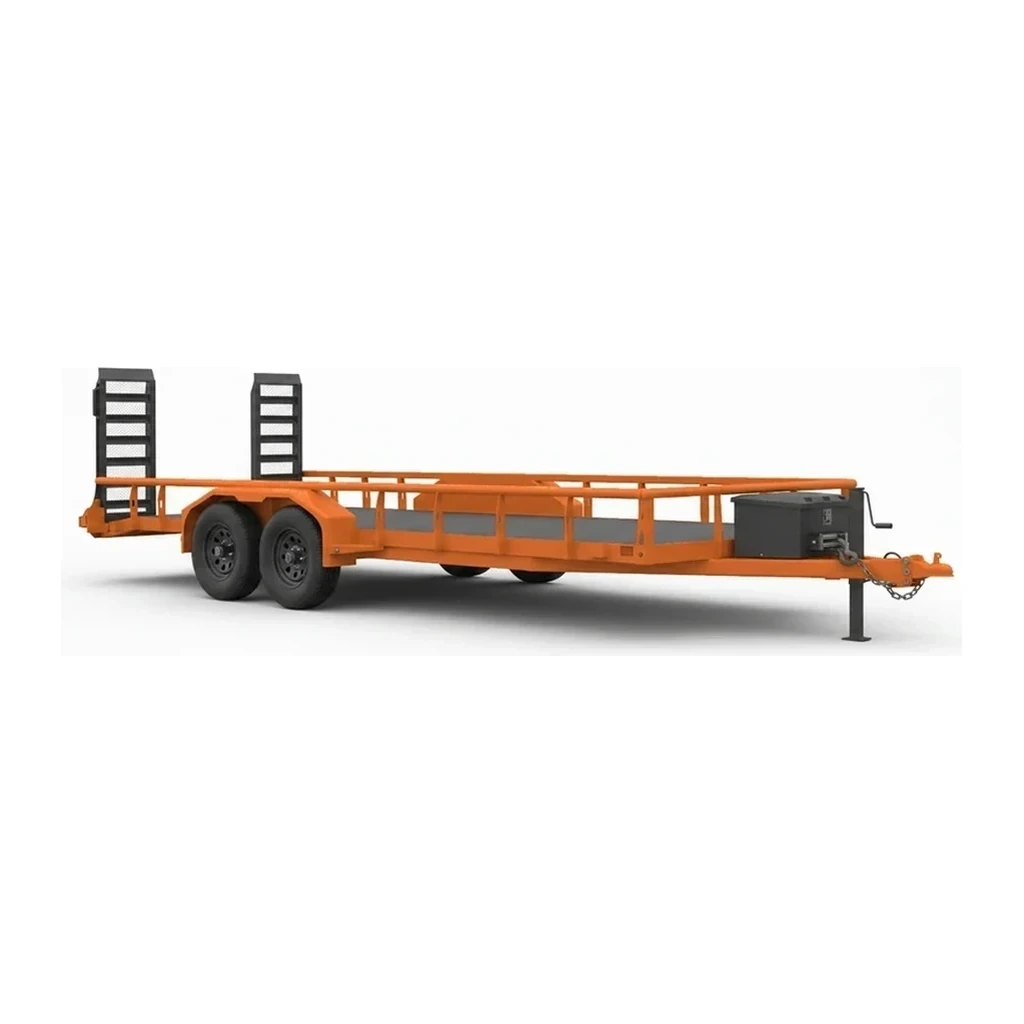
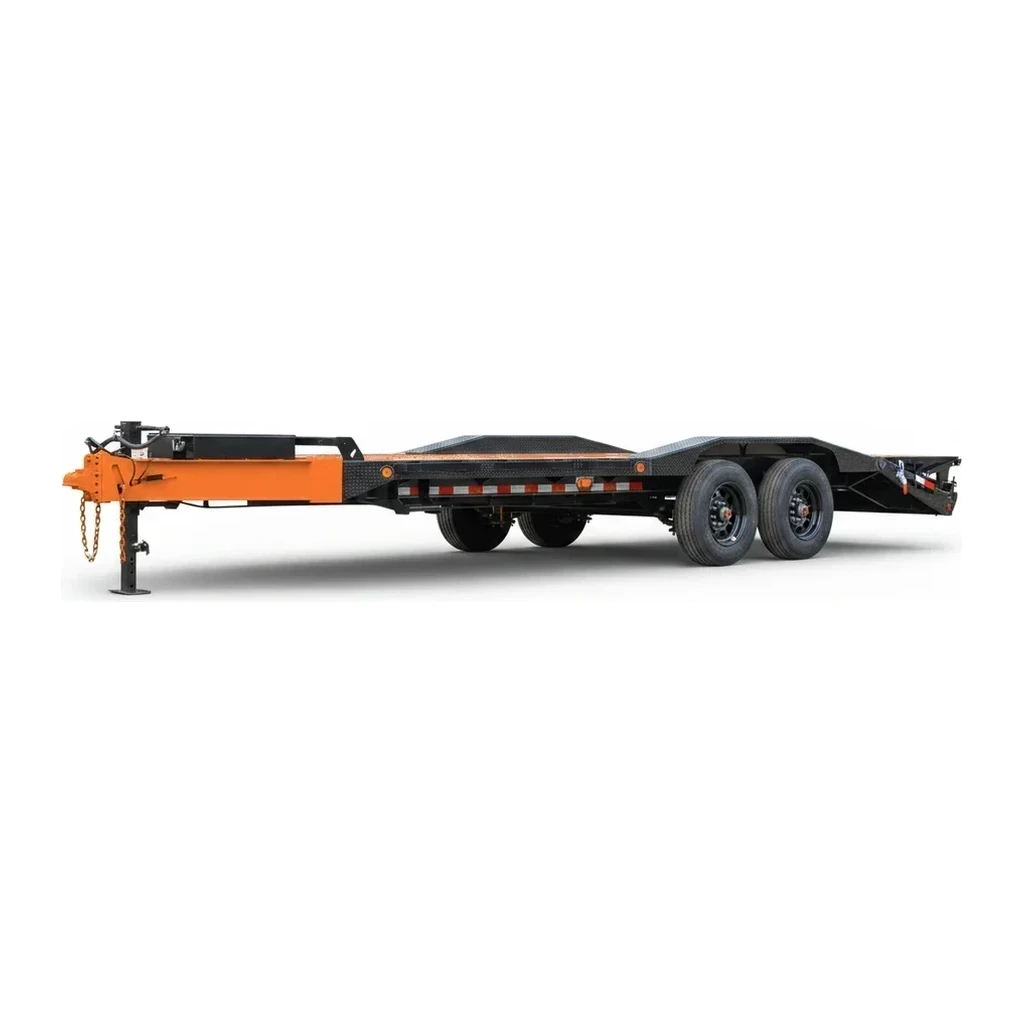
Key specifications
| Specification | Typical range | What it means |
|---|---|---|
| Load capacity | 3,563-6,350 kg (7,850-14,000 lb) | Payload range supported by tandem-axle suspension and frame construction |
| Axle configuration | Tandem (dual axle) | Two axles distribute weight and improve stability compared to single-axle designs |
| GVWR | 7,000–14,000 lb (3,175–6,350 kg) | Gross Vehicle Weight Rating defines maximum loaded trailer weight including deck and cargo |
| Deck construction | Wood plank or steel mesh | Material platforms suited to fork access, tie-down flexibility, and weather exposure |
How to choose
This size class is appropriate when hauling bulk landscaping materials, multiple pallets, skid steers, compact excavators, or mixed loads exceeding single-axle capacity but not requiring dedicated equipment trailers. The 3,000-7,000 lb Utility Trailer handles lighter landscape work, single ATV or small equipment moves, and jobs where a standard half-ton truck provides towing; step down when payload stays below 3,000 lb or maneuverability in tight residential sites is paramount. The 14,000+ lb Utility Trailer becomes necessary when moving heavier excavators, multiple pieces of equipment simultaneously, or when GVWR exceeds 14,000 lb and requires commercial towing setups.
What this size handles
- Transporting 4-6 pallets of block, bagged concrete, or roofing materials to commercial sites
- Hauling skid steers, compact track loaders, or mini excavators between properties
- Moving bulk mulch, soil, gravel, or green waste for landscape installation and maintenance
- Delivering generator sets, light towers, or welders to construction locations
- Transporting ATVs, UTVs, or small agricultural equipment
- Hauling demolition debris, scrap metal, or mixed construction waste
Safety & operation
- Load securement with rated tie-down straps or chains is required; center of gravity must remain low and centered to prevent sway
- Tire pressure and lug nut torque must match manufacturer specifications for dual-axle load distribution
- Safety chains rated for GVWR are required in all jurisdictions and must cross under coupler
- Brake controller adjustment is necessary to match trailer weight and prevent wheel lockup or inadequate stopping distance
Transport & logistics
- Requires 3/4-ton or 1-ton pickup with appropriate hitch class (typically Class IV or V, 10,000-14,000 lb rating)
- Tandem-axle configuration requires wider turning radius and attention to curb clearance during maneuvering
- Electric brakes on both axles require brake controller installation in tow vehicle
Power & supply
- 7-pin or 6-pin trailer connector supplies power to electric brakes, running lights, and turn signals
- No on-board engine or fuel system; trailer is unpowered
Frequently asked
What tow vehicle is needed for a 10,000 lb GVWR utility trailer?
How does tandem-axle construction differ from single-axle in the lighter class?
Can this trailer size carry a compact excavator?
Related equipment
Browse by manufacturer
Sources
Every specification is verified against the manufacturer's published data, with the source linked for reference.
7,000-14,000 lb Utility Trailer
7 models · Every spec cited to source