

Cold Water Pressure Washer
A cold water pressure washer is a mechanical cleaning device that pressurizes ambient-temperature water through a pump and delivers it through a high-pressure hose and nozzle to remove dirt, debris, and coatings from surfaces. These machines serve as the industry standard for washdown, surface preparation, and maintenance cleaning across construction, facility management, and fleet operations. Unlike hot water or steam models, cold water units rely solely on pressure and flow to achieve cleaning performance.
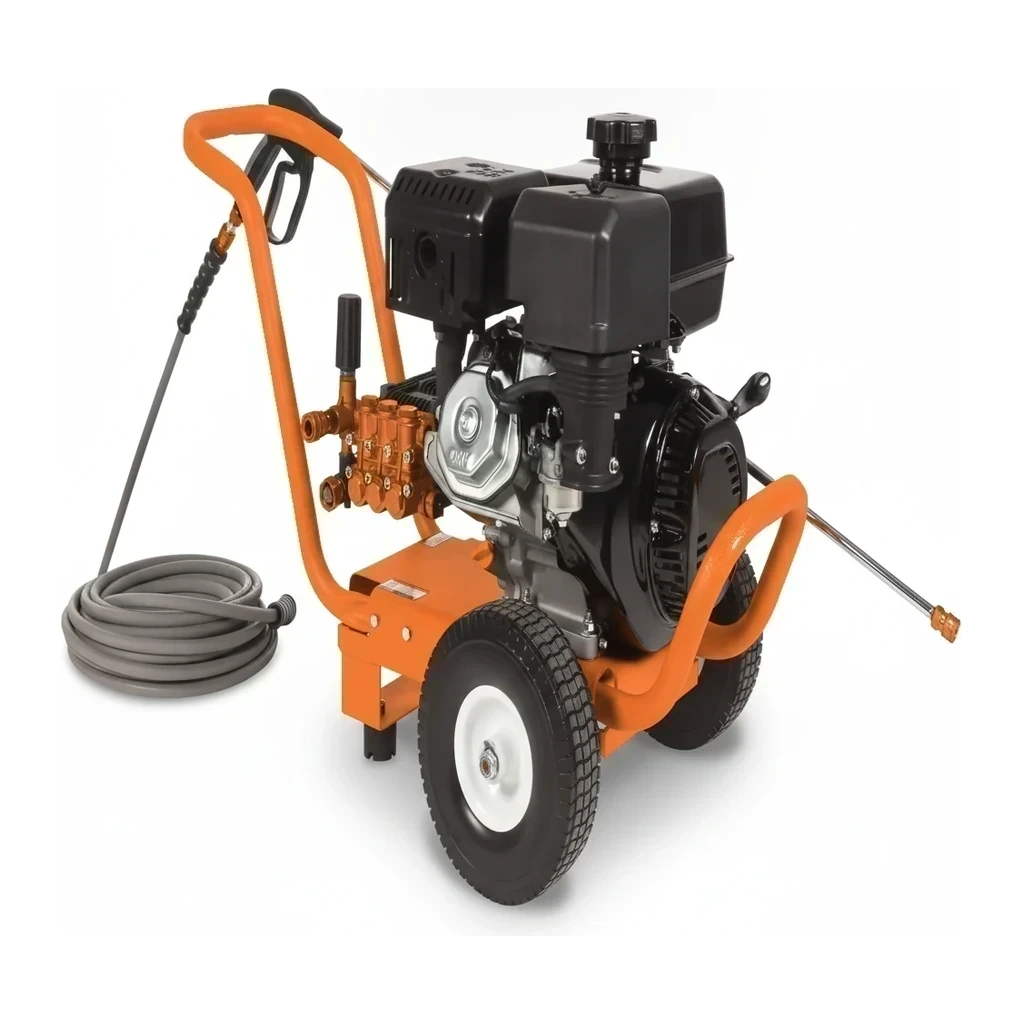
Cat classes
Pick a size class — capacity and reach differ across the range.
How it works
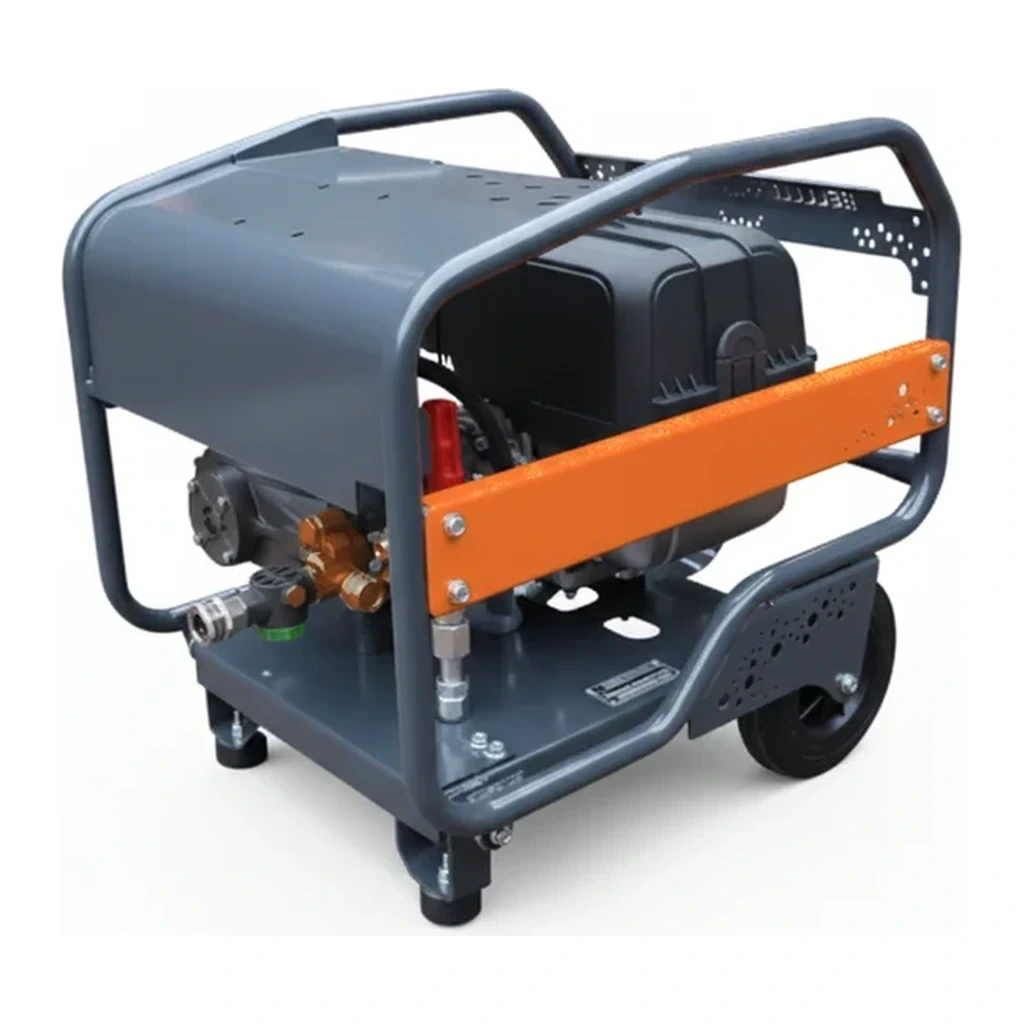
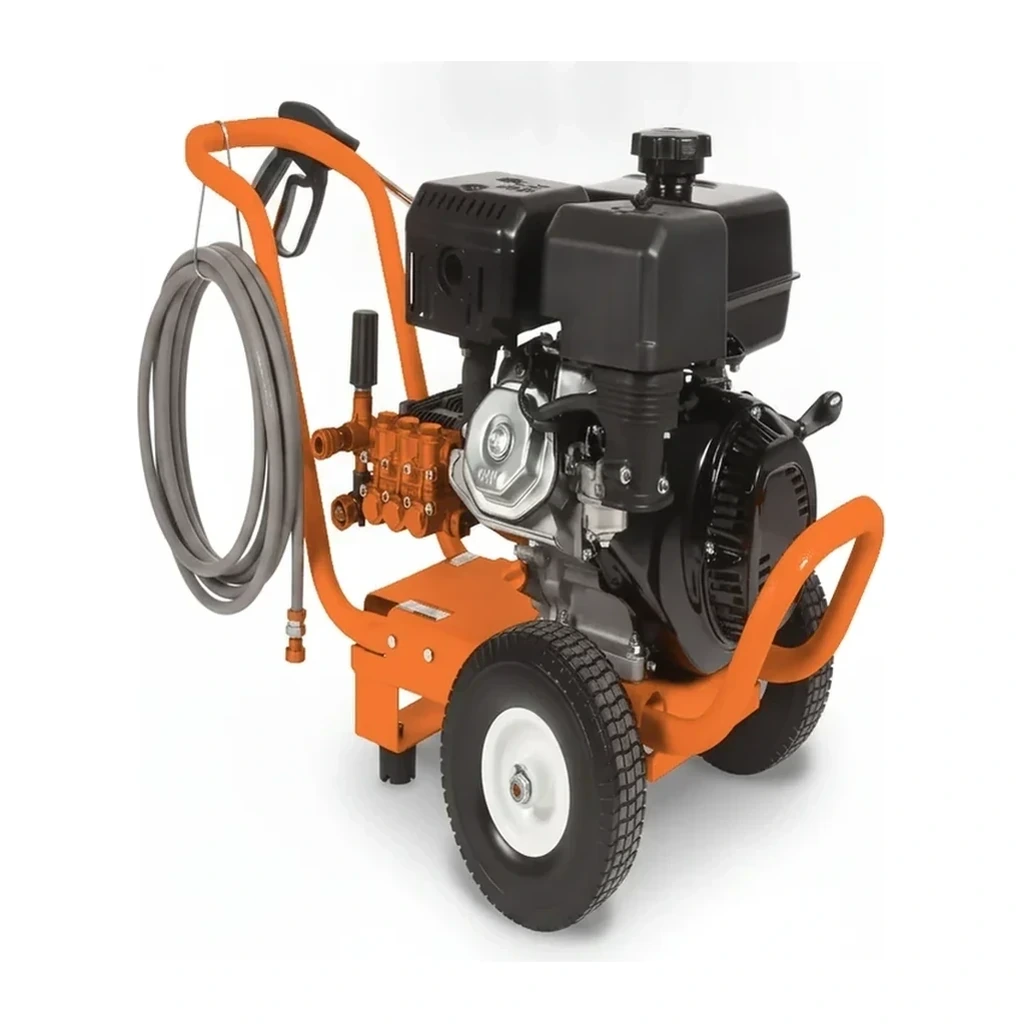
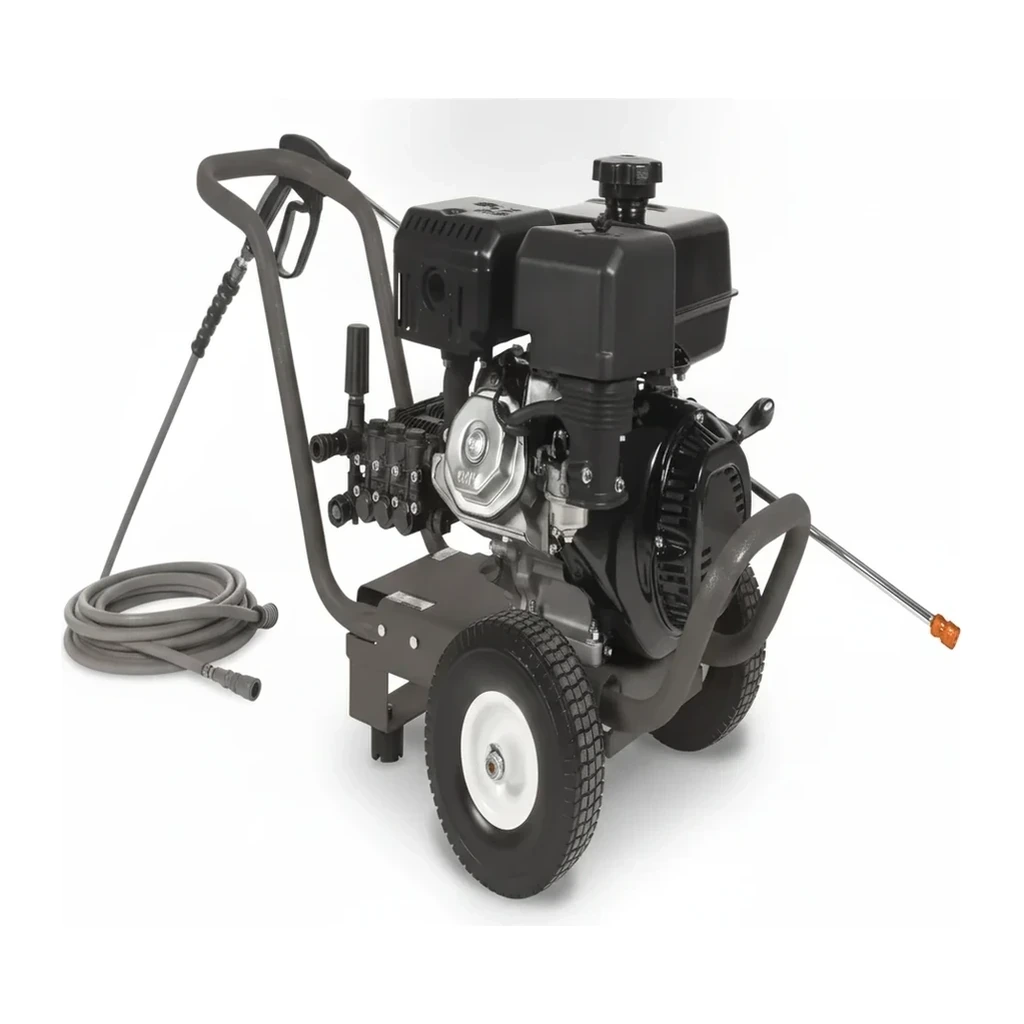
The pressure washer draws water from a supply line or tank and forces it through a reciprocating plunger or triplex pump driven by a gas engine or electric motor. The pump pressurizes the water to 2,500 to 4,200 psi, then delivers it through a reinforced high-pressure hose to a spray gun and interchangeable nozzle tips that control the spray pattern and impact force. Operators select nozzle angles—typically 0°, 15°, 25°, 40°, or soap—to match the cleaning task and surface sensitivity. Gas-powered models use small displacement engines (190–429 cc) and are mobile for field use, while electric units run quieter and emission-free for indoor or stationary applications. Flow rates of 2.3 to 4.0 gallons per minute combine with pressure to produce cleaning units, the true measure of cleaning power.
Types & variants
- Electric Cold Water Pressure Washer
- Runs on standard or high-voltage AC power; quieter, emission-free operation suited to indoor washbays, enclosed spaces, and facilities with nearby electrical service.
- Gas Cold Water Pressure Washer
- Powered by gasoline engines; fully portable without tethering to electrical outlets, standard for jobsite and field cleaning applications.
- Trailer-Mounted Pressure Washer
- Industrial-scale units mounted on wheeled trailers with large fuel tanks and hose reels; designed for fleet washing, municipal cleaning, and high-volume operations.
- Compact/Residential-Grade Pressure Washer
- Lower-pressure units under 2,000 psi optimized for light-duty vehicle washing, siding cleaning, and general exterior maintenance.
- Contractor-Grade Pressure Washer
- Robust 2,000–3,500 psi models built for daily jobsite use including formwork cleaning, concrete prep, and equipment washdown.
- Industrial/Hydroblasting Pressure Washer
- High-output machines above 3,500 psi designed for coating removal, surface preparation, and heavy deposit cleaning.
Key specifications
| Specification | Typical range | What it means |
|---|---|---|
| Water Pressure (PSI) | 2,500–4,200 psi | The force per square inch delivered at the nozzle; primary sizing criterion and determines cleaning aggression and surface penetration. |
| Water Flow (GPM) | 2.3–4.0 GPM | Gallons per minute delivered by the pump; combines with pressure to determine cleaning units and rinsing speed. |
| Cleaning Units (CU) | 5,750–16,800 CU | PSI multiplied by GPM; the truest single measure of total cleaning power and productivity. |
| Engine Displacement | 190–429 cc | For gas models, the engine size that drives the pump; larger displacement supports higher pressure and flow. |
| Hose Length | 25–50 ft (7.6–15.2 m) | High-pressure hose reach from machine to work area; longer hoses reduce repositioning but add friction loss. |
| Operating Weight | 90–2,961 kg (200–6,500 lb) | Total weight of the unit; affects portability, trailer requirements, and transportation logistics. |
How the industry sizes it
The industry and construction industries size cold water pressure washers primarily by water pressure measured in pounds per square inch (PSI). Units under 2,000 psi are considered light-duty for residential and vehicle washing, often electric-powered. The 2,000–3,500 psi range represents the contractor standard for jobsite cleaning, formwork, and fleet maintenance. Machines from 3,500–5,000 psi handle heavy surface preparation, concrete stripping, and operating surface cleaning attachments without performance loss. Above 5,000 psi, units enter the hydroblasting category for industrial coating removal and hardened deposit cutting. Cleaning units (PSI × GPM) provide a more complete performance picture, though PSI remains the dominant specification in equipment selection.
Applications
- Concrete form cleaning and curing compound removal on construction sites
- Vehicle, equipment, and fleet washing for transportation and municipal operations
- Building exterior cleaning including siding, masonry, and walkway maintenance
- Surface preparation for painting, coating, and sealing projects
- Graffiti, gum, and stain removal from sidewalks and public spaces
- Industrial parts washing and machinery degreasing in maintenance facilities
Safety & operation
- High-pressure water jets can cause serious injection injuries, lacerations, and eye damage; operators must never direct the stream toward people or animals.
- Kickback forces from the spray gun and wand require secure two-handed grip and stable footing to prevent loss of control.
- Gas-powered models produce carbon monoxide and must be operated outdoors or in well-ventilated areas; electric models eliminate emission hazards.
- Appropriate personal protective equipment includes safety glasses or face shields, waterproof boots, and hearing protection for gas models.
- Surface cleaning with high pressure can dislodge debris, create ricochets, and damage soft materials; operators should test pressure on inconspicuous areas and maintain safe standoff distances.
Standards & certifications
- OSHA · 29 CFR 1926.302
- Covers powered tools and equipment including pressure washers used in construction; addresses guarding, operator training, and safe use requirements.
- PWNA (Pressure Washers of North America)
- Industry association publishing best practices, training standards, and environmental guidelines for pressure washing operations.
- EPA · Clean Water Act
- Regulates wastewater discharge and runoff from pressure washing operations; requires capture and treatment of contaminated wash water in many jurisdictions.
Frequently asked
What is the difference between PSI and cleaning units?
Can cold water pressure washers remove oil and grease effectively?
How does engine displacement relate to pressure washer performance?
What determines whether to use gas or electric power?
Related equipment
Browse by manufacturer
Sources
Every specification is verified against the manufacturer's published data, with the source linked for reference.
All models
138 models · Page 3 of 3 · Every spec cited to source