
Impact Crusher
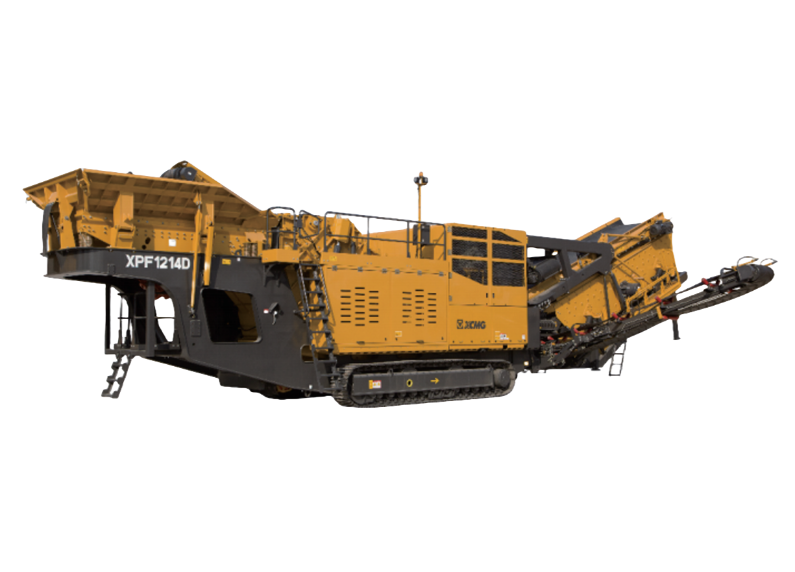
An impact crusher reduces material by striking it: a high-speed rotor throws blow bars or shoes against the feed, shattering rock against breaker plates or its own particle stream. Impactors deliver high reduction ratios in a single stage and dominate recycled concrete and asphalt processing, where their action also separates rebar from rubble.
Fonctionnement
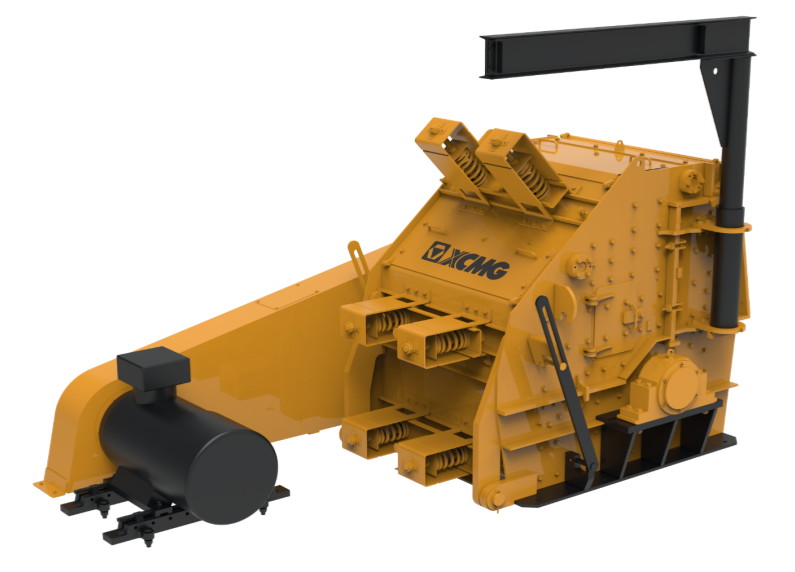
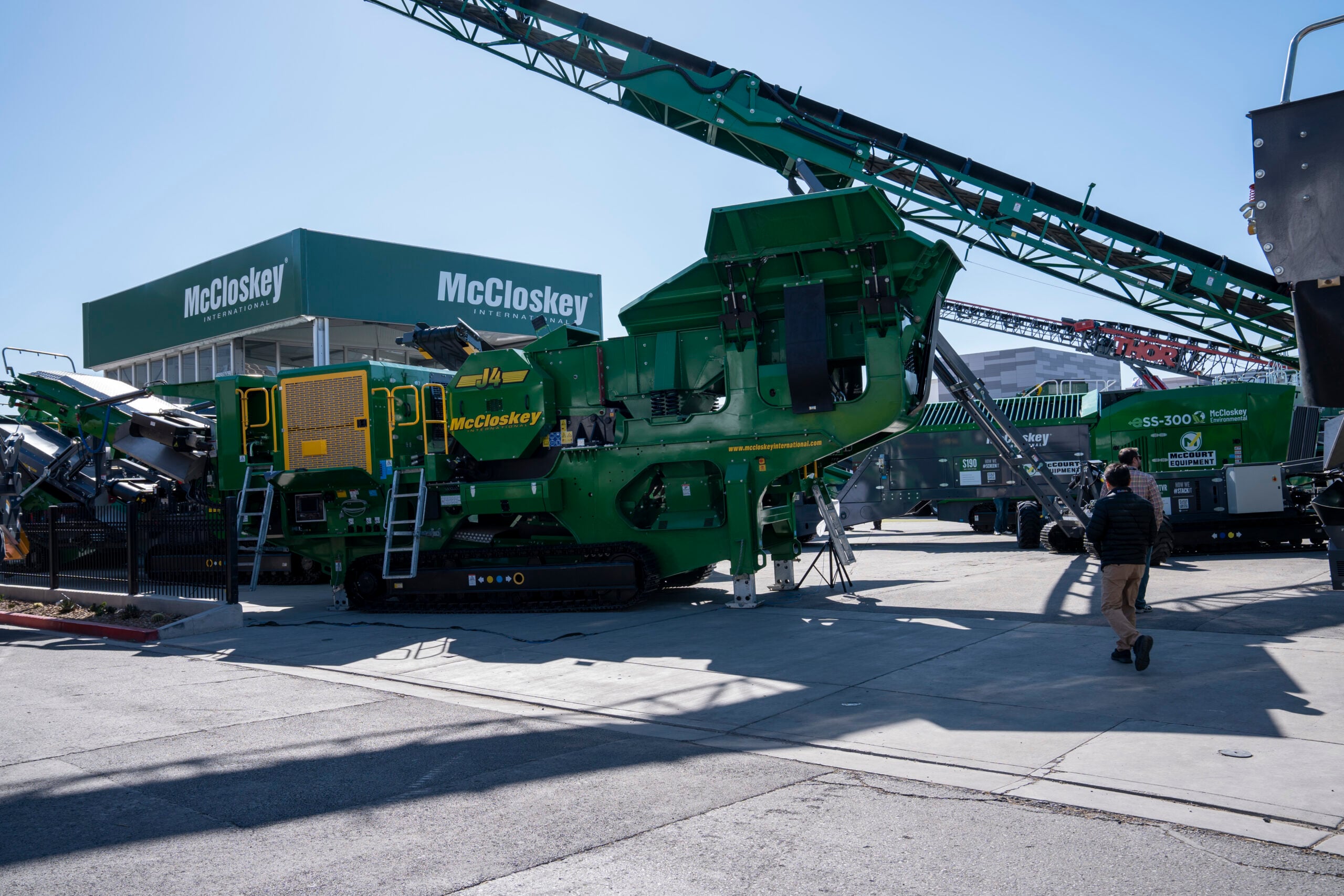
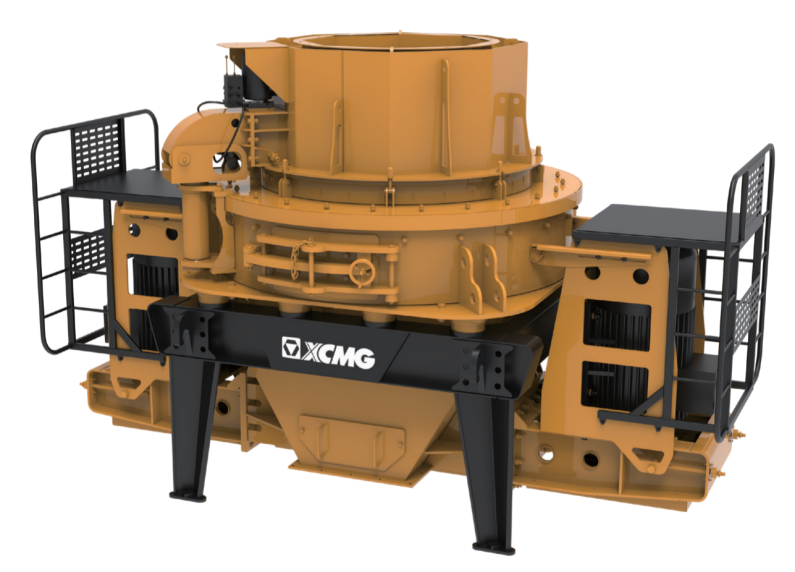
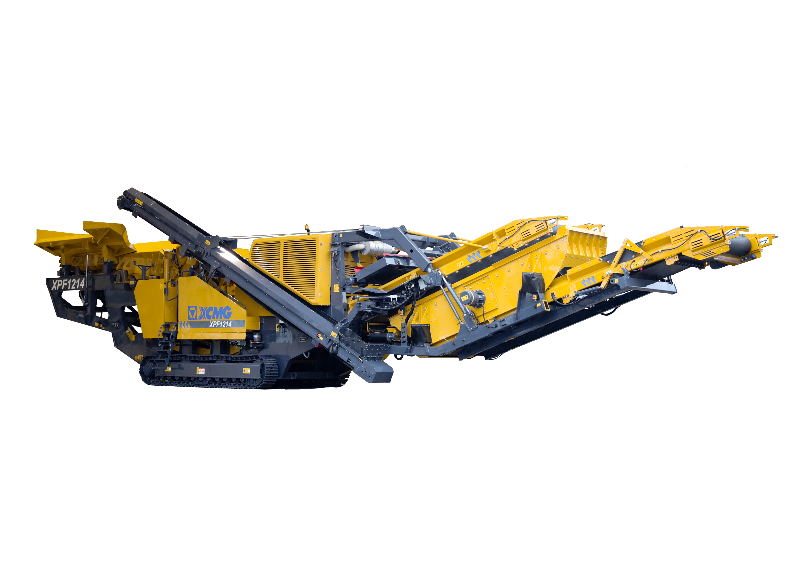
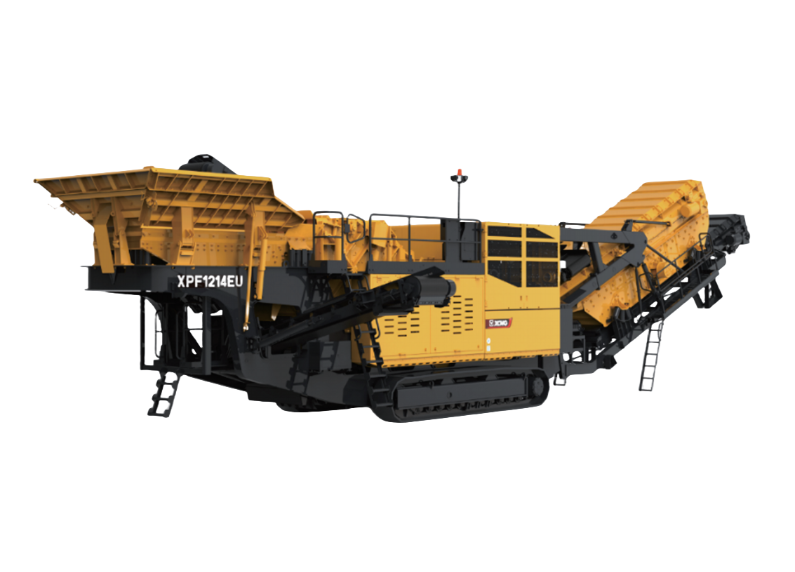
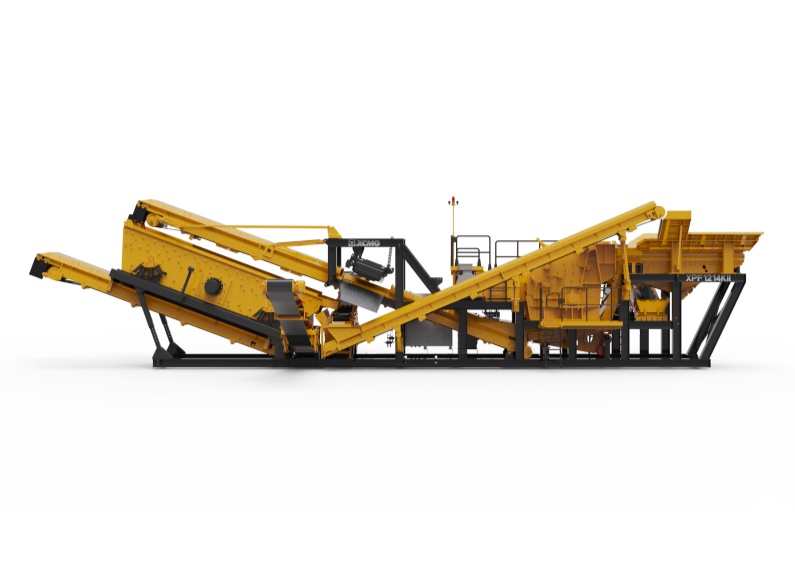
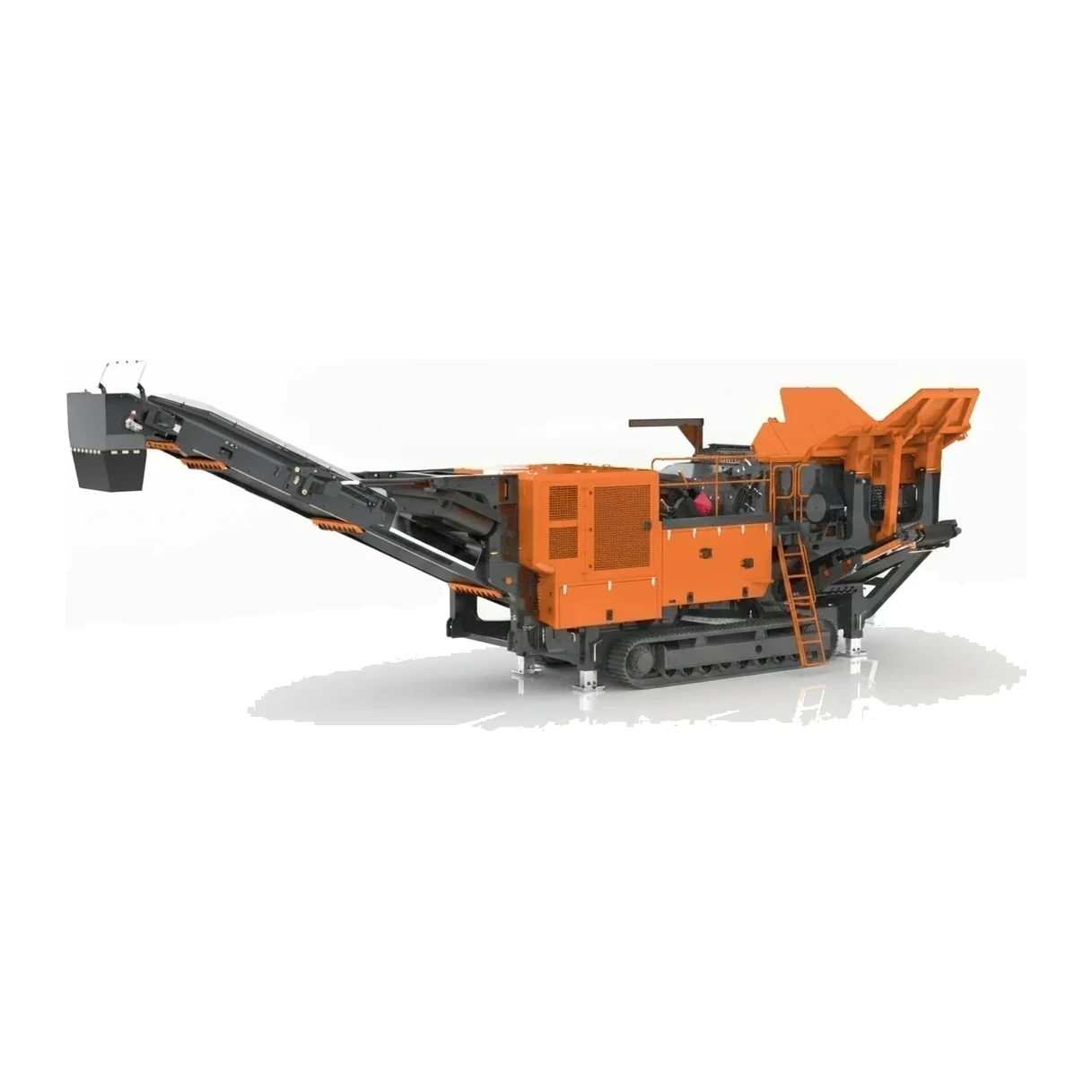
In a horizontal shaft impactor (HSI), a heavy rotor fitted with replaceable blow bars spins inside a housing lined with adjustable apron (breaker) plates. Feed dropping onto the rotor is struck at high speed, shattered against the aprons, and re-struck until it passes the gap set between rotor and aprons. Reduction comes from fracture along natural weakness planes, which is why impactors excel on concrete, asphalt and softer stone. A vertical shaft impactor (VSI) instead accelerates material outward from a spinning rotor into a crushing chamber, rock-on-rock or rock-on-anvil, refining shape and making sand-sized product. Mobile tracked impactors integrate feeder, crusher, discharge belt and often a return screen into one crawler plant.
Types et variantes
- Horizontal shaft impactors (HSI)
- The class standard for primary/secondary duty on concrete, asphalt and medium rock.
- Vertical shaft impactors (VSI)
- Tertiary shaping and sand-making machines using rotor-thrown rock-on-rock crushing.
- Tracked mobile impact plants
- Self-contained crawler units: the recycling industry's default configuration.
- Portable / stationary installations
- Chassis and plant-mounted impactors in fixed aggregate and recycling yards.
Spécifications clés
| Spécification | Plage typique | Signification |
|---|---|---|
| Operating weight | 41,900–116,600 lb (19,006–52,889 kg) | From catalog records of 19,000-52,900 kg for mobile plants: the figure that governs transport and pad requirements. |
| Engine power | 252-510 hp | From catalog records of 252.1-509.6 hp driving the rotor and plant systems on mobile units. |
| Rotor / apron settings | Model-specific | Apron gap and rotor speed set product size and reduction ratio; current catalog records do not carry banded figures. |
Comment l'industrie le dimensionne
Impact crushers are sized by rotor dimensions and throughput, with mobile plants quoted by operating weight and engine power: catalog records run 19,000-52,900 kg and 252-510 hp. Feed type drives selection as much as capacity: HSIs for concrete, asphalt and quarry rock of moderate abrasiveness; VSIs for shaping and manufactured sand; blow-bar metallurgy chosen against the feed's abrasion. Transportability between demolition and recycling sites is the mobile class's defining constraint.
Applications
- Crushing recycled concrete and asphalt into base and fill products
- Primary and secondary reduction of quarried stone of low to medium abrasiveness
- On-site demolition-waste processing with magnetic rebar separation downstream
- Producing high-reduction single-stage product where shape matters
- VSI shaping and manufactured-sand production in aggregate plants
Sécurité et opération
- Lock out before any chamber access: impactor housings store spring/hydraulic energy and blow bars fail explosively if struck while turning.
- Respect thrown-material zones at feed and discharge; impactors eject fragments at rotor speed.
- Control silica dust with water sprays and enclosure per respirable crystalline silica requirements.
- Check blow-bar wear and attachment torque on schedule; a released bar destroys the machine and endangers the area.
- Manage tramp metal on recycled feed: pre-sort and magnets protect both rotor and personnel.
Normes et certifications
- OSHA · 29 CFR 1926.1153
- Respirable crystalline silica rule for construction crushing operations.
- MSHA · 30 CFR Part 56
- Quarry safety rules where impactors run in surface mines.
- OSHA · 29 CFR 1910.212
- Machine guarding requirements for plant installations.
- EPA · Tier 4 Final (40 CFR Part 1039)
- Emissions certification for mobile plant diesel engines.
Questions fréquentes
Impact or jaw crusher for recycled concrete?
What is the difference between HSI and VSI?
How big are mobile impact crushers?
What wears in an impactor?
Comparer les modèles populaires
Chercher par spécification →Normalisé aux mêmes unités. Un tiret signifie que la valeur n'a pas été publiée.
| Modèle | Poids en service | Profondeur d’excavation max | Portée max | Puissance moteur |
|---|---|---|---|---|
| McCloskey International I3C | 52,029 lb (23,600 kg) | - | - | 252 hp |
| McCloskey International I44 | 92,594 lb (42,000 kg) | - | - | 349 hp |
| McCloskey International I54 | 116,625 lb (52,900 kg) | - | - | 510 hp |
Équipements connexes
Parcourir par fabricant
Sources
Chaque spécification est vérifiée par rapport aux données publiées par le fabricant, avec la source liée pour référence.
Tous les modèles
43 modèles · Chaque spécification citée à la source