

Trommel Screen
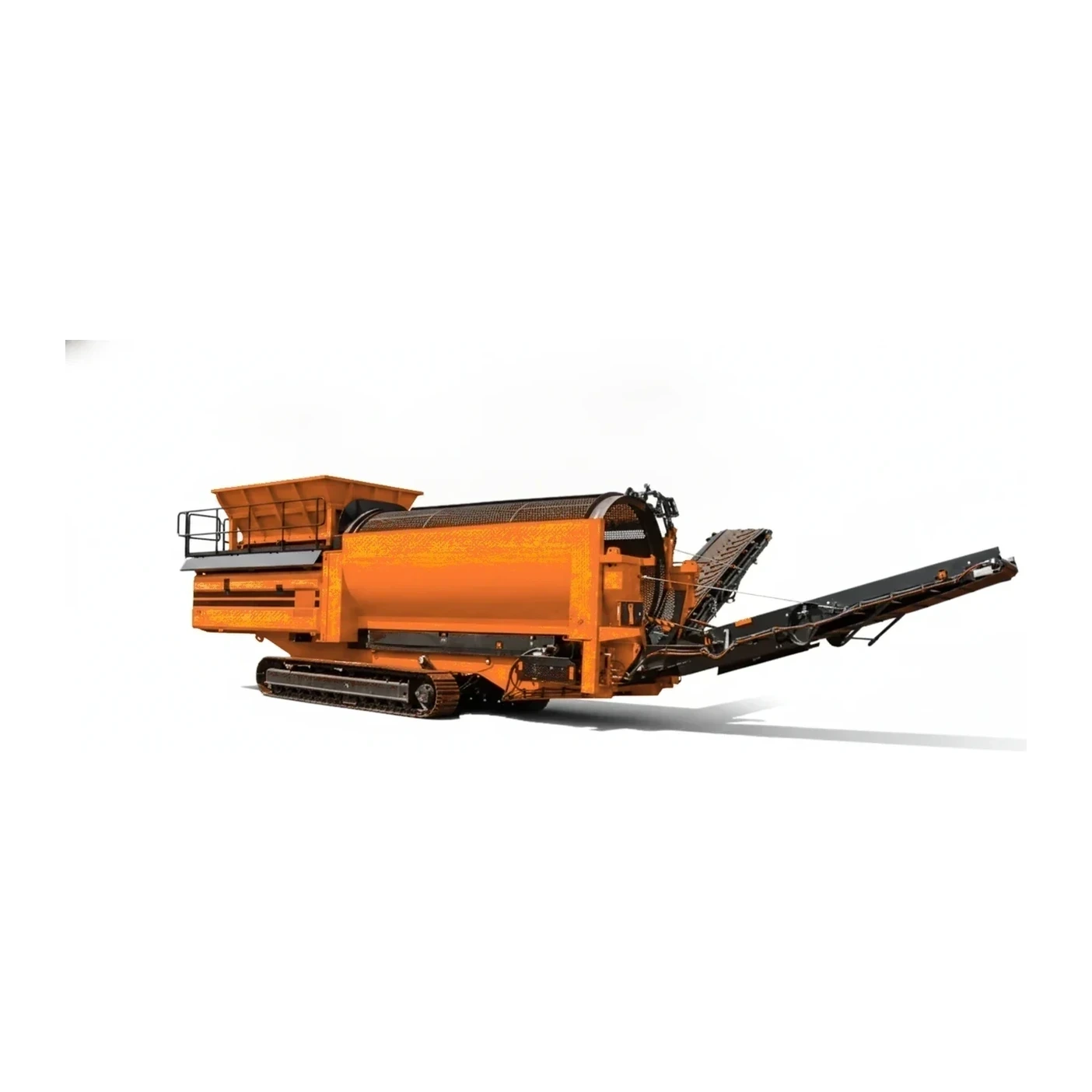
A trommel screen separates material by size in a rotating cylindrical drum: feed tumbles inside the inclined drum while undersize falls through perforations and oversize discharges from the far end. Trommels are the standard screen for topsoil, compost, mulch and waste streams: sticky, fibrous, variable feeds that blind flat vibrating decks.
Fonctionnement
A feed hopper and conveyor deliver material into the elevated end of the drum, catalog drums run 1.5-2.0 m diameter and 4.6-7.9 m long, which rotates on trunnion wheels at a shallow incline. Lifting bars tumble the load as it migrates downhill, repeatedly presenting fresh material to the screen surface; fines pass through the mesh onto a collection conveyor while oversize travels the drum's length and exits the end. The tumbling action breaks up clods and separates fibrous material gently, which is why trommels handle damp soil and compost that would blind a vibrating screen. Brush cleaners sweep the drum exterior, interchangeable drums change the cut size, and folding stockpile conveyors carry both fractions: the whole plant powered by a diesel engine on a towable or tracked chassis.
Types et variantes
- Towable trommels
- Road-towable chassis plants for topsoil, compost and landscape material yards.
- Tracked trommels
- Self-propelled crawler units repositioning around waste and organics sites.
- Interchangeable-drum machines
- Plants swapping drums or drum panels to change the cut size between products.
Spécifications clés
| Spécification | Plage typique | Signification |
|---|---|---|
| Drum diameter | 4.9–6.6 ft (1.5–2 m) | From catalog records: with drum length, sets screening area and residence time. |
| Drum length | 15.1–25.9 ft (4.6–7.9 m) | Longer drums give material more passes over the mesh, raising cut accuracy and capacity. |
| Operating weight | 30,200–67,000 lb (13,698–30,391 kg) | From catalog records of 13,700-30,390 kg: the transport-planning figure for the plant. |
| Engine power | 60-150 hp | From records of 44.7-112 kW driving drum rotation, feeder and conveyors. |
| Hopper capacity | 4.2-5.0 m³ | Feed surge capacity that sets how loaders batch-feed the plant. |
| Conveyor belt width | 35.8–42.1 in (91–107 cm) | From records of 91.4-106.7 cm: governs stockpile conveyor throughput. |
Comment l'industrie le dimensionne
Trommels are sized by drum diameter and length, catalog records run 1.5-2.0 m by 4.6-7.9 m, which together set screening area, residence time and throughput. Larger drums handle higher tonnage and wetter feeds; hopper capacity (4.2-5.0 m³ in catalog records) is matched to the loader feeding the plant. Plant weight, 13,700-30,390 kg across the records, separates towable machines from tracked units and sets the transport class between sites.
Applications
- Screening topsoil and fill to landscape and specification products
- Compost and organics processing at green-waste facilities
- Mulch and biomass sizing
- Construction and demolition waste separation
- Reclaiming soil from excavation spoil and site strippings
Sécurité et opération
- Lock out before entering the drum or clearing wrapped material: drum rotation under power is the machine's fatal hazard.
- Guard conveyor nips and the drum drive; belts and trunnions catch clothing and tools.
- Feed with the loader from the designated side, keeping the hopper edge and operator sight lines clear.
- Manage dust and bioaerosols on compost and waste feeds: respiratory protection per the material handled.
- Set up level on firm ground; a loaded rotating drum destabilizes a poorly founded plant.
Normes et certifications
- OSHA · 29 CFR 1910.212
- Machine guarding requirements for drum, drives and conveyors.
- OSHA · 29 CFR 1926.555
- Conveyor requirements where trommels run on construction sites.
- EPA · Tier 4 (40 CFR Part 1039)
- Emissions rules for the plants' diesel engines.
Questions fréquentes
Trommel or vibrating screen: when does the drum win?
What sizes are trommel drums?
How is the cut size changed?
How do trommels move between sites?
Comparer les modèles populaires
Chercher par spécification →Normalisé aux mêmes unités. Un tiret signifie que la valeur n'a pas été publiée.
| Modèle | Poids en service | Profondeur d’excavation max | Portée max | Puissance moteur |
|---|---|---|---|---|
| Vermeer TR5300 Trommel Screen | 32,000 lb (14,515 kg) | - | - | 74 hp |
| Vermeer TR5300EM Trommel Screen | 32,000 lb (14,515 kg) | - | - | 60 hp |
| Vermeer TR626 Trommel Screen | 65,001 lb (29,484 kg) | - | - | 134 hp |
| Vermeer TR626EM Trommel Screen | 65,001 lb (29,484 kg) | - | - | 150 hp |
| Vermeer TR6400 Trommel Screen | 37,000 lb (16,783 kg) | - | - | 101 hp |
| Vermeer TR6450 Trommel Screen | 39,000 lb (17,690 kg) | - | - | 121 hp |
Équipements connexes
Parcourir par fabricant
Sources
Chaque spécification est vérifiée par rapport aux données publiées par le fabricant, avec la source liée pour référence.
Tous les modèles
11 modèles · Chaque spécification citée à la source