

Telehandler
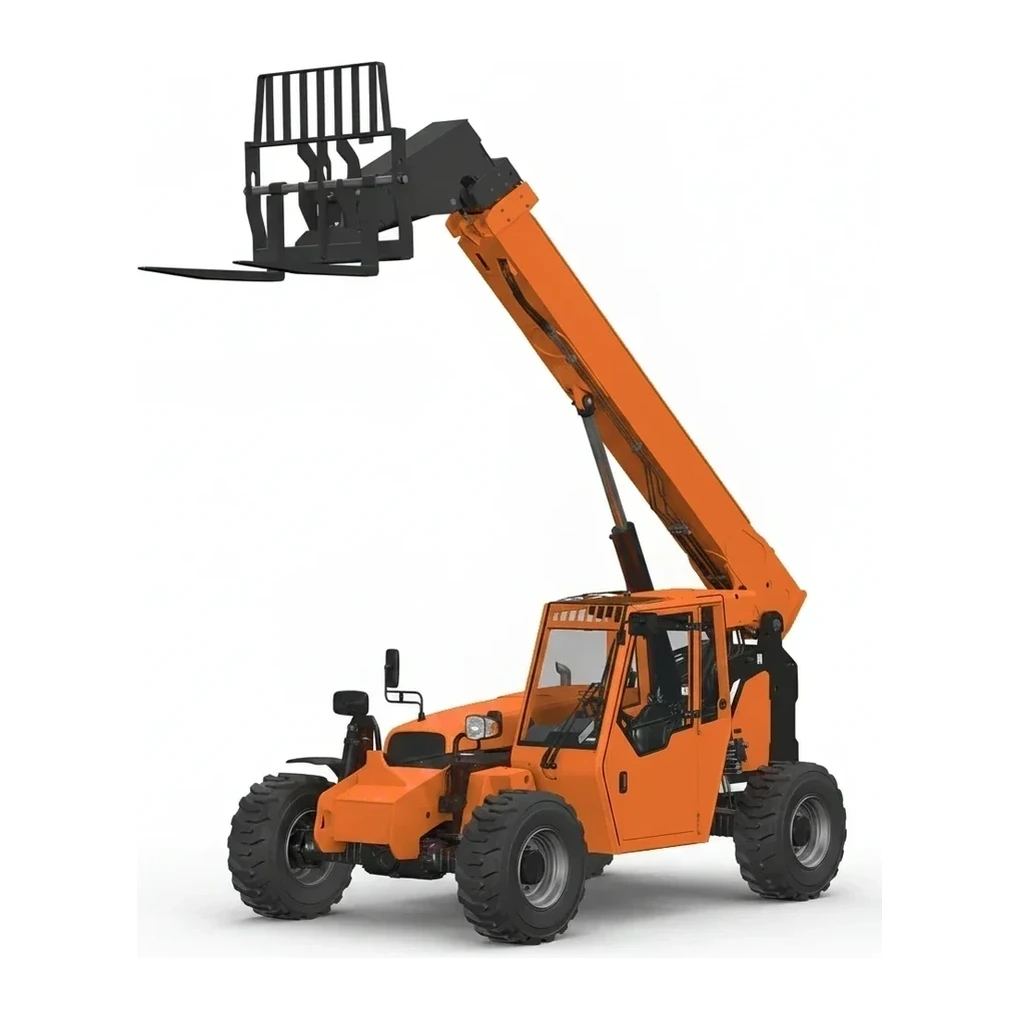
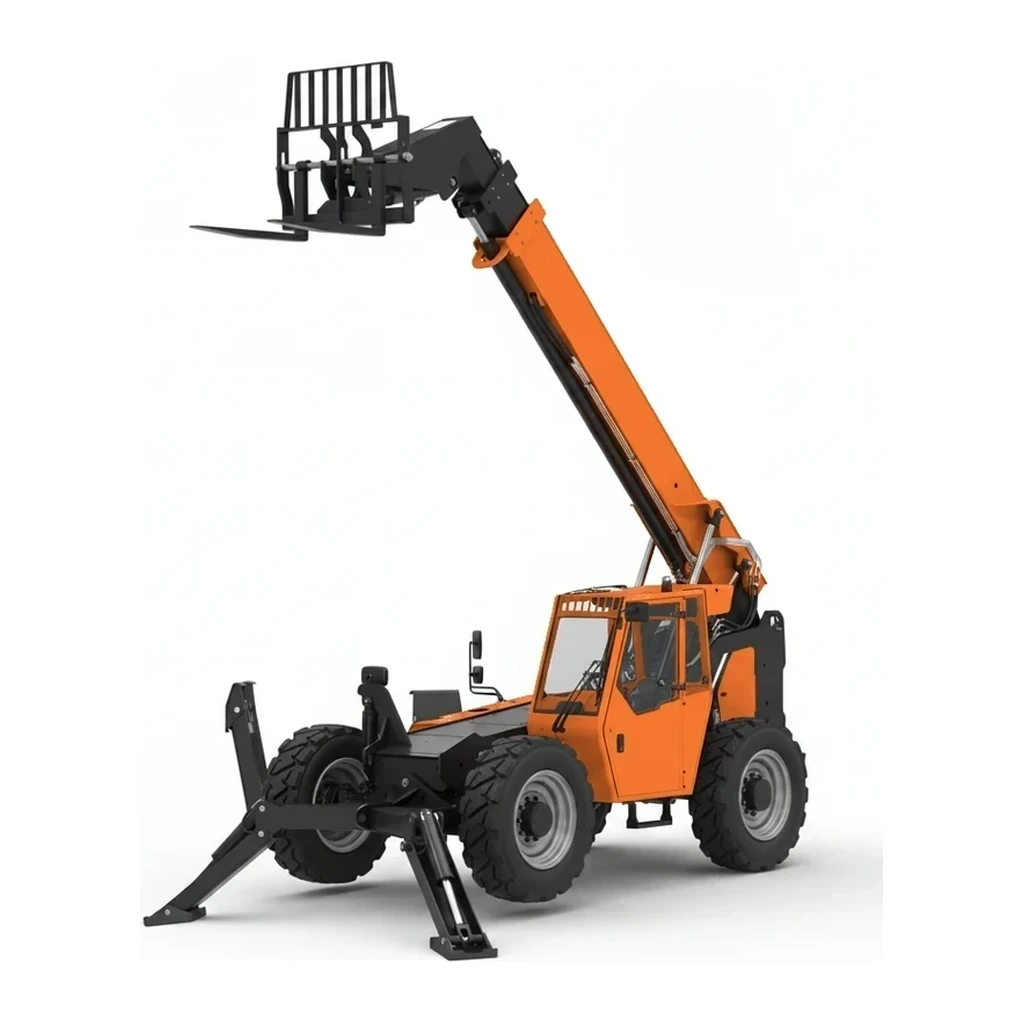
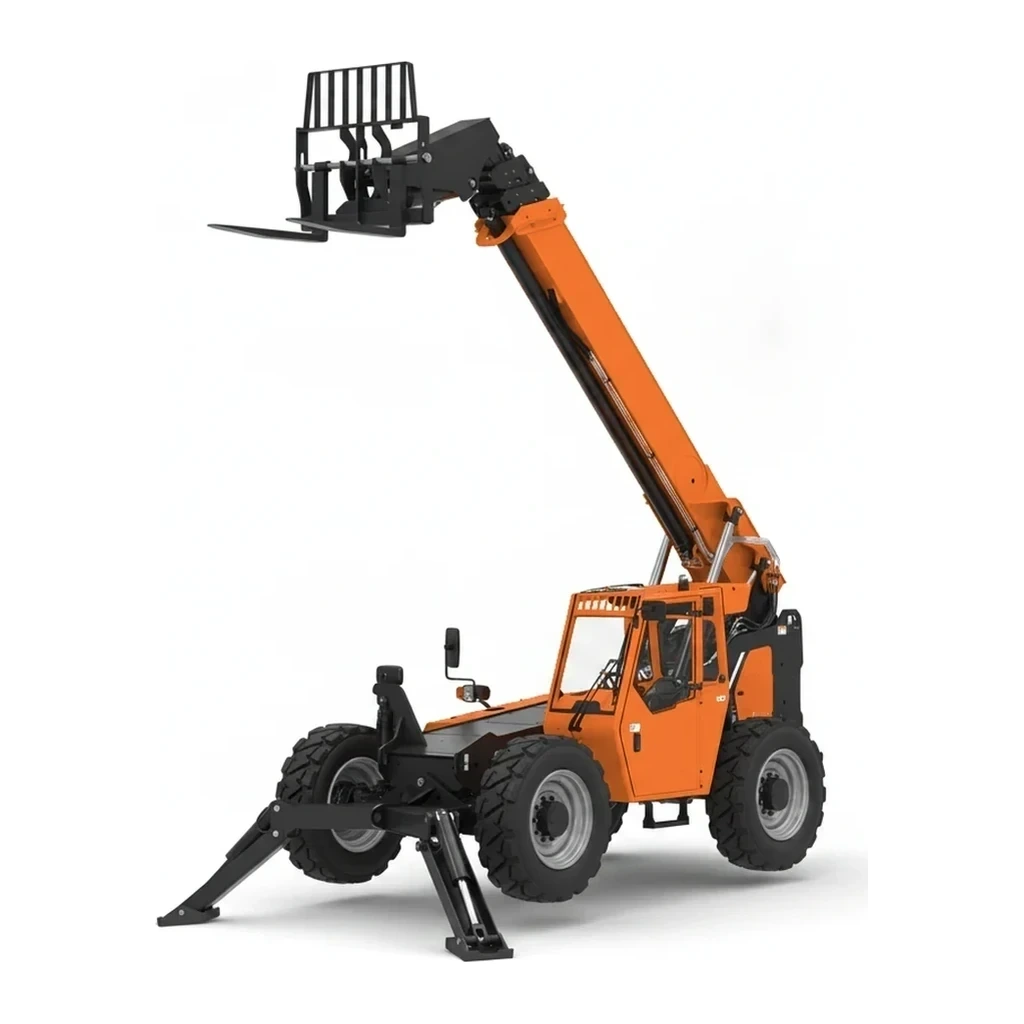
A telehandler is a wheeled, telescopic-boom material handler that combines the lifting function of a forklift with the reach and height of a boom lift. The extendable arm allows operators to place loads at heights and distances beyond the footprint of the machine, making it essential for construction, agriculture, and industrial material placement. Also known as a telescopic handler, reach forklift, zoom boom, or lull.
Cat classes
Choisissez une classe de taille — la capacité et la portée varient selon la gamme.
Fonctionnement
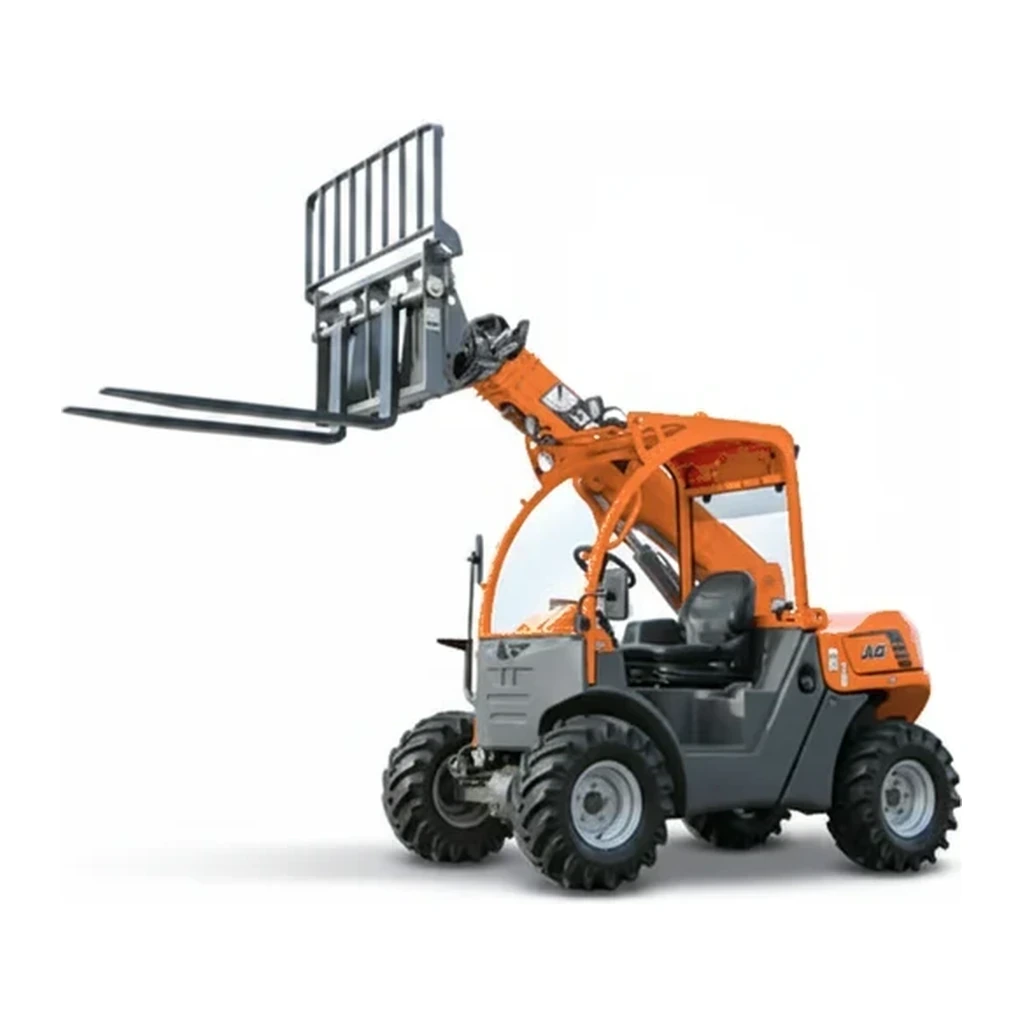
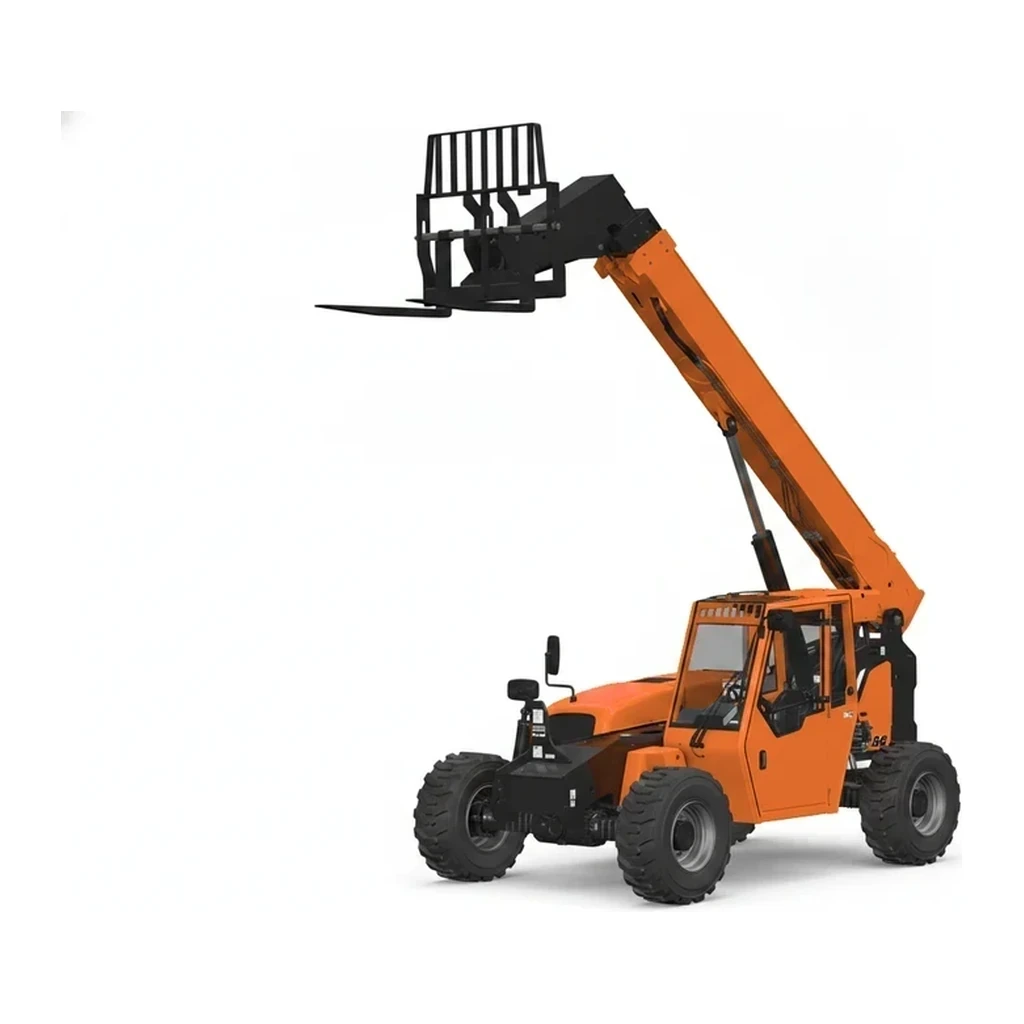
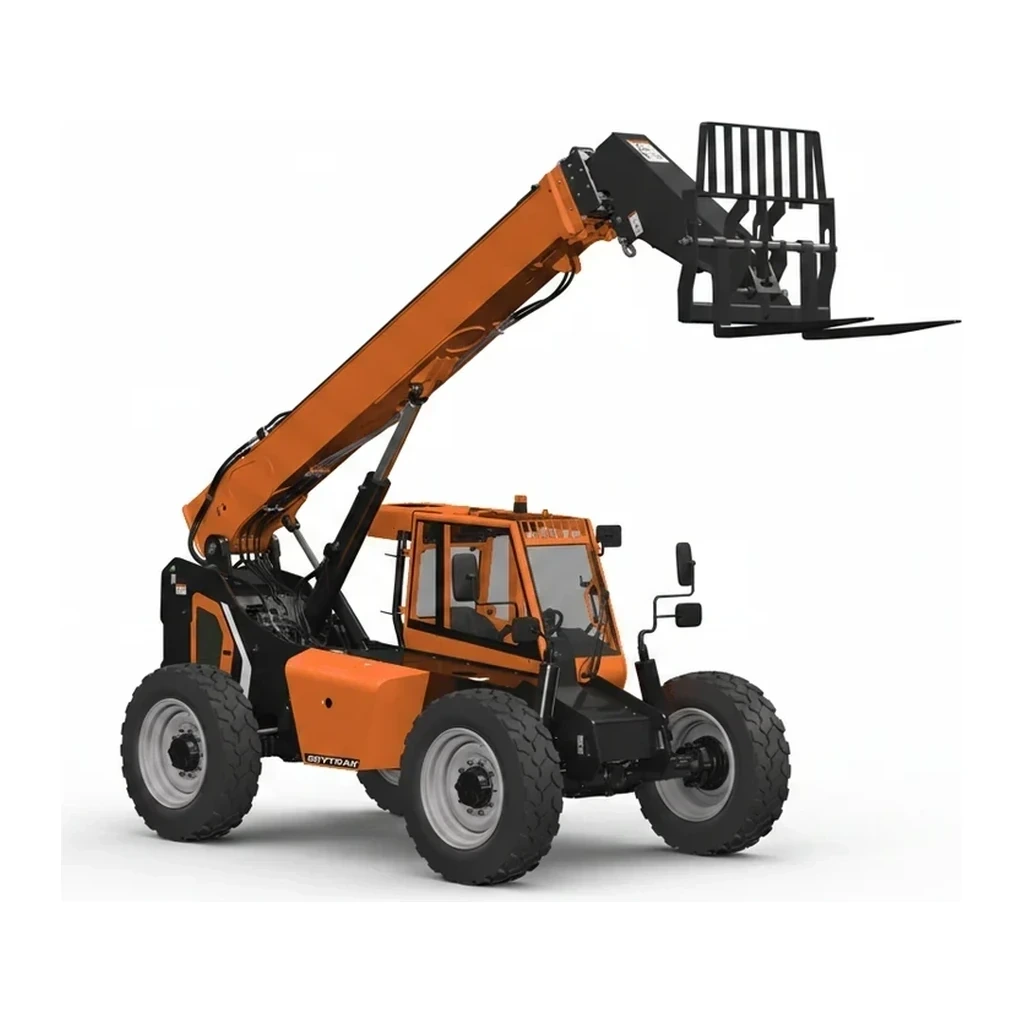
The telehandler operates via a hydraulically-actuated telescopic boom that extends and retracts from a central turret, with the boom capable of pivoting up and down. Attachments—typically forks, buckets, or carriages—mount to the boom end via a quick-coupler system, and hydraulic circuits control both boom extension and attachment angle. The operator controls boom position, attachment tilt, and drive functions from a cab mounted at the machine's rear or side. Stabilization is managed through a combination of chassis weight, wheelbase geometry, and—on many models—frame leveling or stabilizer systems. Load charts specific to boom angle, extension, and attachment govern safe lifting capacity at each operating position. Four-wheel drive and steering modes (two-wheel, four-wheel, crab) are standard on most models, providing maneuverability on rough terrain and in confined spaces.
Types et variantes
- Compact Telehandler
- 2,700-6,000 lb capacity with lift heights of 19-30 ft, designed for residential framing, light commercial work, and applications requiring reduced width and weight.
- Standard Construction Telehandler
- 6,000-10,000 lb capacity with 40-45 ft reach, the industry workhorse for placing materials on two- to four-storey structures, including masonry and steel packages.
- High-Reach Telehandler
- 10,000-12,000 lb capacity with lift heights to 55 ft, used for multi-storey construction, roof loads, and scenarios requiring extended vertical reach.
- Heavy-Capacity Telehandler
- 12,000-17,000 lb capacity with reach to 70 ft, specialized for structural steel erection, precast concrete placement, and industrial lifting at full building height.
- Rotating Telehandler
- Features a turret that rotates 360 degrees independent of the chassis, enabling load placement without repositioning the machine, common in utility and agricultural applications.
Spécifications clés
| Spécification | Plage typique | Signification |
|---|---|---|
| Load Capacity | 2,700-17,000 lb (1,100-23,000 kg) | Maximum weight the machine can lift at minimum boom extension and height; capacity decreases as boom extends or elevates per load chart. |
| Lift Height | 19-70 ft (5.5-21 m) | Maximum vertical height to which the boom tip and attachment can be raised, defining the machine's ability to serve multi-storey structures. |
| Max Forward Reach | 15-50 ft (4.5-15 m) | Horizontal distance from the machine centerline to the boom tip at full extension, critical for placing loads beyond the footprint or over obstacles. |
| Engine Power | 75-173 hp | Diesel or electric engine output driving hydraulic systems, travel functions, and auxiliary circuits; higher power supports heavier loads and faster cycle times. |
| Operating Weight | 12,000-34,600 lb (5,500-15,700 kg) | Total machine weight including fuel and standard attachments, influencing ground pressure, transport requirements, and stability. |
Comment l'industrie le dimensionne
The industry sizes telehandlers primarily by maximum lift capacity, measured in pounds, with bins ranging from 2,700-5,000 lb through 12,000-17,000 lb. Lift height and forward reach are secondary classifiers that define application suitability—compact units serve residential and light commercial work at 19-30 ft, mid-range machines handle two- to four-storey structures at 40-45 ft, and high-reach or heavy-capacity models support multi-storey construction and industrial placement at 55-70 ft. Over 326 models from manufacturers including Manitou, JLG, JCB, Genie, and Skyjack populate the class, with selection driven by the combination of required capacity, reach geometry, and job-site access constraints.
Applications
- Placing palletized materials, steel bundles, and masonry packages on elevated floors and rooftops in commercial and residential construction
- Loading and unloading flatbed trucks and shipping containers at heights or distances beyond conventional forklift reach
- Feeding concrete formwork systems and scaffolding platforms with materials at multi-storey building sites
- Agricultural material handling including stacking hay bales, moving feed, and servicing silos or storage structures
- Industrial warehouse and manufacturing operations requiring versatile load placement in high-bay or outdoor storage areas
- Utility and infrastructure projects positioning equipment, poles, and materials in rough terrain or constrained access environments
Sécurité et opération
- Operators must reference the load chart for every lift configuration, as capacity varies significantly with boom extension, angle, and attachment type; exceeding chart limits risks tip-over.
- Daily pre-operation inspections include checking hydraulic hoses, boom extension mechanisms, attachment securement, tire condition, and load chart legibility.
- Maintain clear sight lines or use spotters when placing loads at height or distance; boom swing and extension can create blind spots and striking hazards.
- Travel with the boom fully retracted and lowered to minimize center of gravity; traverse slopes with the heavy end uphill and avoid sudden turns or stops on grades.
- Ensure ground conditions can support combined machine and load weight; soft, uneven, or sloped surfaces increase tip-over risk and may require outriggers or ground protection.
Normes et certifications
- ANSI/ITSDF · B56.6
- Safety standard for rough terrain forklift trucks, including telehandlers, covering design, operation, maintenance, and load handling requirements.
- OSHA · 1926.602
- Material handling equipment regulations for construction, mandating operator training, load chart compliance, and operational safety procedures.
- CSA · B335
- Canadian standard for lift trucks including telehandlers, establishing safety and performance criteria parallel to ANSI standards.
- EPA · Tier 4
- Emissions standards governing diesel engine output in telehandlers manufactured for the North American market, requiring advanced exhaust treatment systems.
Questions fréquentes
How does lift capacity change with boom extension?
What is the difference between a telehandler and a boom lift?
What attachments are compatible with telehandlers?
How is a telehandler transported between job sites?
Comparer les modèles populaires
Chercher par spécification →Normalisé aux mêmes unités. Un tiret signifie que la valeur n'a pas été publiée.
| Modèle | Capacité de charge | Hauteur de levage | Puissance moteur |
|---|---|---|---|
| Caterpillar TL943C | 8,999 lb (4,082 kg) | 13.1 ft (4.0 m) | 74 hp |
| Genie GTH-1056 | 22,046 lb (10,000 kg) | 56 ft (17.1 m) | 125 hp |
| JLG 1043 | 10,000 lb (4,536 kg) | 43 ft (13.1 m) | 111 hp |
| JLG 1055 | 10,000 lb (4,536 kg) | 55 ft (16.8 m) | 129 hp |
| JLG 1075 | 10,000 lb (4,536 kg) | 75 ft (22.9 m) | 160 hp |
| JLG 1255 | 12,000 lb (5,443 kg) | 55 ft (16.8 m) | 130 hp |
Équipements connexes
Parcourir par fabricant
Sources
Chaque spécification est vérifiée par rapport aux données publiées par le fabricant, avec la source liée pour référence.
Tous les modèles
331 modèles · Page 4 sur 7 · Chaque spécification citée à la source