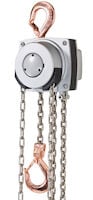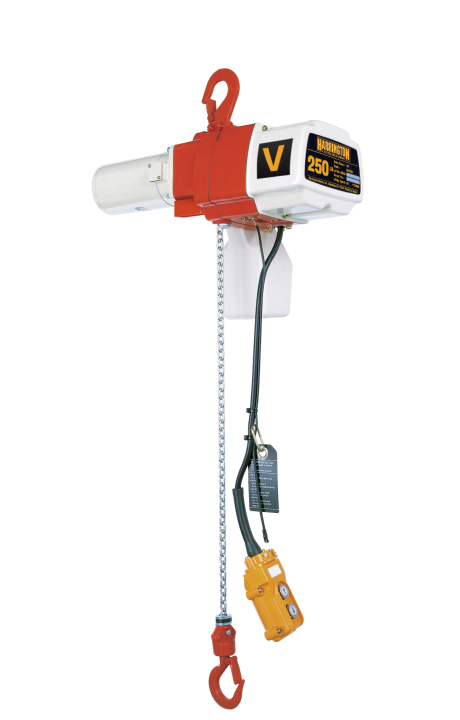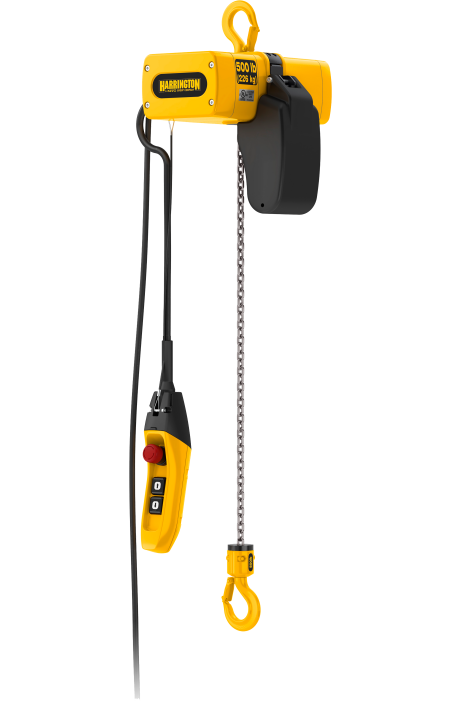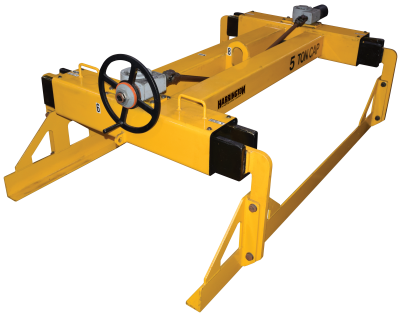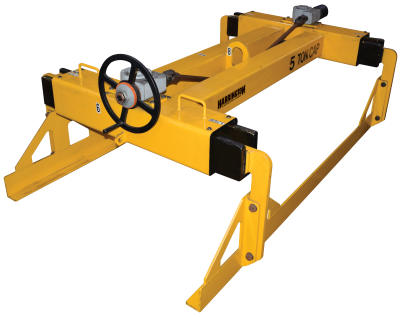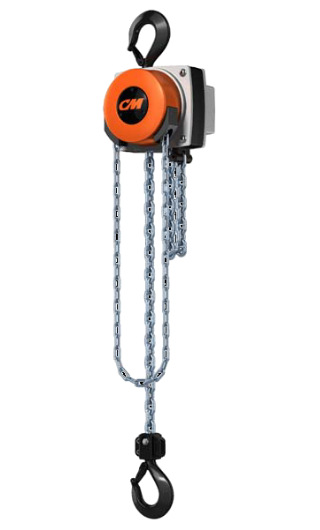

Up to 1 ton Chain Hoist
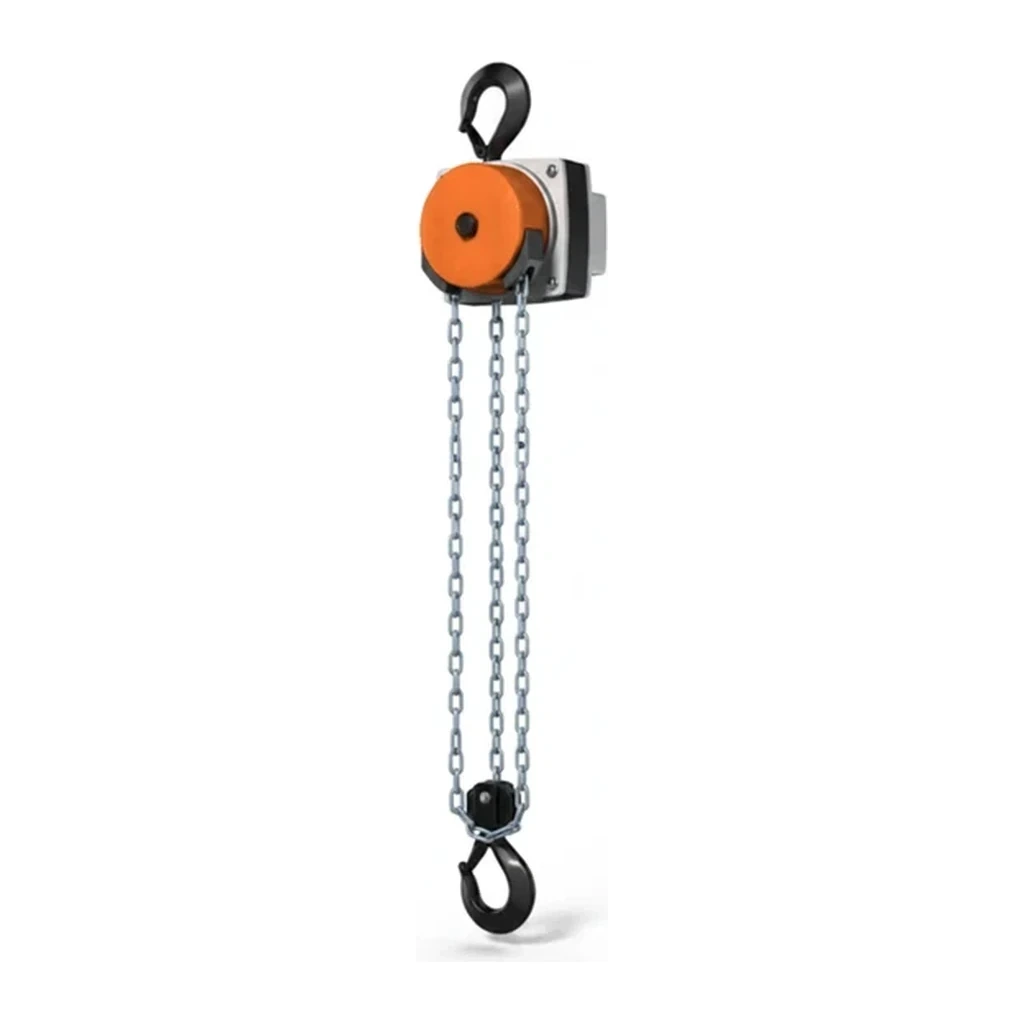
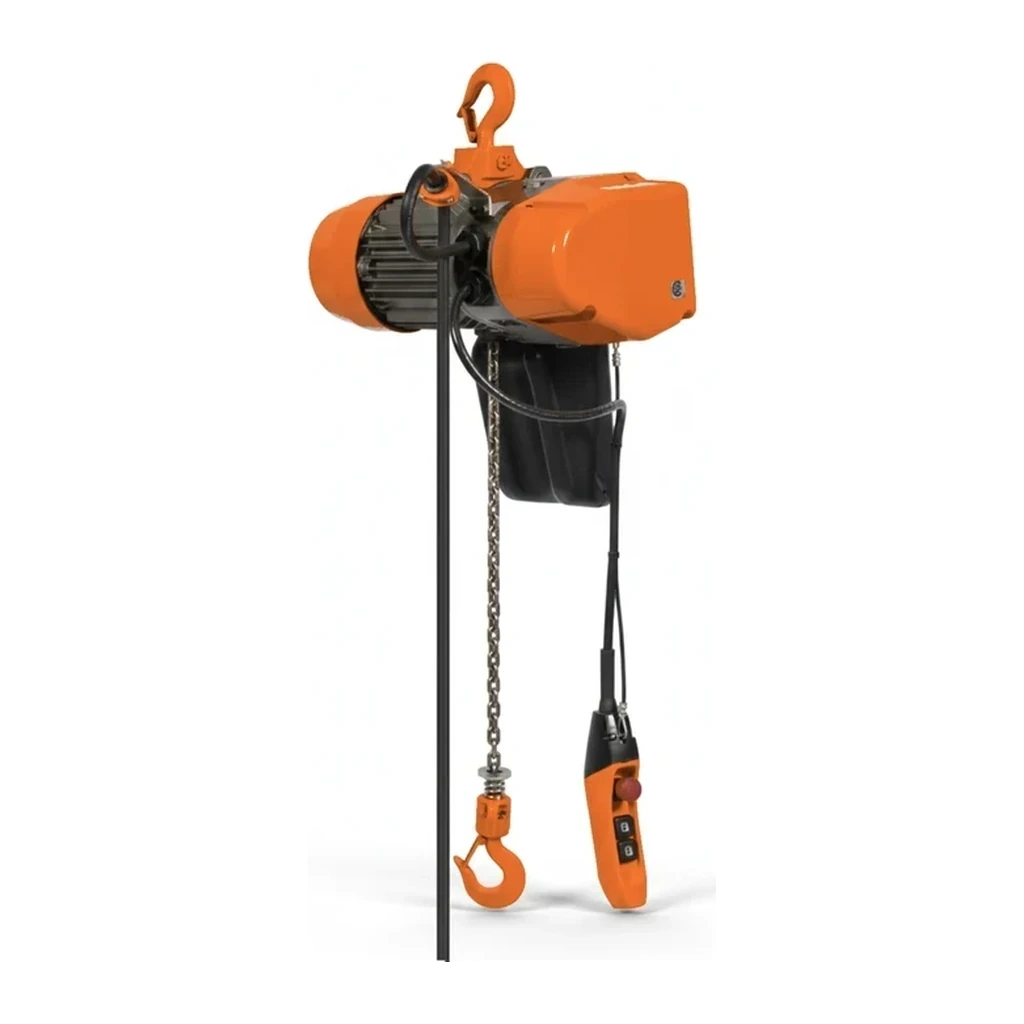
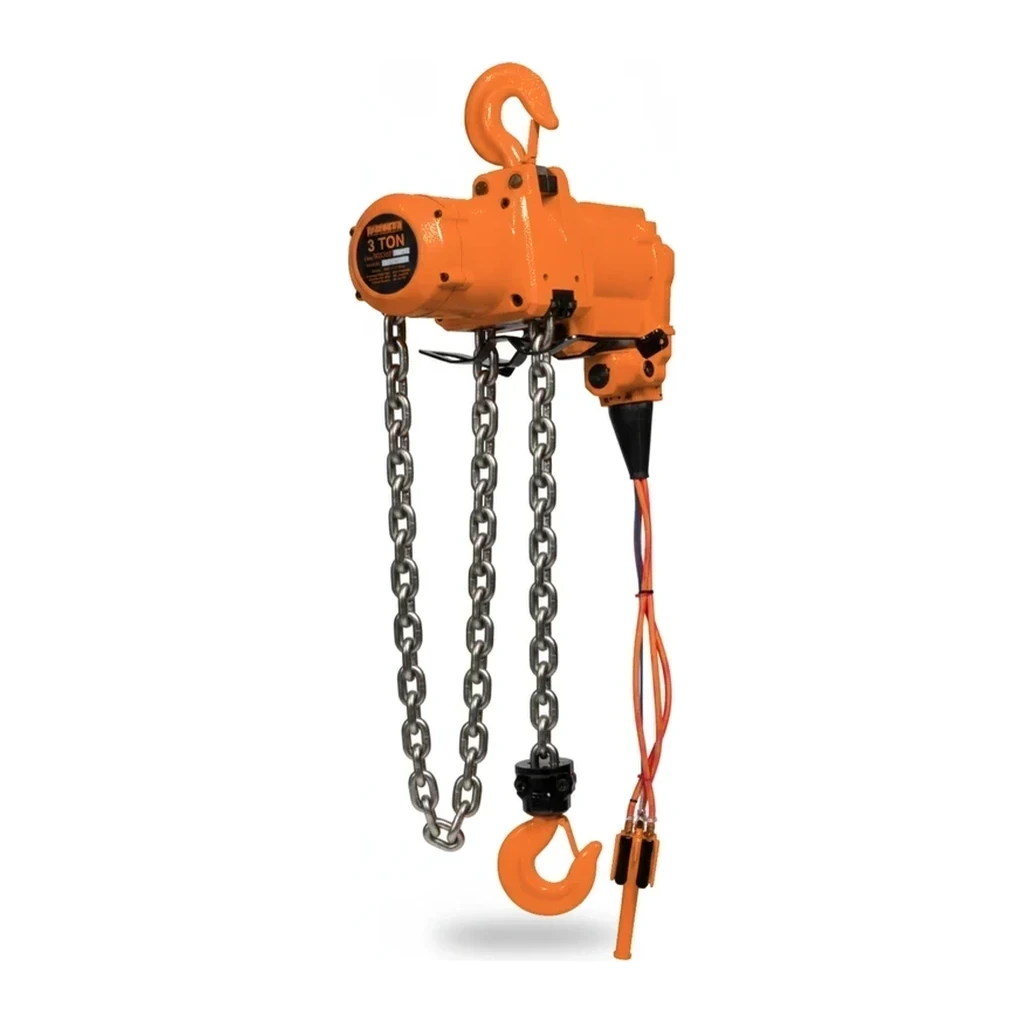
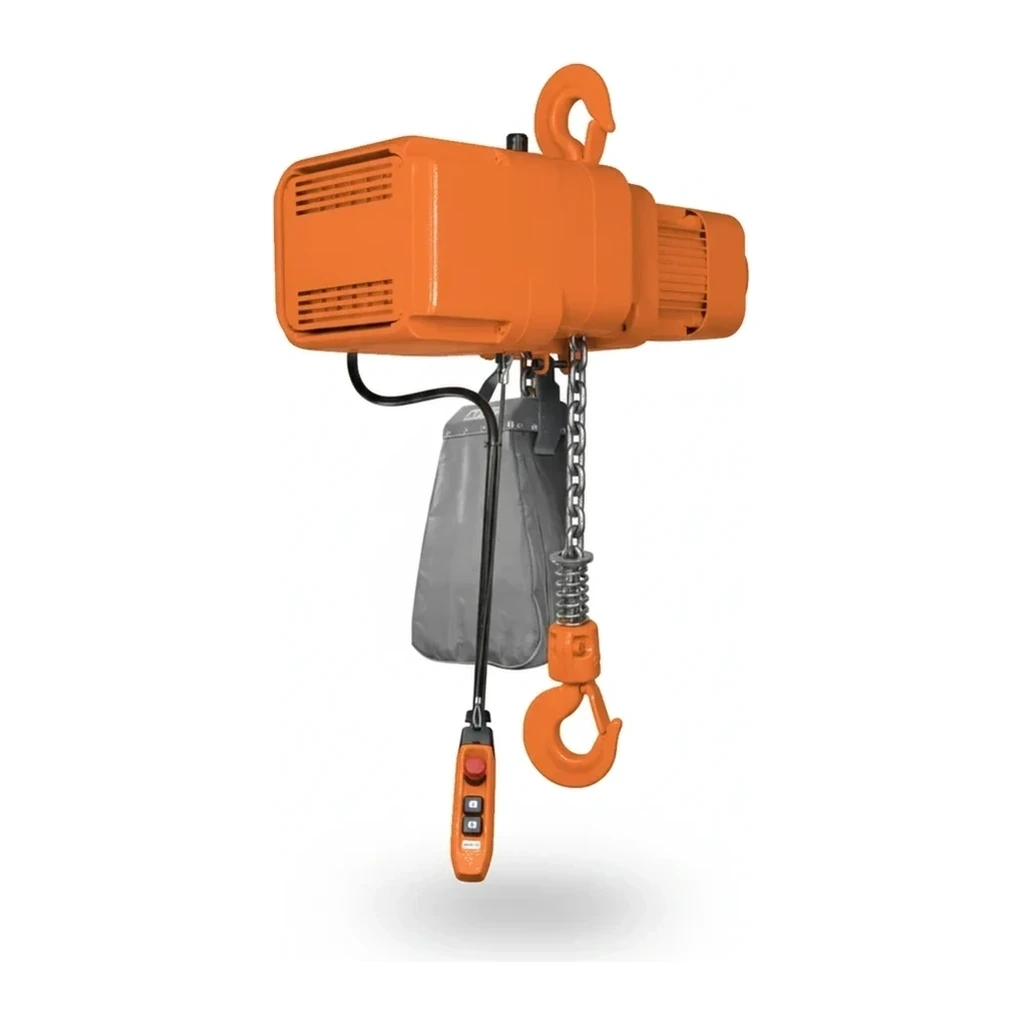
Up to 1 ton chain hoists occupy the lightest end of the overhead lifting spectrum, designed for motors, valves, and engine pulls where loads stay under 750 kg. These manually operated or low-capacity powered units provide lift heights from 5 to 13 feet, making them common in maintenance bays, light fabrication, and HVAC installations. They represent the first rung on the chain hoist ladder, below the 1-2 ton class used for heavier assemblies.
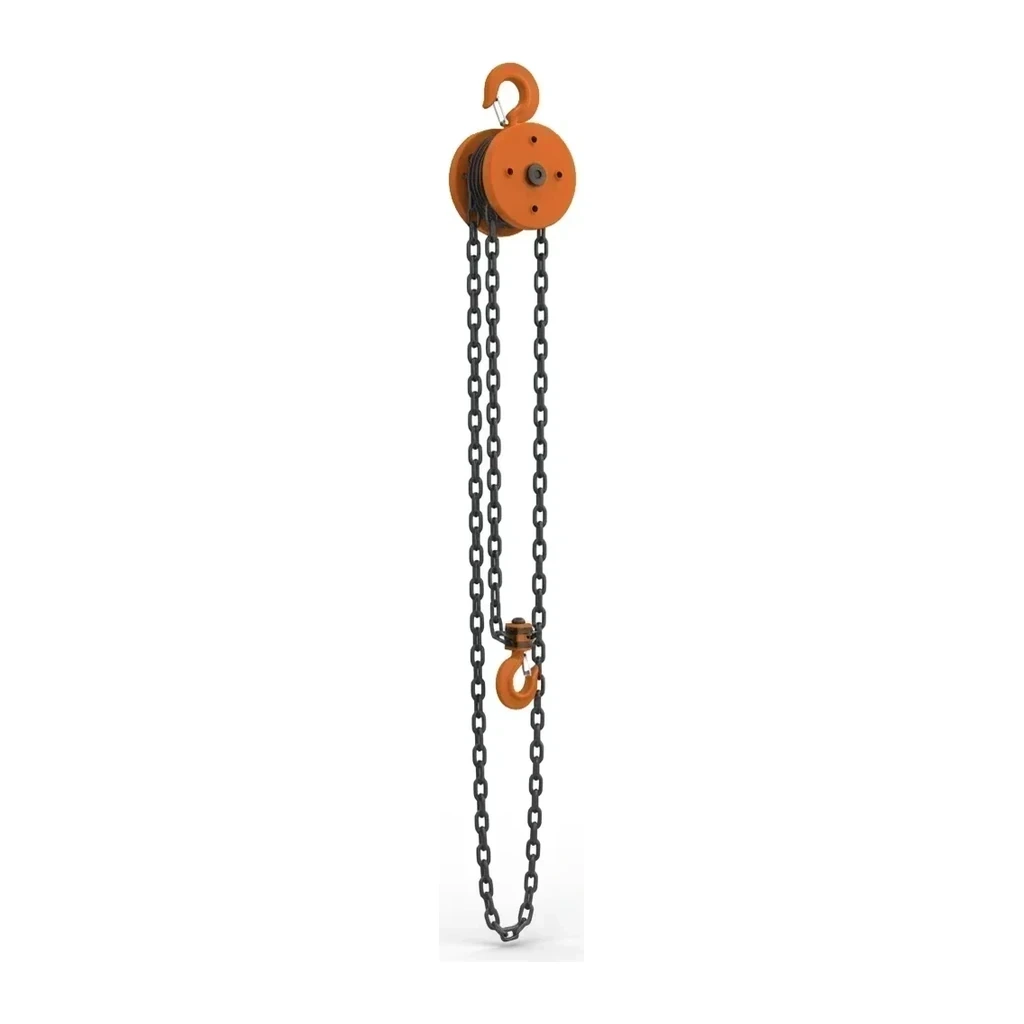
Cat classes
Choisissez une classe de taille : la capacité et la portée varient selon la gamme.
Spécifications clés
| Spécification | Plage typique | Signification |
|---|---|---|
| Load capacity | 500–1,653 lb (227–750 kg) | Maximum safe working load at full lift height; covers small motors and components through light engine blocks. |
| Lift height | 5–13 ft (1.5–4.0 m) | Maximum vertical travel from hook to trolley or mounting point; dictates clearance in low-bay shops and maintenance areas. |
| Chain configuration | Single or dual fall | Single fall for lighter loads and faster lift speed; dual fall for loads approaching capacity with finer control. |
| Suspension | Hook or trolley mount | Hook suspends from fixed beam; trolley allows horizontal travel along I-beam or monorail track. |
Comment choisir
Up to 1 ton chain hoists suit light mechanical work where components weigh less than 750 kg and overhead clearance is limited to 13 feet or less. They handle typical automotive engine pulls, small pump installations, and HVAC unit positioning in standard ceiling-height buildings. When loads approach or exceed 1 ton, such as dual-motor assemblies, larger gearboxes, or industrial compressors, the 1-2 ton Chain Hoist class provides the necessary capacity and often greater lift height for taller facilities. This smallest size class favors portability and manual operation; applications requiring frequent repositioning of heavy industrial machinery benefit from stepping up to powered models in the next weight band.
Ce que cette taille peut gérer
- Pulling four-cylinder and small V6 engines in automotive repair shops
- Installing packaged HVAC units on rooftop platforms with 10-foot lift requirements
- Positioning submersible pumps and small centrifugal units in water treatment plants
- Lifting valve assemblies and actuators during pipeline maintenance
- Repositioning milling machine heads and lathe components in machine shops
- Hoisting electric motors and gearboxes during conveyor system maintenance
Sécurité et opération
- Load capacity ratings apply at room temperature on vertical lifts; angled pulls reduce safe working load and require engineering consultation
- Chain condition and hook latch integrity require inspection before each use; stretched links or worn pockets indicate retirement criteria
- Suspended loads must never pass over personnel; establish exclusion zones and use tag lines for horizontal positioning
- Trolley installations depend on beam flange width and I-beam rating; structural engineer verification prevents overloading building members
Transport et logistique
- Hand-portable or carried in service vans; units typically weigh 10-40 kg depending on capacity and lift height
- No dedicated trailer required; fits in standard tool boxes or pickup beds alongside other rigging hardware
- Trolley-mounted configurations may require disassembly from beam track for transport between sites
Alimentation
- Manual lever-operated models require no external power; operator pull force decreases with mechanical advantage of chain falls
- Electric models in this class draw 110V or 220V single-phase power, compatible with standard jobsite outlets
- Pneumatic versions operate on shop air at 90 PSI, common in environments prohibiting electric spark sources
Questions fréquentes
What differentiates a 1/2 ton from a 3/4 ton model in this class?
Can lift height be extended beyond the stated range?
How does duty cycle differ between manual and electric models in this size?
Comparer les modèles populaires
Chercher par spécification →Normalisé aux mêmes unités. Un tiret signifie que la valeur n'a pas été publiée.
| Modèle | Capacité de charge | Hauteur de levage | Puissance moteur |
|---|---|---|---|
| Vestil VS-ECH-5-1PH | 500 lb (227 kg) | 13 ft (4.0 m) | - |
| Vestil VS-ECH-10-1PH | 1,001 lb (454 kg) | 13 ft (4.0 m) | - |
| Ironton 57037 | 1,649 lb (748 kg) | 5 ft (1.5 m) | - |
Équipements connexes
Parcourir par fabricant
Sources
Chaque spécification est vérifiée par rapport aux données publiées par le fabricant, avec la source liée pour référence.
Up to 1 ton Chain Hoist
13 modèles · Chaque spécification citée à la source