

Trench Box
A trench box, also called a trench shield, is a two-walled steel or aluminum structure with spreader bars that sits in an open trench to protect workers from cave-in. It does not prevent soil movement; it shields the people working inside it. Trench boxes are the most common protective system for utility trench work at and beyond the 5 ft depth where OSHA requires protection.
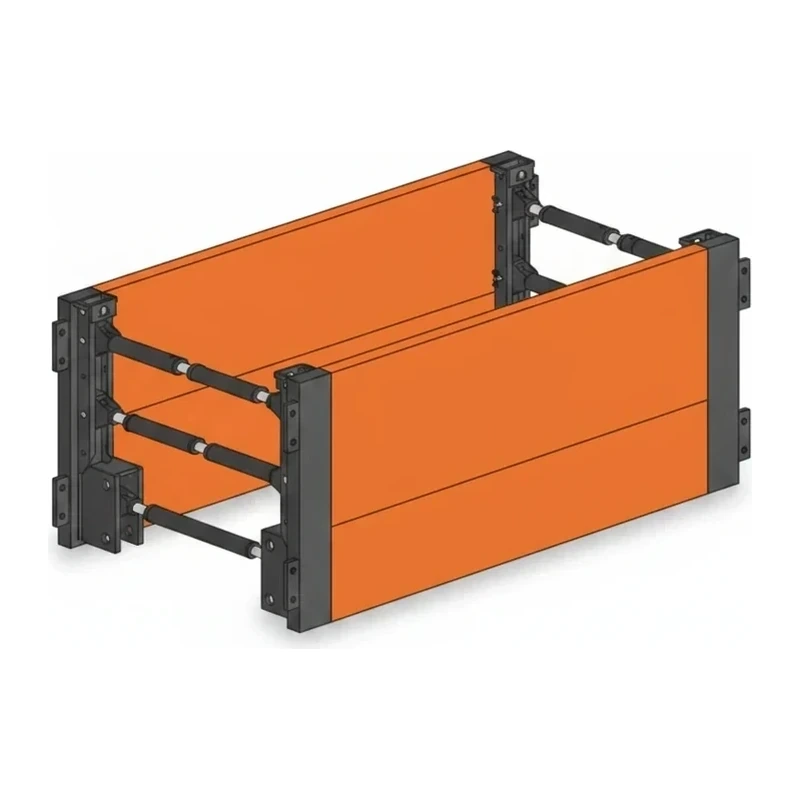
Fonctionnement
Two sidewall panels are held apart by pipe spreaders sized to the trench width. The assembled box is lowered into the trench by excavator, and crews work only within its footprint. As the work advances, the excavator drags or lifts the box forward to the next section: workers exit before the box is moved. Each shield carries a manufacturer depth rating by soil class, stamped on its data plate. The box must extend at least to the required protection depth, and stacked configurations extend coverage for deeper cuts where the tabulated data allows.
Types et variantes
- Steel trench boxes
- The heavy-duty standard for deep utility work, handled by excavator.
- Aluminum trench boxes
- Lightweight shields that smaller machines or crews can place, for shallower work.
- Stackable boxes
- Units engineered to stack for depth beyond a single panel height.
- Bedding boxes
- Open-bottom variants that protect workers placing pipe bedding while material is fed in.
Spécifications clés
| Spécification | Plage typique | Signification |
|---|---|---|
| Depth rating by soil class (ft) | Stated on each shield's data plate per manufacturer tabulated data | The legal limit for how deep the box may protect workers in a given soil classification. |
| Panel length and height | Per model; sets trench coverage per placement | Longer panels mean fewer moves; height determines protected depth per tier. |
| Inside width (spreader length) | Adjustable via spreader selection per model | Must clear the pipe or structure being installed while fitting the trench cut. |
| Shield weight | Model-specific; governs the machine needed to place and pull the box | The excavator must handle the shield safely at the required reach. |
Comment l'industrie le dimensionne
Trench boxes are sized by required protected depth, trench width, and the excavator available to handle them. The depth rating for the site's soil class governs first: a competent person classifies the soil, then the shield's tabulated data confirms the box is adequate. Spreaders set the inside width around the pipe or structure being installed.
Applications
- Water, sewer, and storm utility installation
- Pipeline repair and tie-in excavations
- Manhole and vault setting
- Any open trench work at 5 ft depth or beyond
- Bedding and pipe-laying operations in active trenches
Sécurité et opération
- A competent person must classify soil, select the protective system, and inspect daily and after rain.
- Workers must never remain in the box while it is being moved or lifted.
- The box must not be loaded beyond its depth rating for the classified soil.
- Ladder or ramp access within 25 ft of every worker in the trench.
- Spoil piles and equipment stay back at least 2 ft from the trench edge.
Normes et certifications
- OSHA · 29 CFR 1926.652
- Requires protective systems at 5 ft depth and beyond; shields must match manufacturer tabulated data or an engineered design.
- OSHA · 29 CFR 1926.652(g)
- Specific shield-system rules: no lateral movement when occupied, protection from loads falling over the sides.
- OSHA · 29 CFR 1926.651
- General excavation requirements: access, egress, inspections, and spoil setbacks that apply alongside shield use.
Questions fréquentes
Does a trench box stop a cave-in?
At what depth is a trench box required?
Can trench boxes be stacked for deeper cuts?
Équipements connexes
Parcourir par fabricant
Tous les modèles
2 modèles · Chaque spécification citée à la source