
Vertical Hydraulic Shore
A vertical hydraulic shore is a lightweight aluminum shoring unit that presses two vertical rails against opposing trench walls using hydraulic cylinders. Unlike a trench shield that passively protects workers, hydraulic shores actively preload the soil, preventing movement before it starts. They install from above grade, no one enters the trench until it is shored, and one worker can typically carry and place them.
Fonctionnement
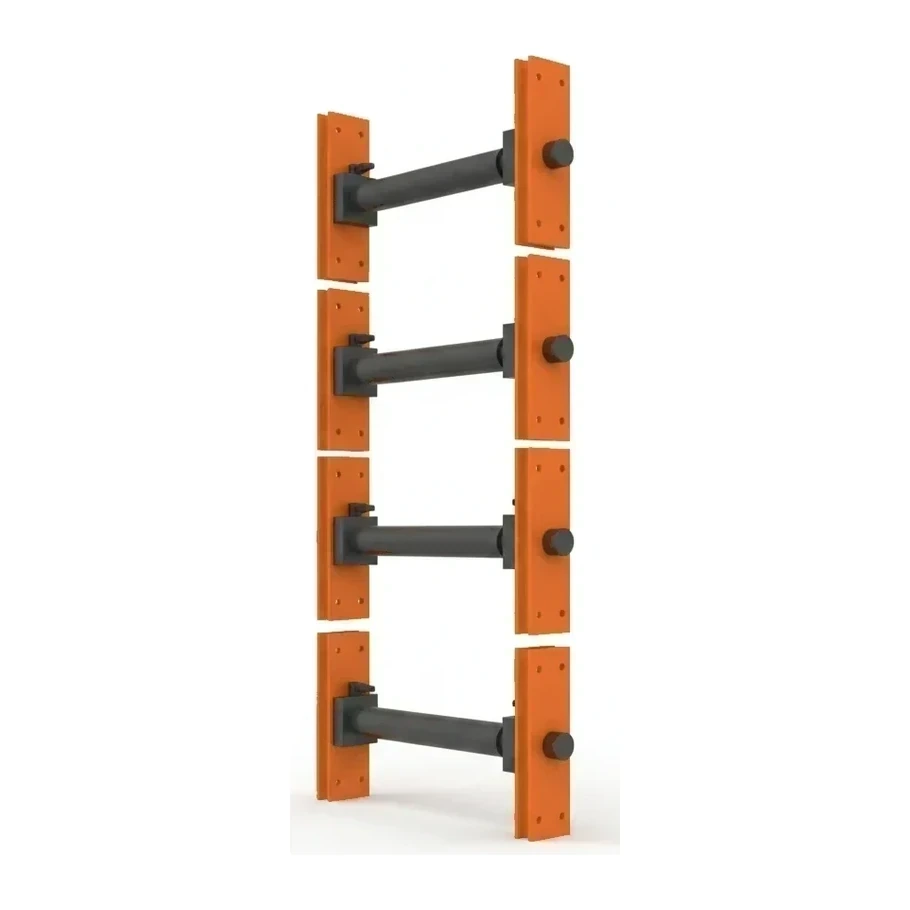
Each shore consists of two aluminum rails joined by one or more hydraulic cylinders. The unit is lowered into the trench with a placement tool, and a hand pump pressurizes the cylinders so the rails press firmly against both walls. That preload compresses and confines the soil, stopping the initial movement that leads to cave-in. Shores are placed at intervals along the trench according to the manufacturer's tabulated data for the soil class and depth. Removal also happens from above: a release tool bleeds cylinder pressure and the unit is lifted out, so workers are never exposed to unshored ground.
Types et variantes
- Single-cylinder shores
- Cover shallow trench bands in the shorter rail lengths.
- Multi-cylinder shores
- Longer rails with two or more cylinders cover deeper wall heights.
- Shores with plywood or panel sheeting
- Rails bear on sheeting to distribute pressure across soft or raveling soils.
- Waler system configurations
- Cylinders drive horizontal walers for wider spans and special conditions.
Spécifications clés
| Spécification | Plage typique | Signification |
|---|---|---|
| Rail coverage height (ft) | Varies by model and manufacturer | Matches the shore to the trench wall height being supported. |
| Cylinder working range (in) | Per model; cylinders extend across the trench width | Must span the cut width while staying inside the rated extension range. |
| Rated capacity per tabulated data | Stated by soil class and spacing in the manufacturer's tables | Governs horizontal spacing between shores along the trench. |
Comment l'industrie le dimensionne
Vertical hydraulic shores are sized by trench depth and width against manufacturer rail-height catalogs, with cylinder ranges matched to the cut width. Spacing along the trench comes from the manufacturer's tabulated data for the classified soil. Deeper or wider conditions move the job to waler systems, shields, or engineered designs.
Applications
- Water, sewer, and gas service trench work
- Utility repair and point excavations
- Trench work near existing structures where soil preload limits ground movement
- Short-duration digs where install and removal speed matter
- Shoring support around formwork and foundation work at trench depth
Sécurité et opération
- Install and remove from above grade; no entry into an unshored trench at any point.
- A competent person classifies soil and sets shore spacing from the tabulated data.
- Verify cylinder pressure at installation and re-check after rain or vibration events.
- Use sheeting where soils ravel between rails; bare shores suit only cohesive ground.
Normes et certifications
- OSHA · 29 CFR 1926.652(c)
- Hydraulic shoring is an accepted protective-system design method when applied per manufacturer tabulated data.
- OSHA · 29 CFR 1926 Subpart P App. D
- Aluminum hydraulic shoring design tables.
- OSHA · 29 CFR 1926.651
- Daily competent-person inspections, access, and spoil setback rules for shored trenches.
Questions fréquentes
How is a hydraulic shore different from a trench box?
What depths do these shores cover?
Can one worker install them?
Équipements connexes
Parcourir par fabricant
Sources
Chaque spécification est vérifiée par rapport aux données publiées par le fabricant, avec la source liée pour référence.
Tous les modèles
29 modèles · Chaque spécification citée à la source