

Equipment Trailer
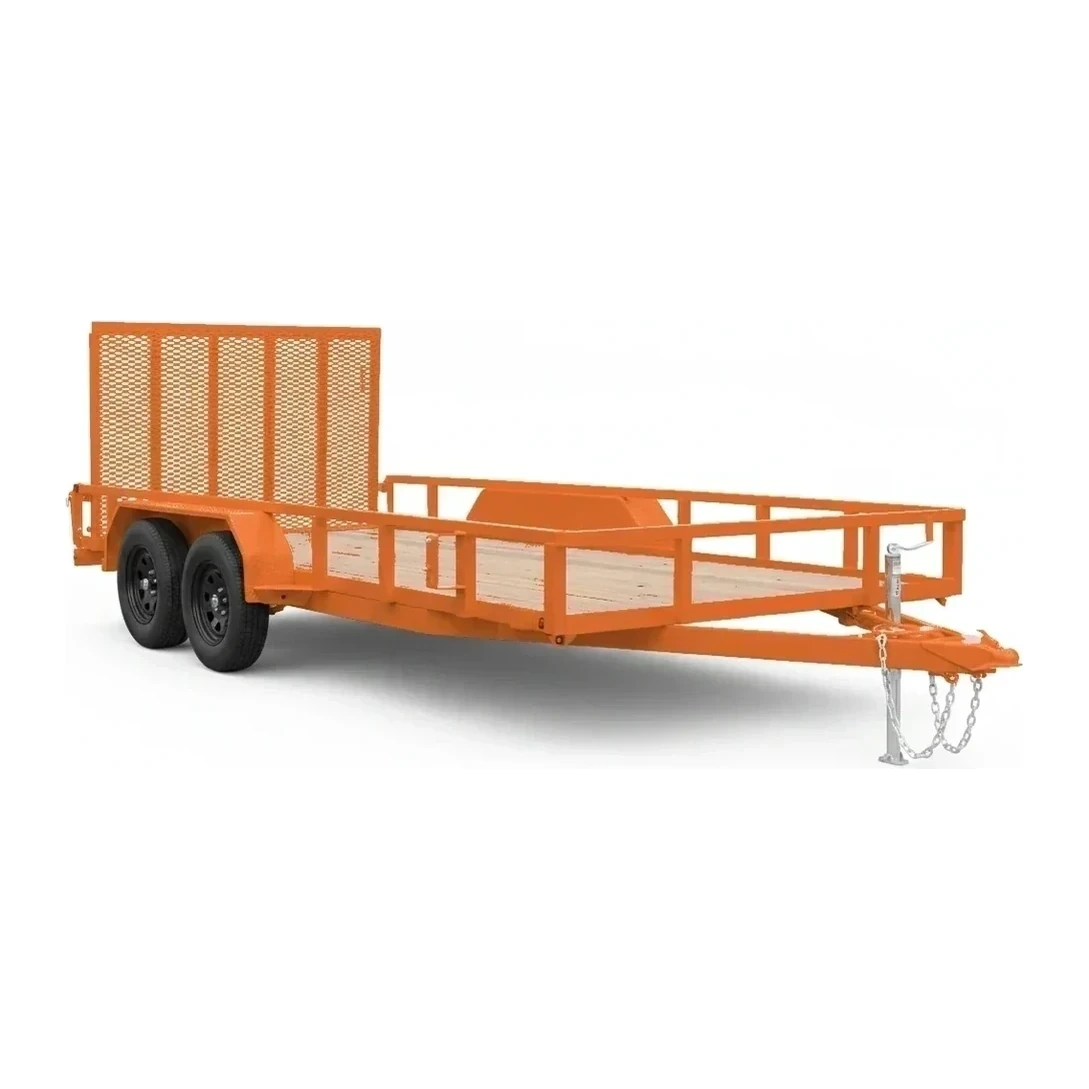
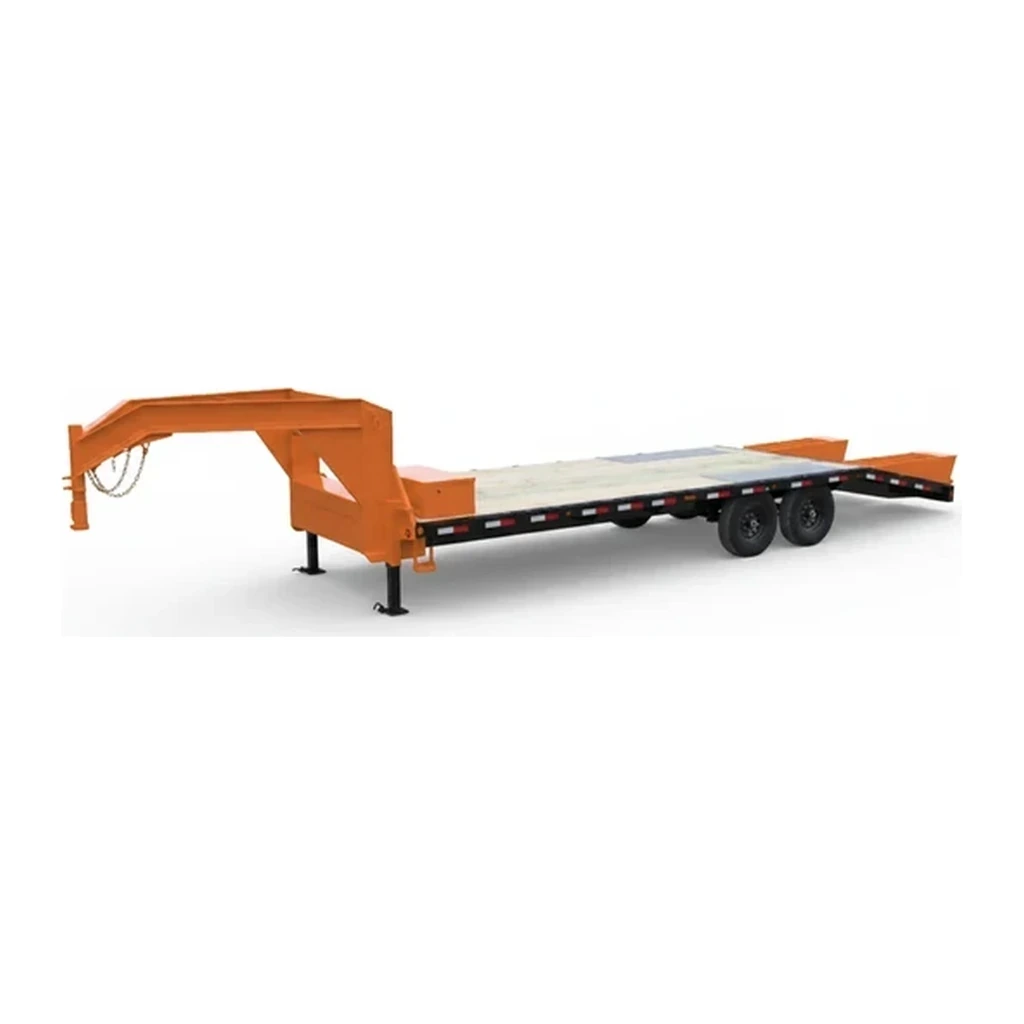
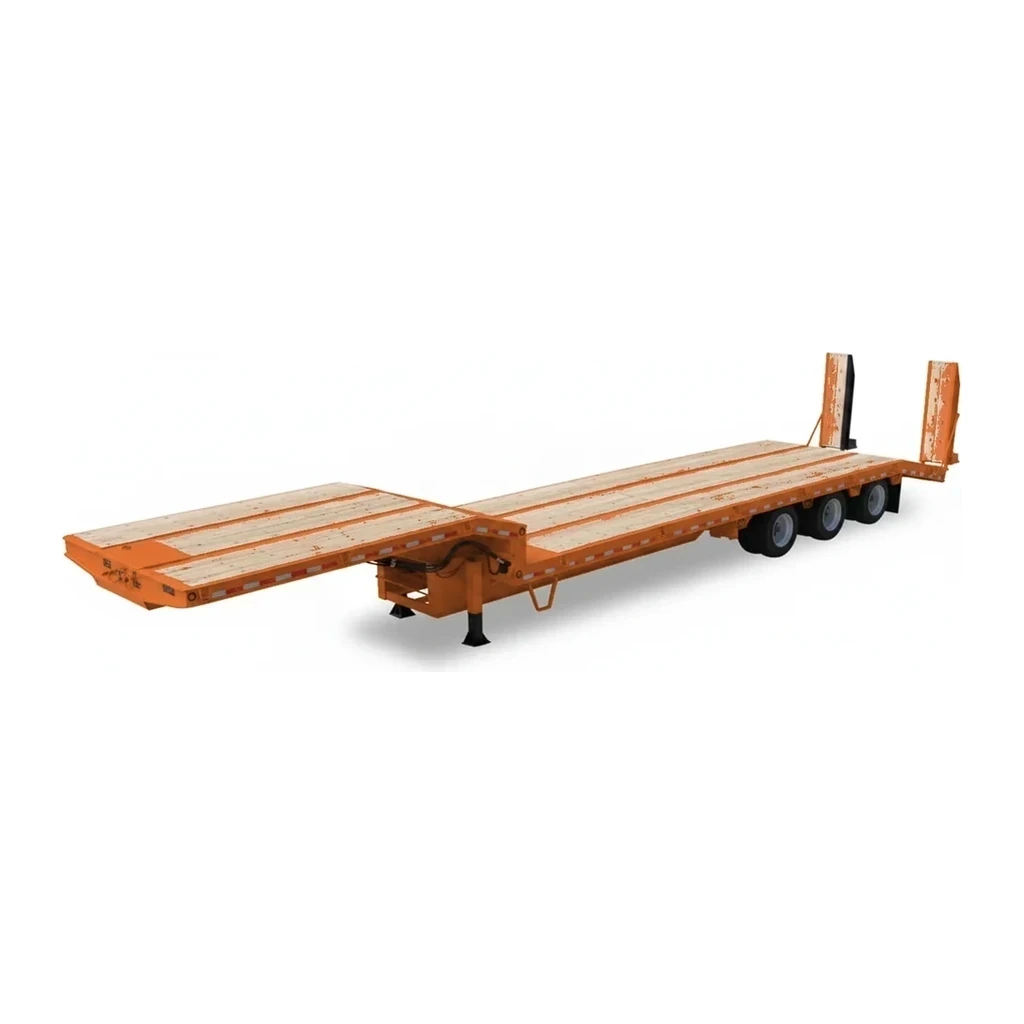
An equipment trailer is a flat-deck towed trailer built to carry machines: skid steers, mini excavators, compact tractors, and attachments. Ramps or a dovetail allow equipment to drive or track aboard. The industry catalogs these trailers by GVWR in bands: up to 10,000 lb, 10,000-14,000 lb, 14,000-26,000 lb, and 26,000+ lb.
Cat classes
Choisissez une classe de taille : la capacité et la portée varient selon la gamme.
Fonctionnement
The steel frame carries a wood or steel deck over one or more braked axles, with fold-down, slide-in, or stand-up ramps at the rear. Machines load under their own power up the ramps, weight centered ahead of the axles to keep tongue load in the 10-15 percent range that tows stably. Four-point chain or strap securement to rated D-rings holds the machine; attachments are secured separately. Gross axle ratings, coupler class, and tire load range together define the trailer's real capacity.
Types et variantes
- Bumper-pull equipment trailers
- The most common configuration for compact machines behind pickup trucks.
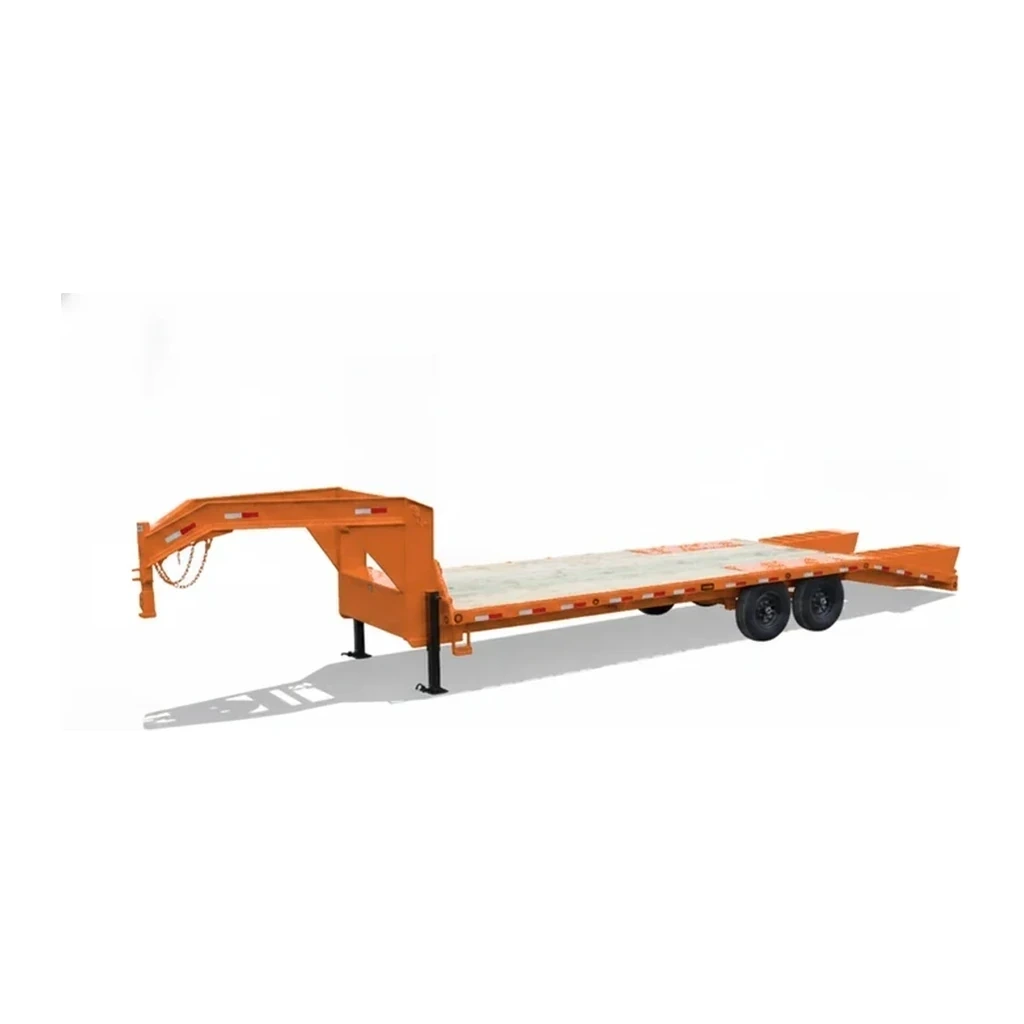
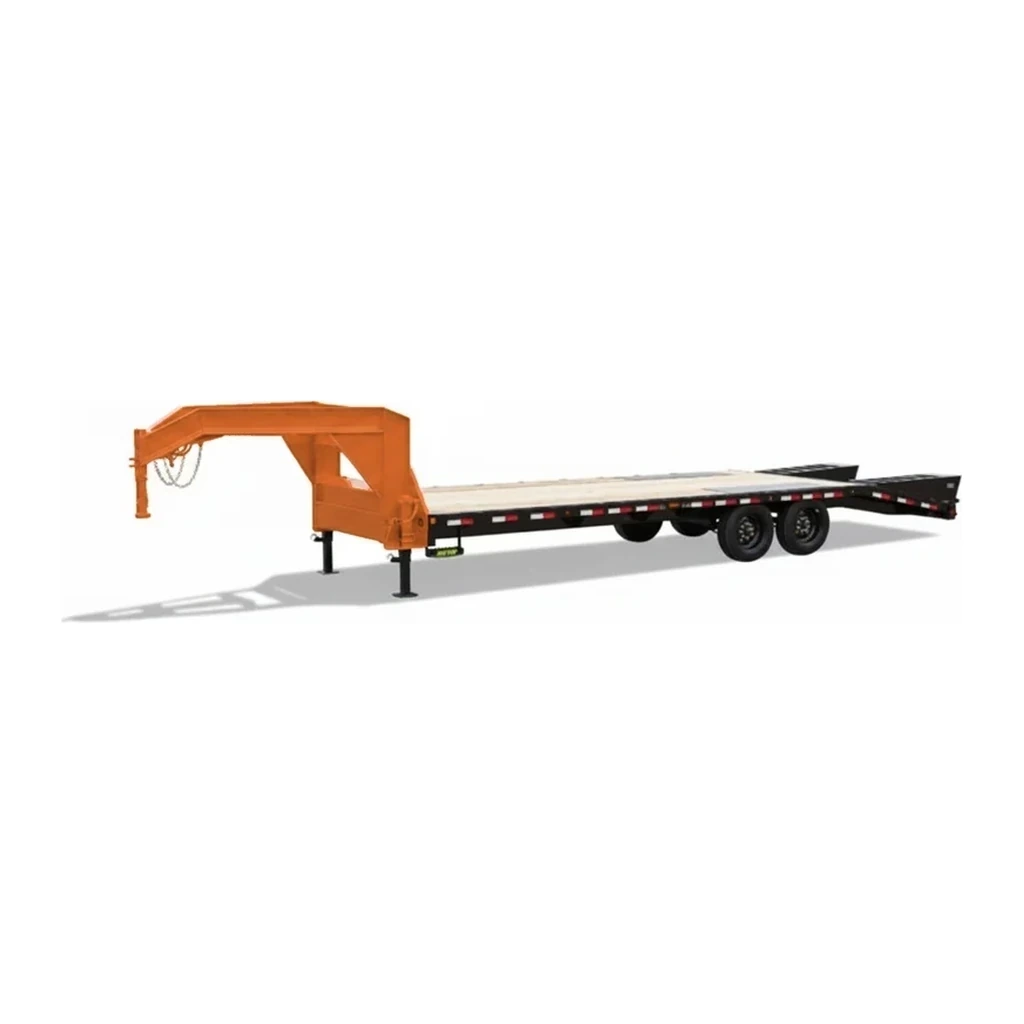
- Gooseneck deck-over trailers
- Bed-mounted coupling and full-width decks for larger machines.
- Dovetail and ramp-gate designs
- Lowered load angles for low-clearance and tracked equipment.
- Lowboy-style heavy haulers
- Heavy-haul decks in the 26,000+ lb band for large machine transport.
Spécifications clés
| Spécification | Plage typique | Signification |
|---|---|---|
| GVWR band (lb) | Up to 10,000 lb | 10,000-14,000 lb | 14,000-26,000 lb | 26,000+ lb | Matches trailer to machine-plus-attachment weight and tow vehicle capacity. |
| Load capacity | 680-60,328 kg across cataloged models | The machine weight the trailer legally carries after tare. |
| Trailer weight | 184-1,020 kg on cataloged models with published tare weights | Subtracts from GVWR to give true payload. |
| Trailer length | 142.4-4,593.8 in across cataloged models | Deck length must accommodate the machine's wheelbase and overhang. |
Comment l'industrie le dimensionne
Equipment trailers are sized from the machine outward: machine weight plus attachments plus tare must stay under GVWR with margin, and the tow vehicle must rate for the loaded total. The up-to-10,000 lb band suits a mini excavator or compact machine behind a 3/4-ton pickup. The 10,000-14,000 lb band is the deck-over standard for a full-size skid steer, 5-ton excavator, or scissor lift. The 14,000-26,000 lb band covers heavy tandem and tri-axle work up to the CDL threshold. The 26,000+ lb band includes lowboy and heavy-haul decks requiring a CDL and commercial tow vehicle. Deck length and ramp angle must also fit the machine's footprint and clearance.
Applications
- Hauling skid steers and compact track loaders
- Moving mini excavators between sites
- Transporting compact tractors with loaders
- Delivering attachments and small machines together
- General contractor equipment moves
Sécurité et opération
- Four-point securement with rated chains and binders on every machine move.
- Load for 10-15 percent tongue weight; tail-heavy trailers sway at speed.
- Verify electric brake function and breakaway battery before departure.
- Chock and lower attachments to the deck before strapping.
Normes et certifications
- FMCSA · 49 CFR 393.130
- Federal securement rules specific to heavy vehicles, equipment, and machinery on trailers.
- NHTSA · FMVSS 108
- Trailer lighting and conspicuity requirements.
- SAE · J684
- Coupler, hitch, and safety-chain performance standard for trailer connections.
Questions fréquentes
What band carries a typical skid steer?
How many tie-downs does a machine need?
Why does tare weight matter?
Comparer les modèles populaires
Chercher par spécification →Normalisé aux mêmes unités. Un tiret signifie que la valeur n'a pas été publiée.
| Modèle | Capacité de charge | Puissance moteur |
|---|---|---|
| Multiquip TRLR-70 | - | - |
| Multiquip TRLR-70US | - | - |
| Multiquip TRLR-75XF | - | - |
| Multiquip TRLR-75XF2 | - | - |
| Multiquip TRLR-85XF2 | - | - |
| Multiquip TRLR-125US | - | 166 hp |
Équipements connexes
Parcourir par fabricant
Sources
Chaque spécification est vérifiée par rapport aux données publiées par le fabricant, avec la source liée pour référence.