

Utility Trailer
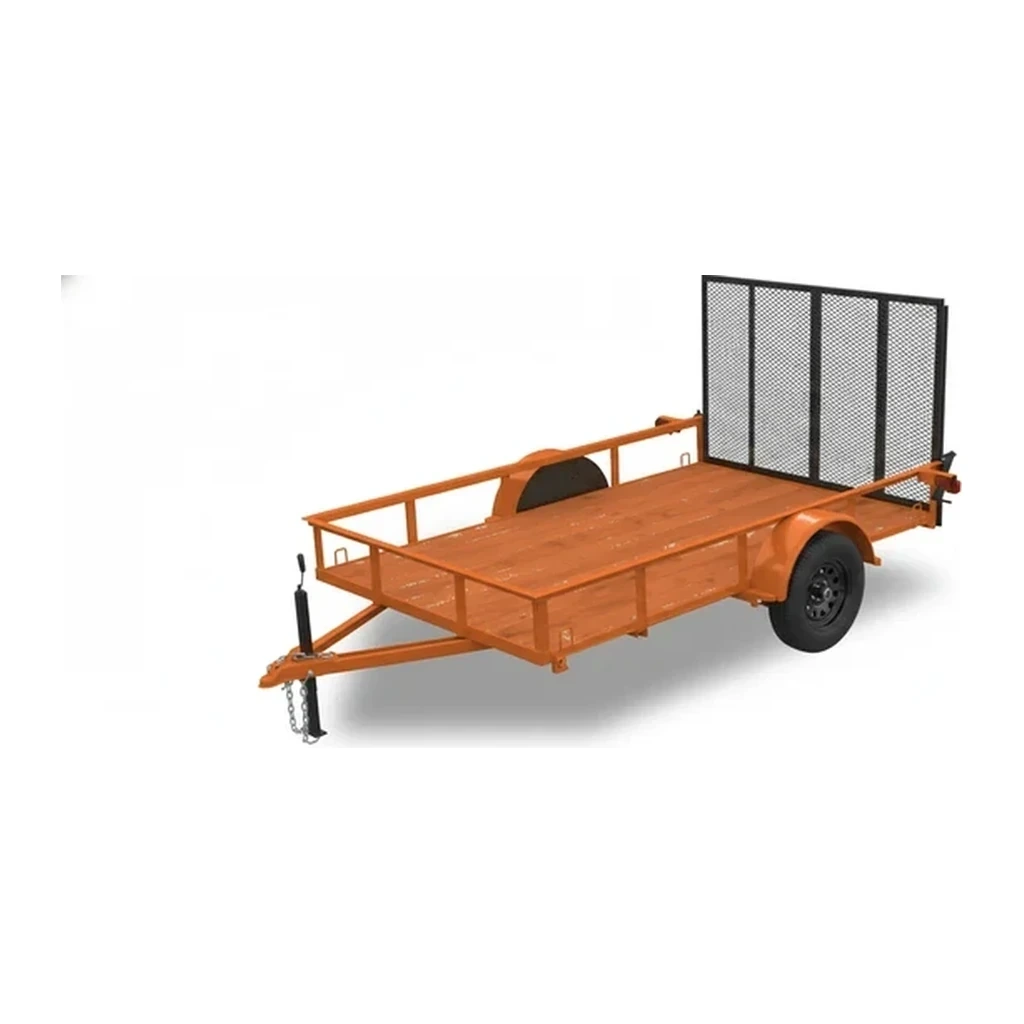
A utility trailer is an open general-purpose trailer for cargo, materials, and light equipment. Rail-sided or flat, single- or multi-axle, it is the most versatile towed platform in a fleet. Cataloged bands run up to 3,000 lb, 3,000-7,000 lb, 7,000-14,000 lb, and 14,000+ lb.
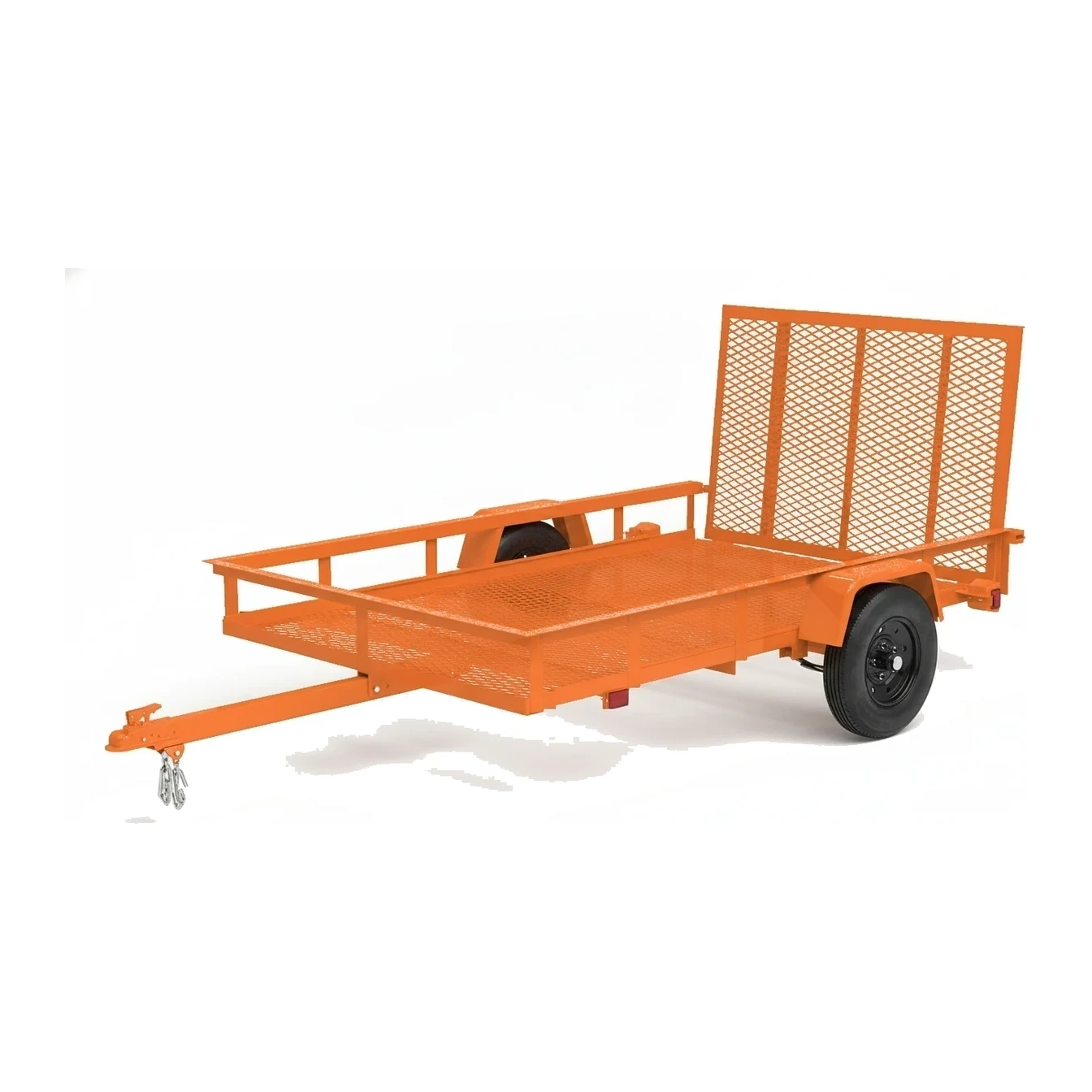
Cat classes
Choisissez une classe de taille : la capacité et la portée varient selon la gamme.
Fonctionnement
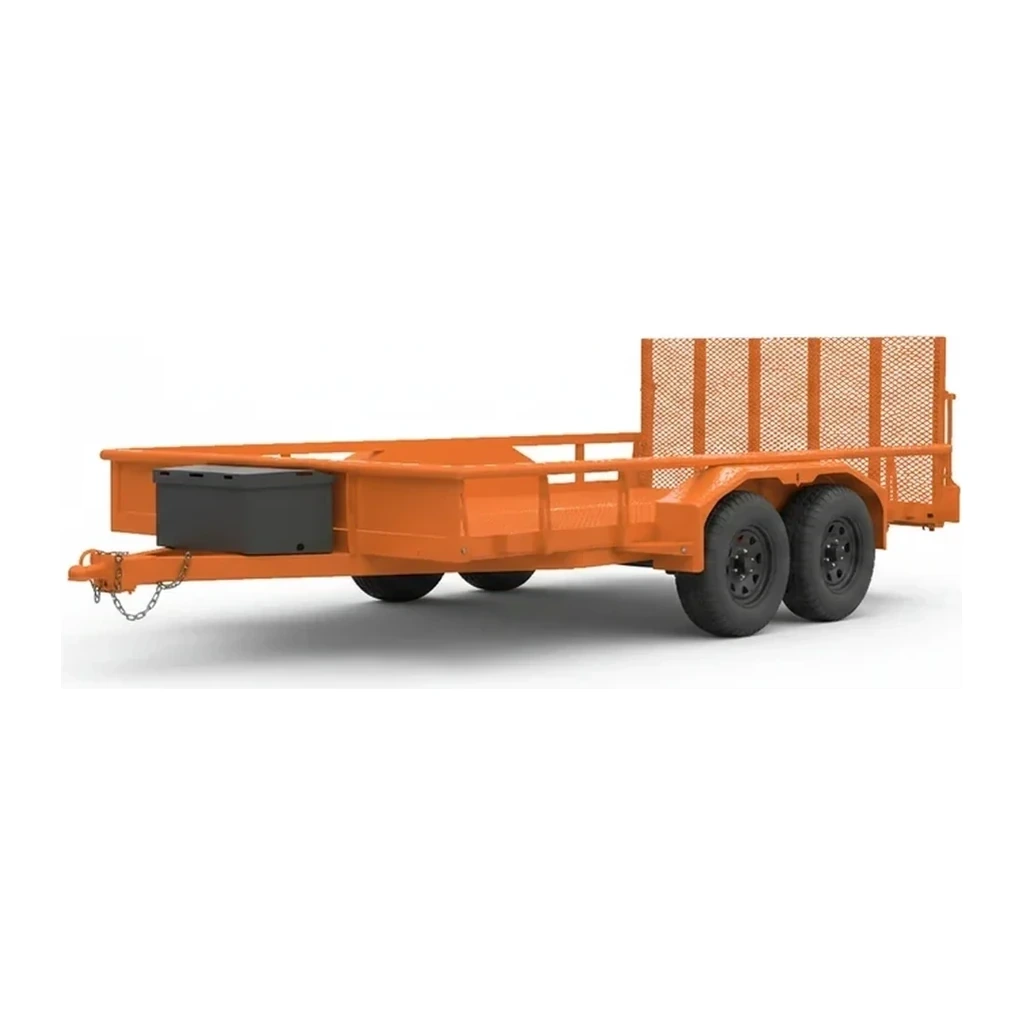
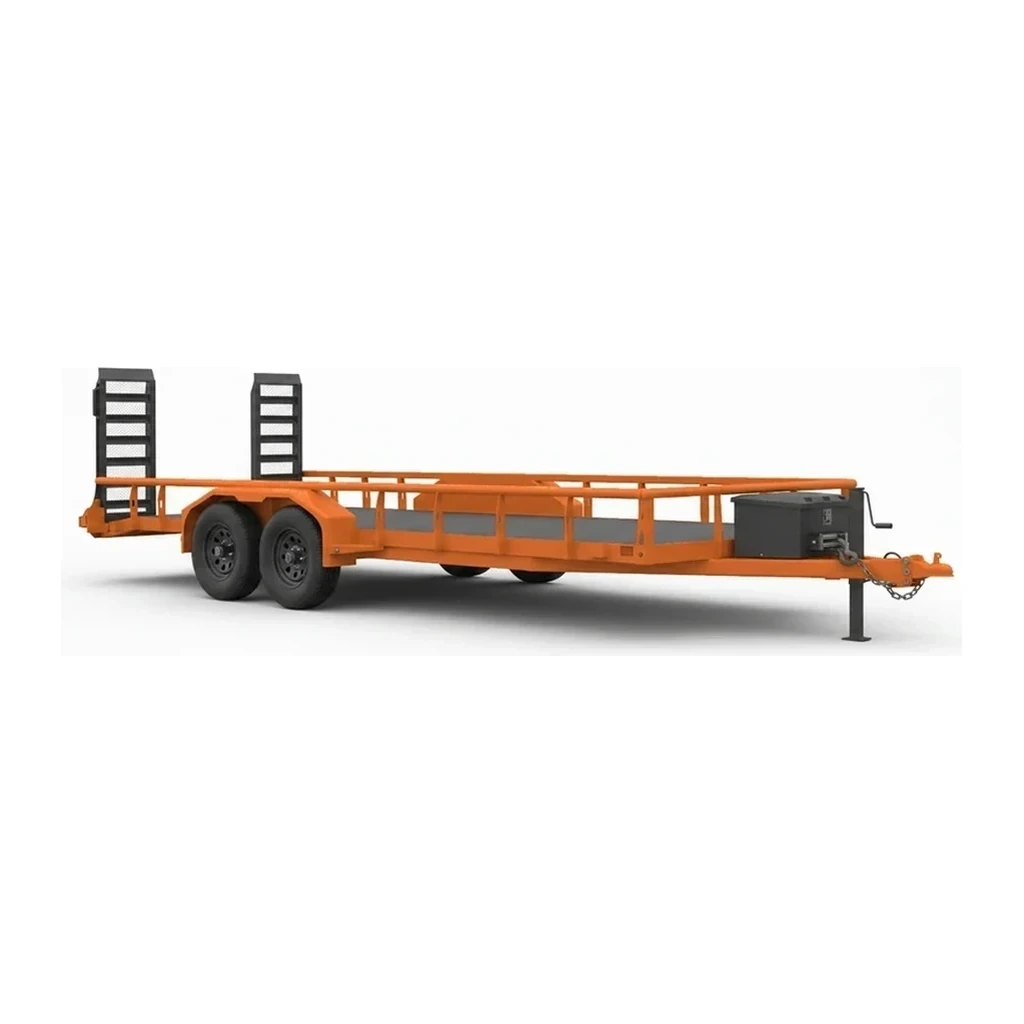
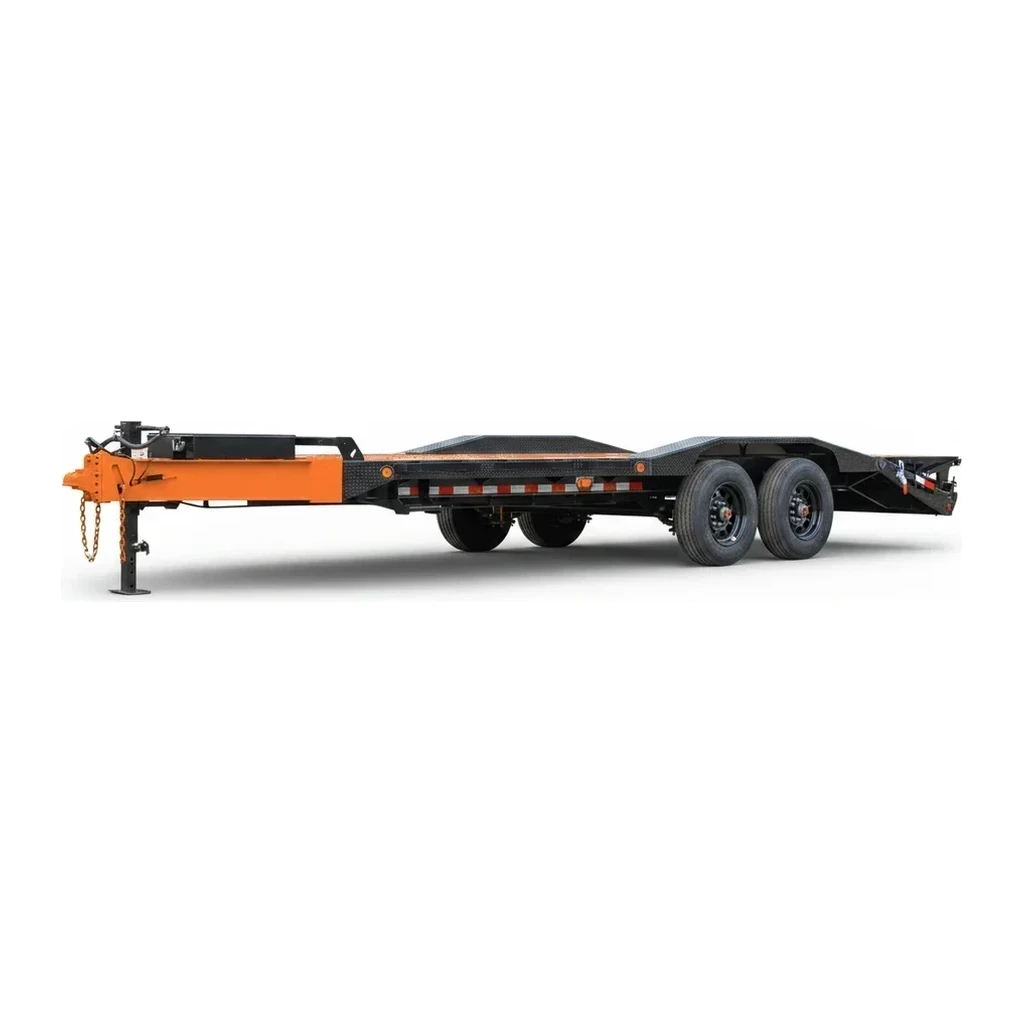
A steel frame carries a decked floor with side rails or stake pockets, riding on leaf- or torsion-sprung axles with electric brakes above the light band. A rear ramp gate on many models loads wheeled cargo and small machines. Payload is GVWR minus tare, and tongue load in the 10-15 percent range keeps the tow stable. The heavy bands adopt equipment-trailer construction, tandem and triple axles, heavier couplers or gooseneck connection, while keeping the open multi-purpose deck.
Types et variantes
- Up to 3,000 lb utility trailers
- No brakes required in most jurisdictions: a small open trailer behind any vehicle with a hitch.
- 3,000-7,000 lb utility trailers
- The everyday landscape and rubbish trailer, single axle with brakes.
- 7,000-14,000 lb utility trailers
- Tandem-axle utility work: bulk material, pallets and light equipment.
- 14,000+ lb utility trailers
- Heavy open trailers approaching the CDL line.
Spécifications clés
| Spécification | Plage typique | Signification |
|---|---|---|
| Capacity band (lb) | Cataloged bands run up to 3,000, 3,000-7,000, 7,000-14,000, and 14,000+ lb | The gross-weight class governing tow vehicle, brakes, and licensing. |
| Load capacity | 200-47,260 kg across cataloged listings | Real cargo capacity after trailer tare. |
| Deck and gate configuration | Rail sides, stake pockets, and ramp gates per model | Determines what cargo loads and how. |
Comment l'industrie le dimensionne
Utility trailers are sized by the heaviest routine load plus margin, against the tow vehicle's rating: the up to 3,000 lb band tows behind any vehicle with a hitch, 3,000-7,000 lb suits half-ton trucks and SUVs, 7,000-14,000 lb requires heavy-duty pickups, and the 14,000+ lb band approaches equipment-hauling combinations with licensing implications as gross weights climb past 26,000 lb.
Applications
- Hauling ATVs, UTVs, and small machines
- Material and supply runs for renovation and construction
- Landscape debris and green-waste hauling
- Vehicle transport in the braked bands
- General site support and yard duty
Sécurité et opération
- Load heavy items over the axles with 10-15 percent of weight on the tongue.
- Cross safety chains under the coupler and verify breakaway function on braked models.
- Do not exceed the gate rating when loading machines up ramp gates.
- Check tire load range and pressure: utility trailers commonly run overloaded tires.
Normes et certifications
- FMCSA · 49 CFR 393
- Brake, lighting, and securement requirements for trailers in commercial service.
- NHTSA · FMVSS 108
- Lighting and conspicuity requirements applicable to all road trailers.
- SAE · J684
- Coupler, ball, and safety-chain performance standard.
- FMCSA · 49 CFR 383
- Combinations over 26,000 lb GCWR with trailers over 10,000 lb require a Class A CDL in commercial use.
Questions fréquentes
What separates a utility trailer from an equipment trailer?
When do brakes become mandatory?
What can the 3,000-7,000 lb band actually carry?
Comparer les modèles populaires
Chercher par spécification →Normalisé aux mêmes unités. Un tiret signifie que la valeur n'a pas été publiée.
| Modèle | Capacité de charge | Puissance moteur |
|---|---|---|
| Ditch Witch HX50 Vacuum Excavator | 57,320 lb (26,000 kg) | 50 hp |
| Ditch Witch HX30 Vacuum Excavator | 44,092 lb (20,000 kg) | 25 hp |
| Ditch Witch HX75 Vacuum Excavator | 57,298 lb (25,990 kg) | 74 hp |
Équipements connexes
Parcourir par fabricant
Sources
Chaque spécification est vérifiée par rapport aux données publiées par le fabricant, avec la source liée pour référence.