

Masonry and Tile
How it works
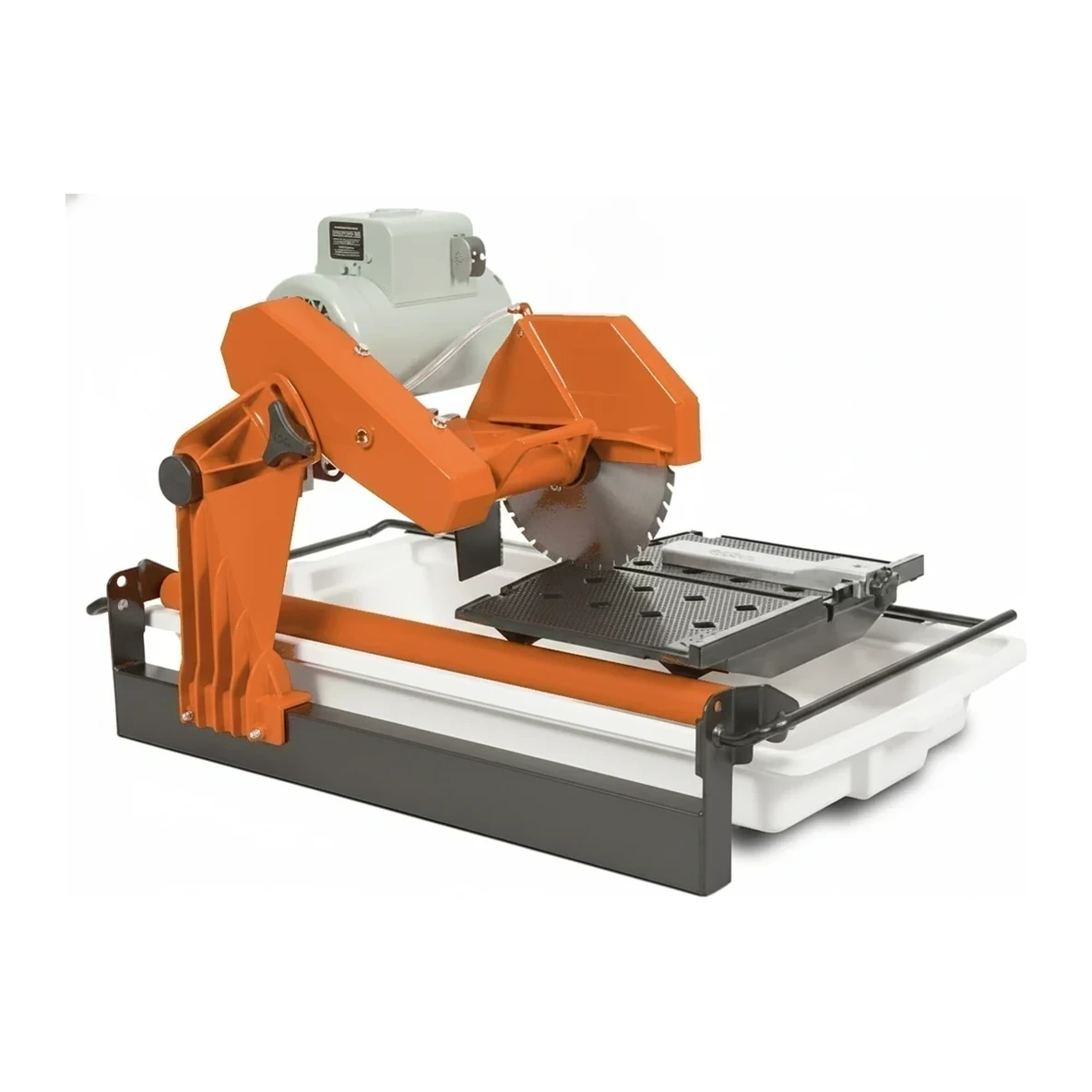
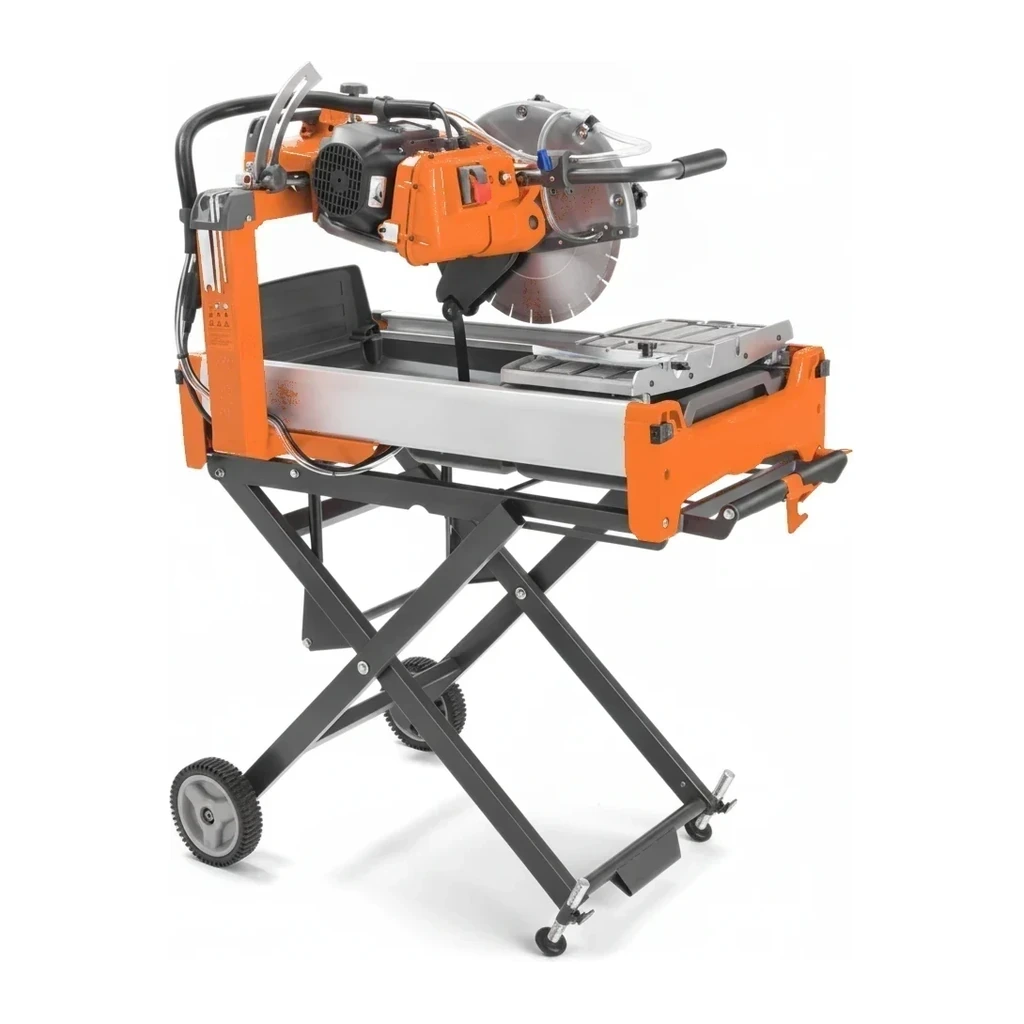
Masonry and tile cutting equipment operates by rotating a diamond-impregnated blade at high speed through the workpiece, with continuous water flow to the cutting zone. The water serves multiple purposes: cooling the blade to prevent warping and premature wear, lubricating the cut to reduce friction, and suppressing dust generated by the cutting process. Depending on the machine configuration, either the blade moves through a stationary workpiece or the material is fed into a fixed blade position. The diamond particles embedded in the blade's edge grind through hard materials rather than cutting with teeth, making them effective for ceramic, stone, and masonry products that would shatter or chip with conventional saw blades.
Types & variants
- Tile Saw
- Precision cutting machines designed specifically for ceramic tile, porcelain, glass tile, and similar thin materials, typically featuring sliding tables or overhead blade configurations for straight cuts, miters, and angular work on flooring and wall tile installations.
- Masonry Saw
- Heavy-duty saws engineered for cutting thicker, denser materials such as brick, concrete block, natural stone, pavers, and concrete, generally featuring more robust construction and higher horsepower motors than tile-specific models.
Standards & certifications
- ANSI · B7.1
- Safety requirements for the use, care, and protection of abrasive wheels used in masonry and tile cutting applications
- OSHA · 29 CFR 1926.304
- Regulations governing woodworking and masonry saws in construction, including guarding and operational safety requirements
- TCNA · Handbook for Ceramic, Glass, and Stone Tile Installation
- Industry standards for tile installation methods and practices, including equipment selection and cutting techniques
Frequently asked
What is the difference between a tile saw and a masonry saw?
Tile saws are engineered for thinner, more delicate materials like ceramic and porcelain tile, typically offering finer precision and features like adjustable fences for detailed angle work. Masonry saws are built for heavier materials such as brick, block, and thick stone, featuring larger blades, higher horsepower motors, and more robust frames to handle the increased cutting forces and material weight.
Why do masonry and tile saws use water during cutting?
Water performs three critical functions: it cools the diamond blade to prevent heat damage and extend blade life, lubricates the cutting surface to reduce friction and improve cut quality, and captures dust particles to minimize airborne silica and other hazardous particulates. The continuous water flow is essential for both equipment longevity and worker safety.
How are masonry and tile saw capacities specified?
Capacity is typically specified by maximum cutting depth and maximum material length or diagonal cut capability. Blade diameter largely determines cutting depth, while table size and rip capacity define the maximum workpiece dimensions. Masonry saws may also specify maximum block size or paver dimensions, while tile saws often indicate maximum diagonal tile size for corner-to-corner cuts.
What blade types are used for different masonry and tile materials?
Diamond blade selection depends on material hardness and composition. Continuous rim blades provide smooth cuts for tile and soft stone, segmented blades offer faster cutting for brick and concrete block, and turbo blades balance speed and finish quality for general masonry work. Bond hardness is matched to material—softer bonds for hard materials like porcelain and granite, harder bonds for softer materials like brick and asphalt.