

Single-Disc Floor Grinder
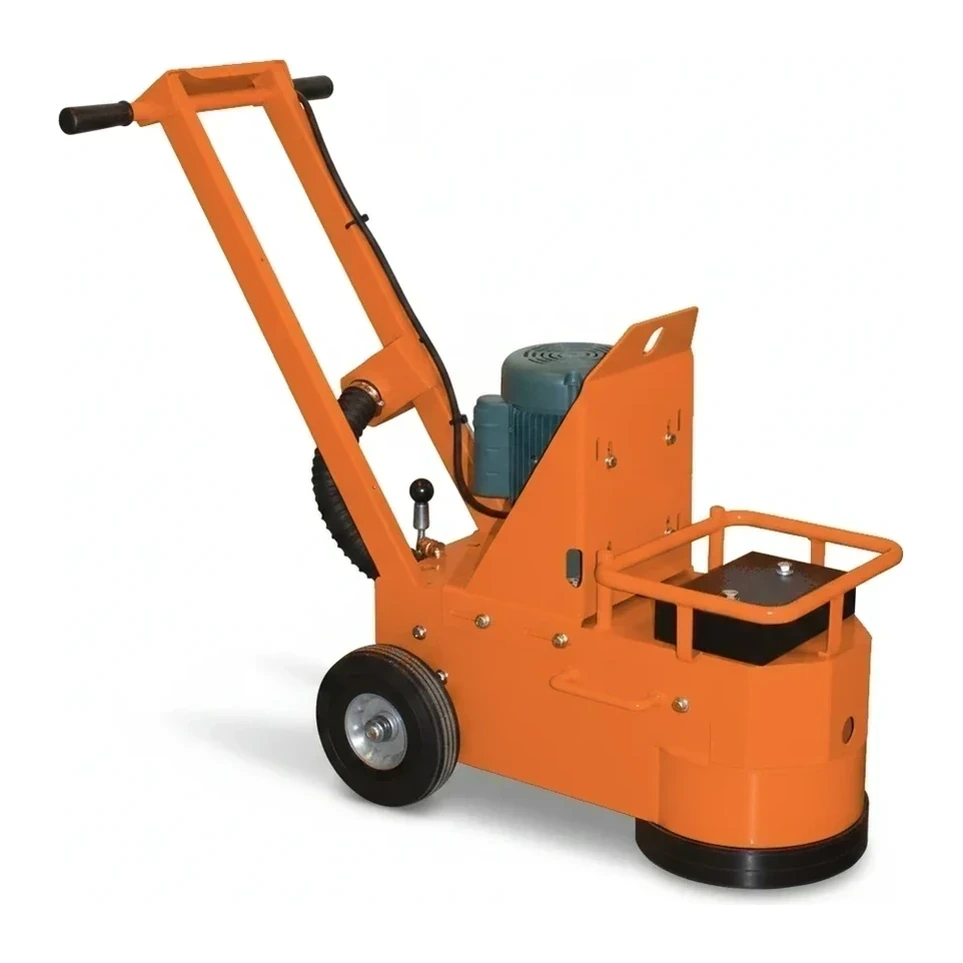
A single-disc floor grinder is a surface preparation machine featuring one rotating abrasive head used for grinding, smoothing, and profiling concrete floors. These machines range from compact edge grinders to mid-size open-floor units, serving as essential tools for coating removal, surface leveling, and prep work in areas inaccessible to larger multi-head equipment.
How it works
The machine drives a single circular grinding head mounted with diamond tooling, cup wheels, or other abrasive segments that rotate against the concrete surface. An electric or pneumatic motor transfers power through a direct-drive or belt-driven mechanism to the grinding disc, while adjustable handles and weight distribution allow operators to control grinding depth and surface contact. Dust shrouds integrated into the head typically connect to vacuum systems for silica dust control during operation. Smaller models are maneuvered manually along edges and corners, while larger single-disc units may include wheels or transport mechanisms for open-floor work across medium-sized areas.
Types & variants
- Edge/Corner Grinder
- Compact models designed specifically for perimeter work, tight spaces, and areas adjacent to walls where larger equipment cannot reach
- Mid-Size Single-Head Grinder
- 10-inch and larger machines balancing portability with coverage area, suitable for small rooms and general surface prep tasks
- Large Single-Disc Grinder
- Units providing increased grinding width for open-floor applications while maintaining single-head simplicity
- Variable-Speed Grinder
- Models with adjustable RPM controls allowing operators to match disc speed to tooling type and surface conditions
- Pneumatic Grinder
- Air-powered units eliminating electrical hazards in wet environments or where power access is limited
Key specifications
| Specification | Typical range | What it means |
|---|---|---|
| Grinding Width | Measured in inches | Diameter of the grinding disc; determines coverage area and accessibility to confined spaces |
| Engine Power | 5.0-35.0 hp | Motor output capacity; higher power enables aggressive material removal and operation of larger tooling |
| Head Configuration | Single rotating disc | One abrasive head distinguishes this class from multi-head planetary systems |
| Speed Range | Variable or fixed RPM | Rotational speed of grinding disc; affects tooling performance and surface finish quality |
| Weight | Varies by size class | Machine mass contributes to grinding pressure and operator maneuverability |
How the industry sizes it
The industry sizes single-disc floor grinders by grinding disc diameter measured in inches. Machines up to 10 inches are classified for edges, corners, and small rooms: designed to reach areas where larger machines cannot. Units 10 inches and above serve open-floor single-disc grinding for coating removal and light leveling, one room at a time. Size selection depends on the balance between maneuverability requirements and desired production rate.
Applications
- Edge and corner grinding in rooms prepared with larger multi-head equipment
- Coating removal and surface profiling in small to medium-sized spaces
- Concrete leveling and lippage reduction around columns and transitions
- Surface preparation along walls, under fixtures, and in tight-access areas
- Light grinding and smoothing prior to polishing or overlay installation
- Mastic and adhesive removal from concrete substrates
Safety & operation
- Respiratory protection and dust extraction systems required due to respirable crystalline silica exposure during concrete grinding
- Guards and shrouds must remain in place to contain abrasive debris and prevent contact with rotating components
- Proper ergonomic technique and anti-vibration measures reduce operator fatigue and hand-arm vibration syndrome risk
- Ground fault circuit interrupter (GFCI) protection necessary for electric models in damp or wet conditions
- Hearing protection required as grinding operations frequently exceed 85 dBA noise exposure levels
Standards & certifications
- OSHA · 29 CFR 1926.1153
- Respirable crystalline silica standard mandating exposure controls and dust suppression during concrete cutting and grinding
- ANSI · B7.1
- Safety requirements for use, care, and protection of abrasive wheels used on grinding machinery
Frequently asked
What distinguishes a single-disc grinder from a planetary grinder?
How are single-disc floor grinders sized within the industry?
What applications require edge grinders versus larger single-disc models?
What dust control measures apply to single-disc grinding operations?
Related equipment
Browse by manufacturer
Sources
Every specification is verified against the manufacturer's published data, with the source linked for reference.
All models
152 models · Page 4 of 4 · Every spec cited to source