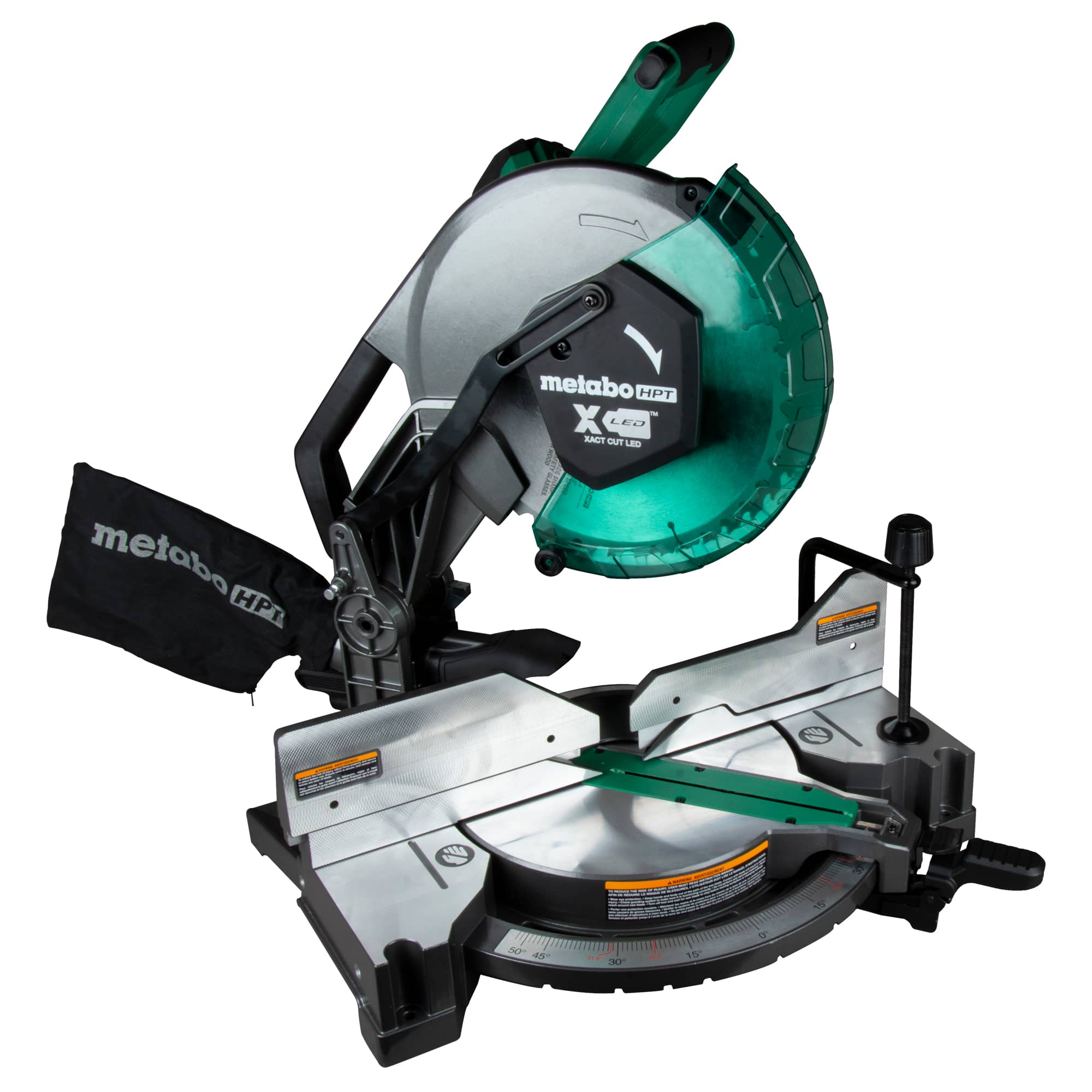

Miter Saw
A miter saw is a stationary saw that swings a circular blade down through stock held against a fence, cutting precise crosscuts and angles. It is the accuracy benchmark for trim, framing, and any repeated angle cut.
Cat classes
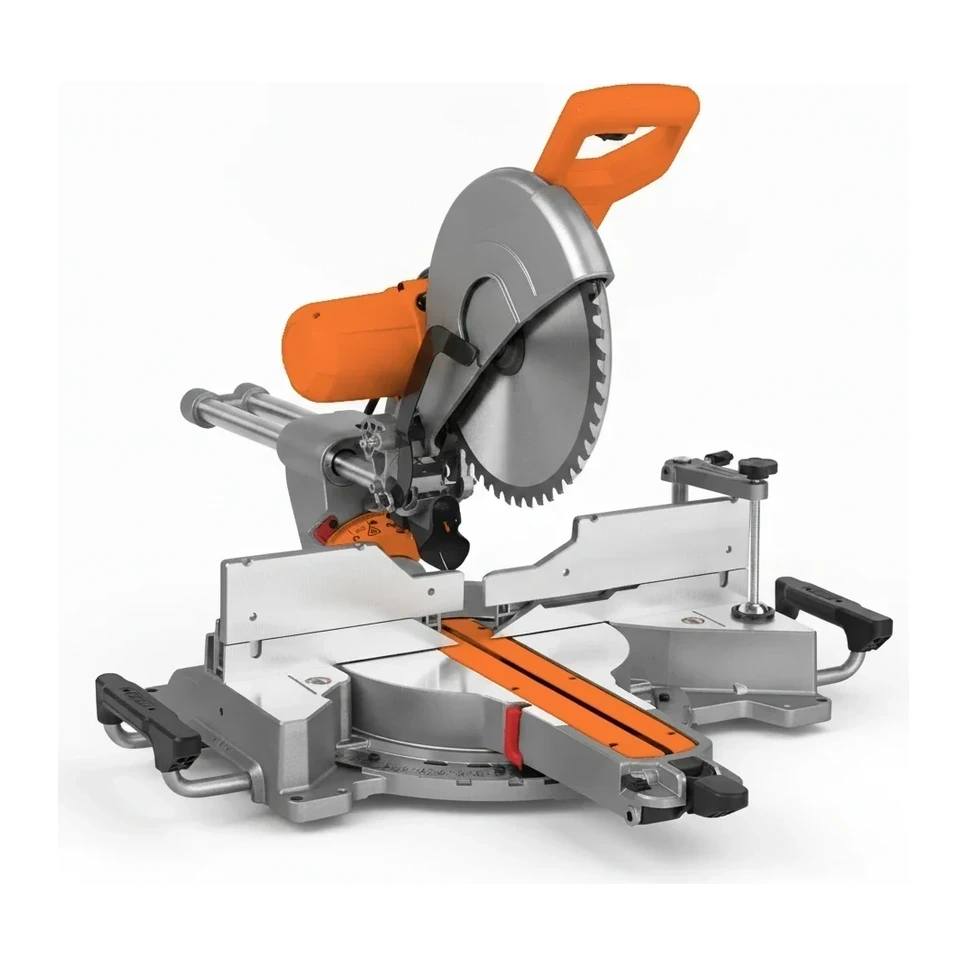
Pick a size class — capacity and reach differ across the range.
How it works
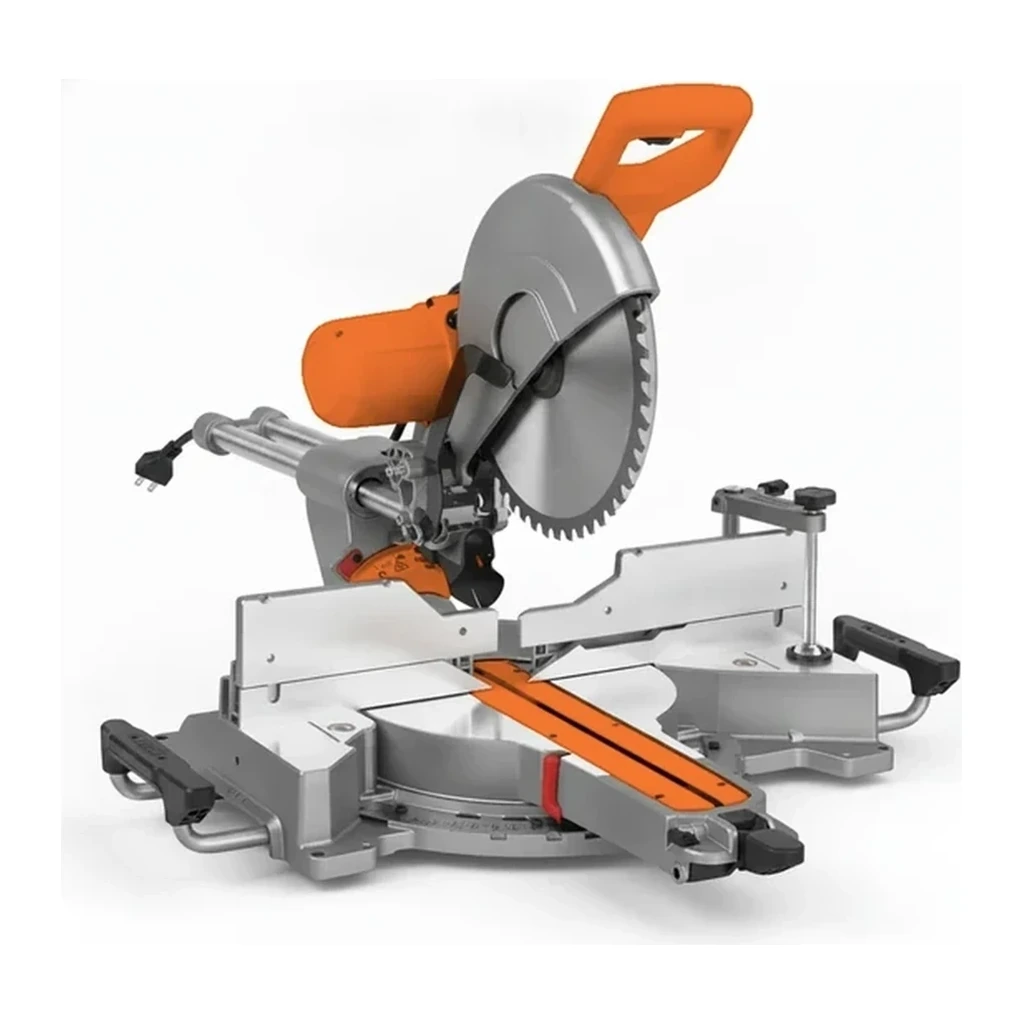
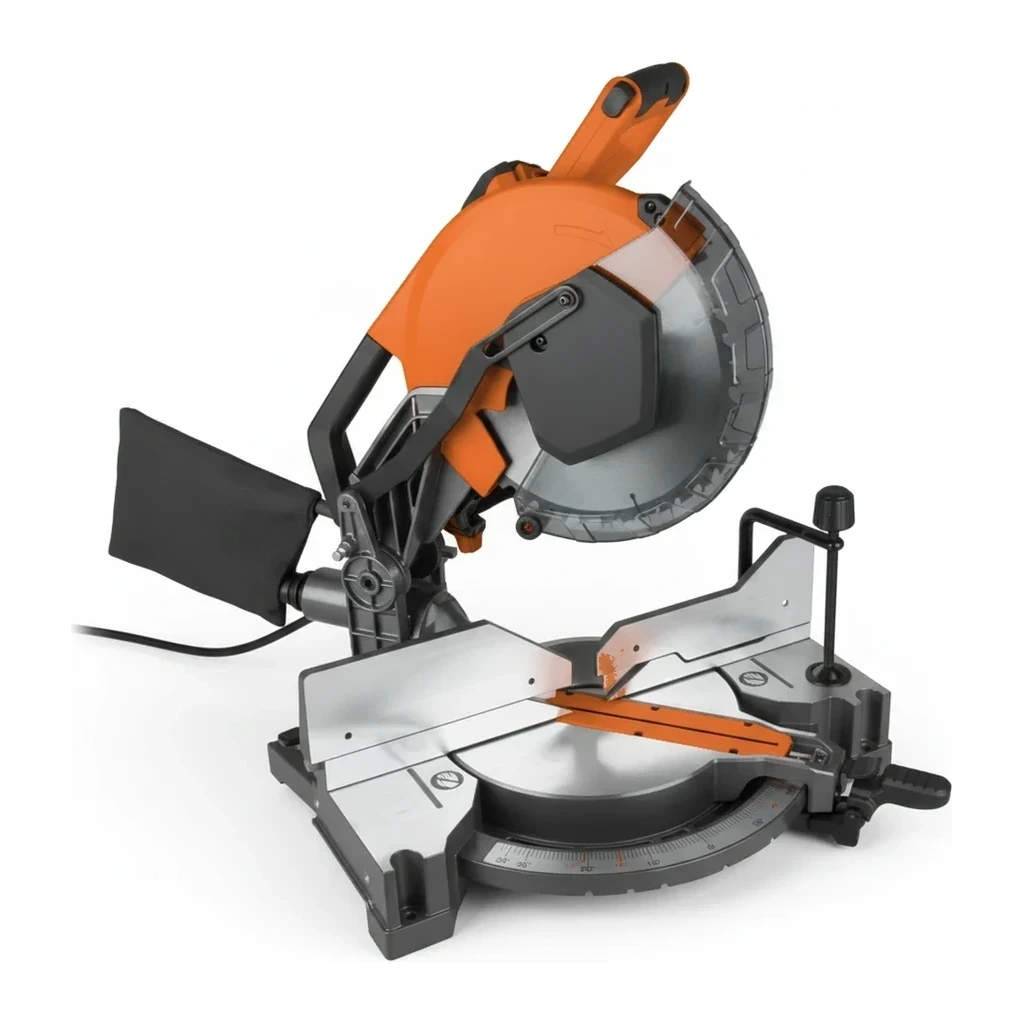
The blade and motor pivot on a hinged arm above a rotating table; the operator sets the miter angle on the table and, on compound saws, tilts the head for a bevel. Sliding models add rails so the head can pull through wide boards. Stock stays fixed against the fence while the blade comes down through it, which is what makes the cuts repeatable.
Types & variants
- Compound miter saws
- Fixed-head saws cutting miters and bevels for trim and framing.
- Sliding compound saws
- Rail-mounted heads that extend crosscut capacity for wide boards.
- Dual-bevel saws
- Heads tilting both directions so crown work needs no flipping.
Key specifications
| Specification | Typical range | What it means |
|---|---|---|
| Blade diameter | 10–12 in (most common sizes) | Larger blades cut taller and wider stock in one pass. |
| Miter range | 0–52 degrees | Covers the angles needed for corners, including out-of-square walls. |
| Bevel range | 0–47 degrees | Tilting the blade handles compound cuts for crown and sloped work. |
How the industry sizes it
The class bands by blade diameter. 10 in saws handle trim, base, and crosscuts up to about a 2×6, light enough to carry room to room. 12 in saws, usually sliding, crosscut a 2×12 or a 12 in wide board in one pull.
Applications
- Baseboard, casing, and crown moulding cuts
- Framing lumber crosscuts and repetitive length stops
- Deck boards, rails, and fascia
- Door, window, and stair trim fitting
Safety & operation
- Hands stay outside the marked no-hands zone beside the fence; small offcuts are never plucked while the blade spins.
- Let the blade reach full speed before contact and stay down until it stops after the cut on sliding saws.
- Long stock must be supported level with the table so it cannot pinch the blade mid-cut.
Standards & certifications
- OSHA · 29 CFR 1926.304
- Woodworking tool guarding and operating requirements.
- UL · UL 62841-3-9
- Safety standard for hand-held and transportable motor-operated electric tools, miter saws.
Frequently asked
What blade size covers general trim work?
Sliding or fixed head?
Why are cuts coming out slightly off square?
Related equipment
Browse by manufacturer
Sources
Every specification is verified against the manufacturer's published data, with the source linked for reference.
All models
59 models · Page 2 of 2 · Every spec cited to source