

Brush Chipper
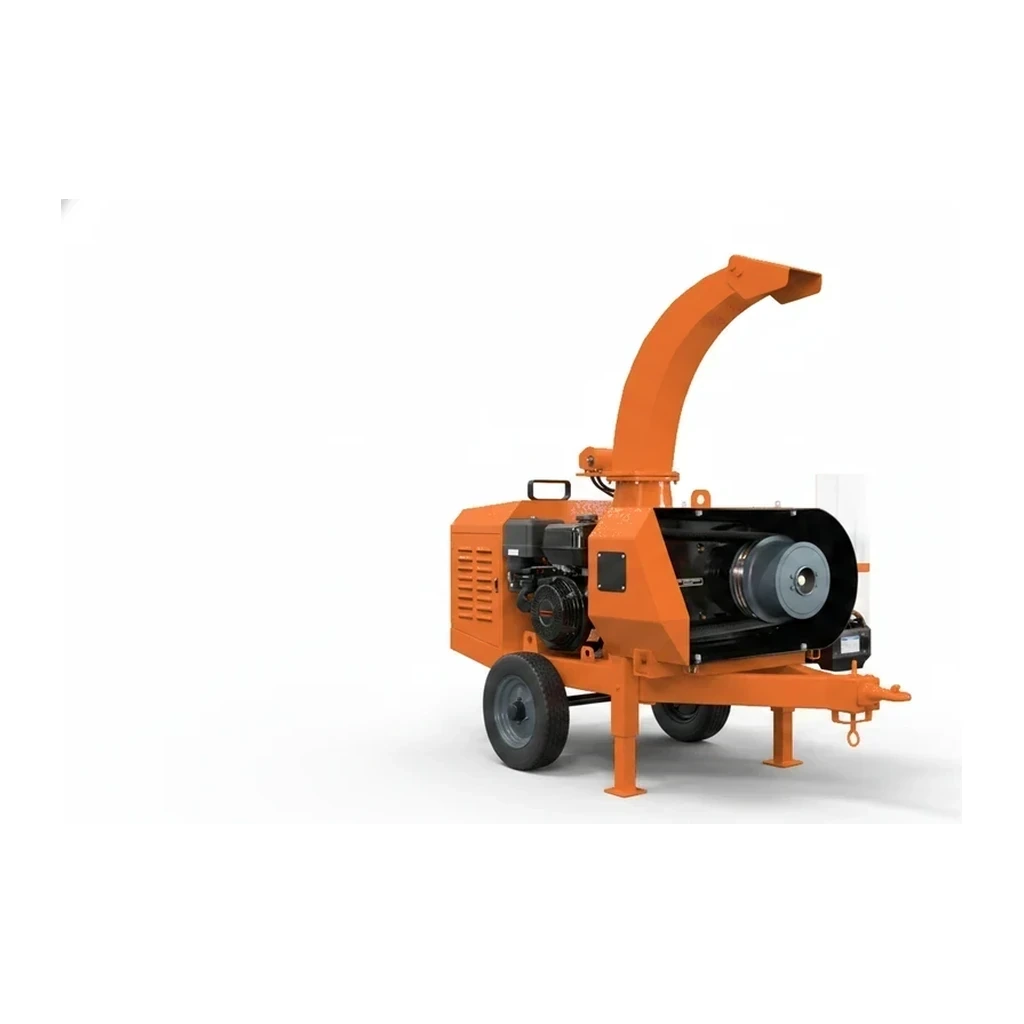
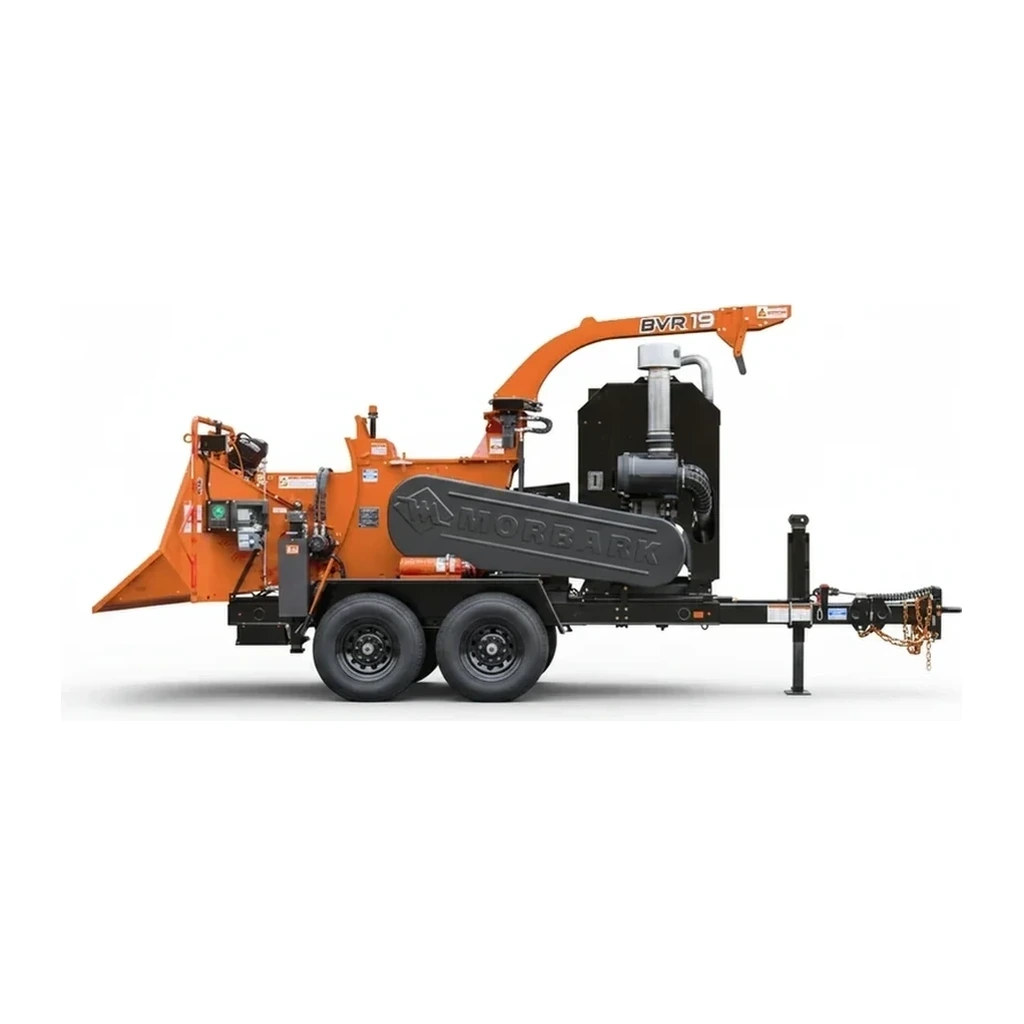
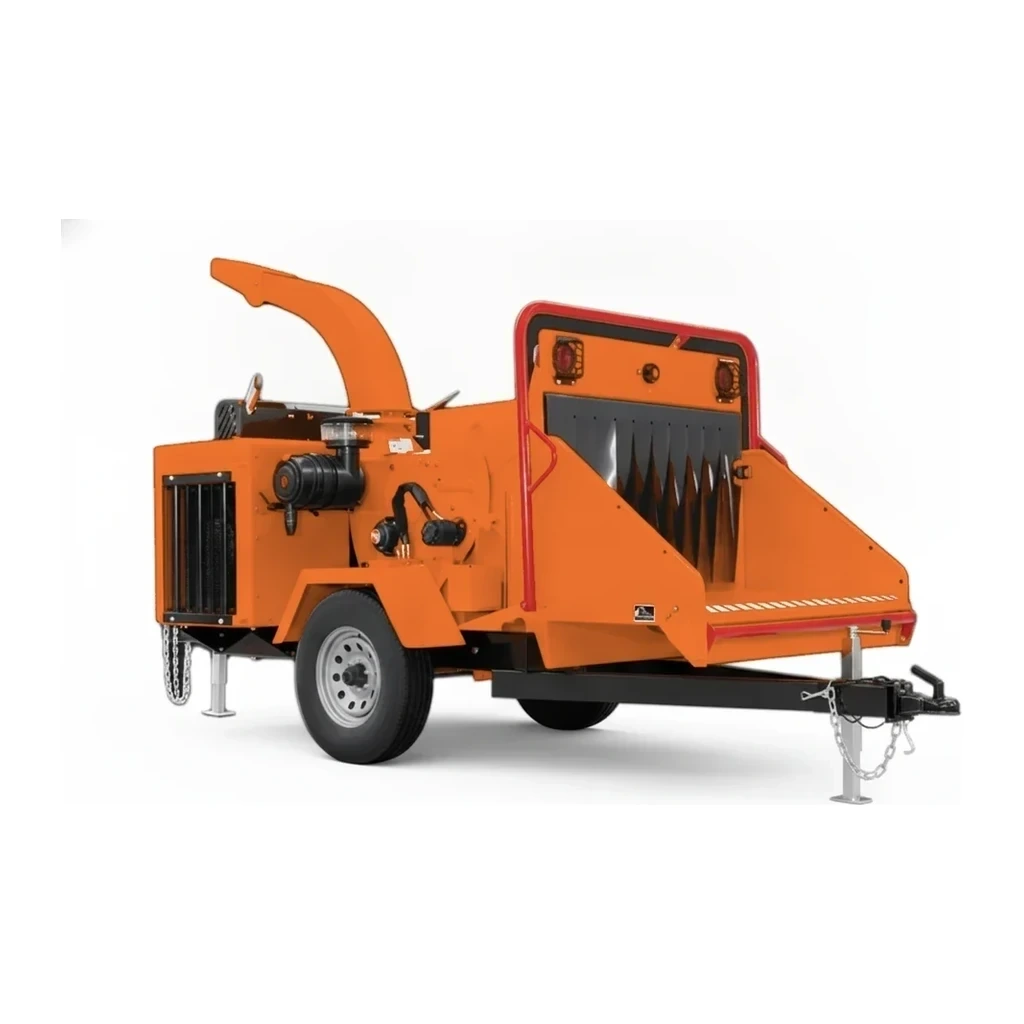
A brush chipper is a mobile or towable machine that processes tree limbs, branches, and brush into wood chips through high-speed mechanical cutting. The equipment class serves tree-service contractors, municipalities, landscape crews, and land-clearing operations that require efficient reduction of organic debris. Capacity ratings range from 6 inches to 22 inches, measured by the maximum diameter of material that can be fed into the throat opening.
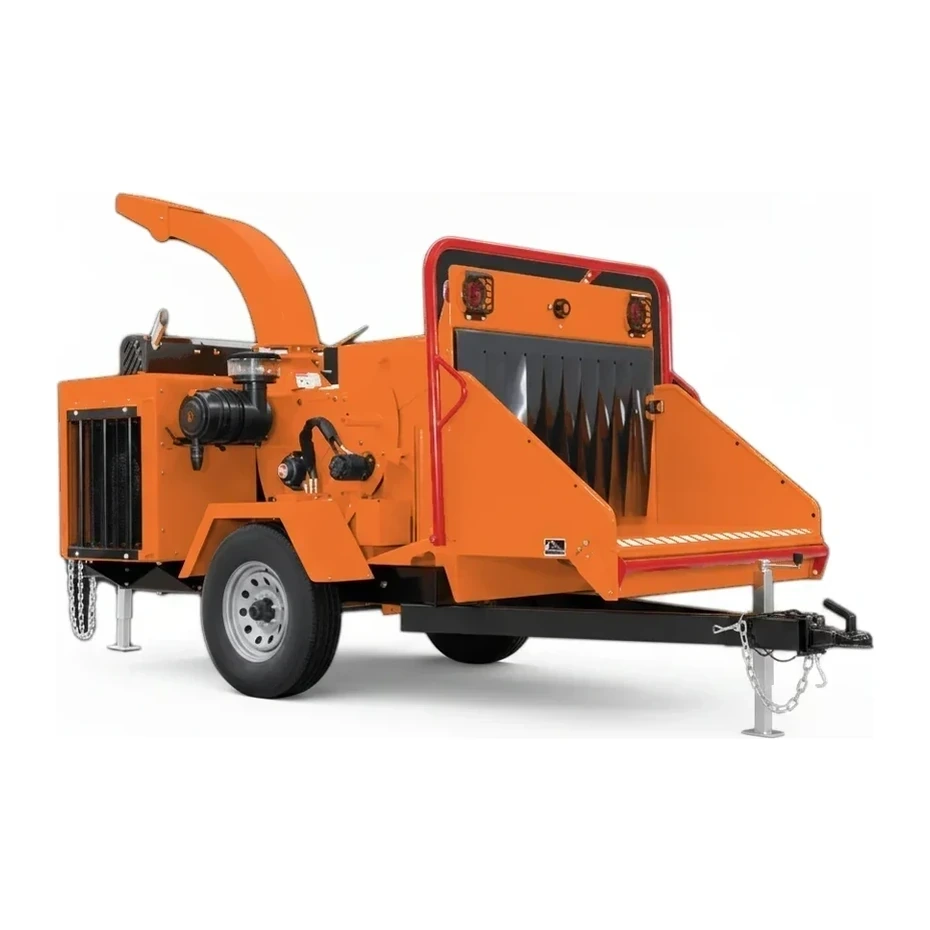
Cat classes
Pick a size class — capacity and reach differ across the range.
How it works
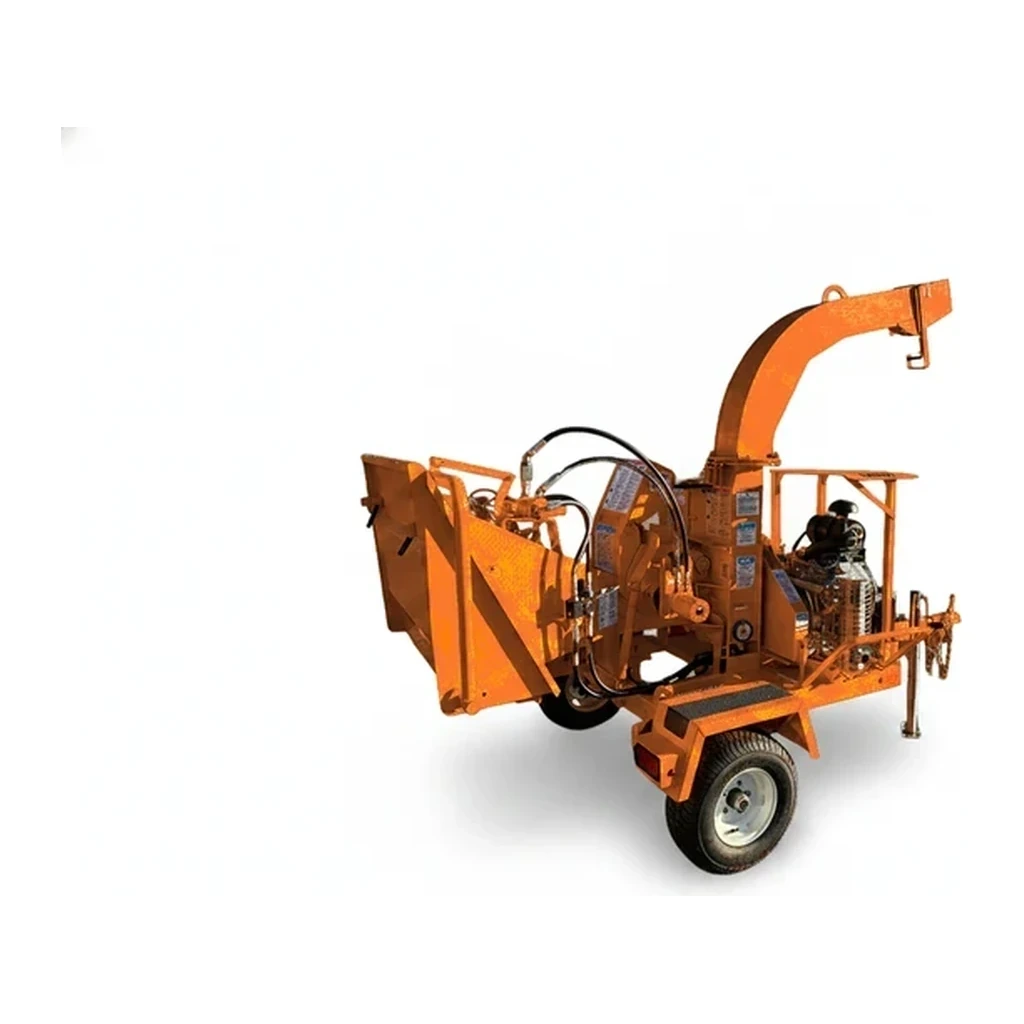
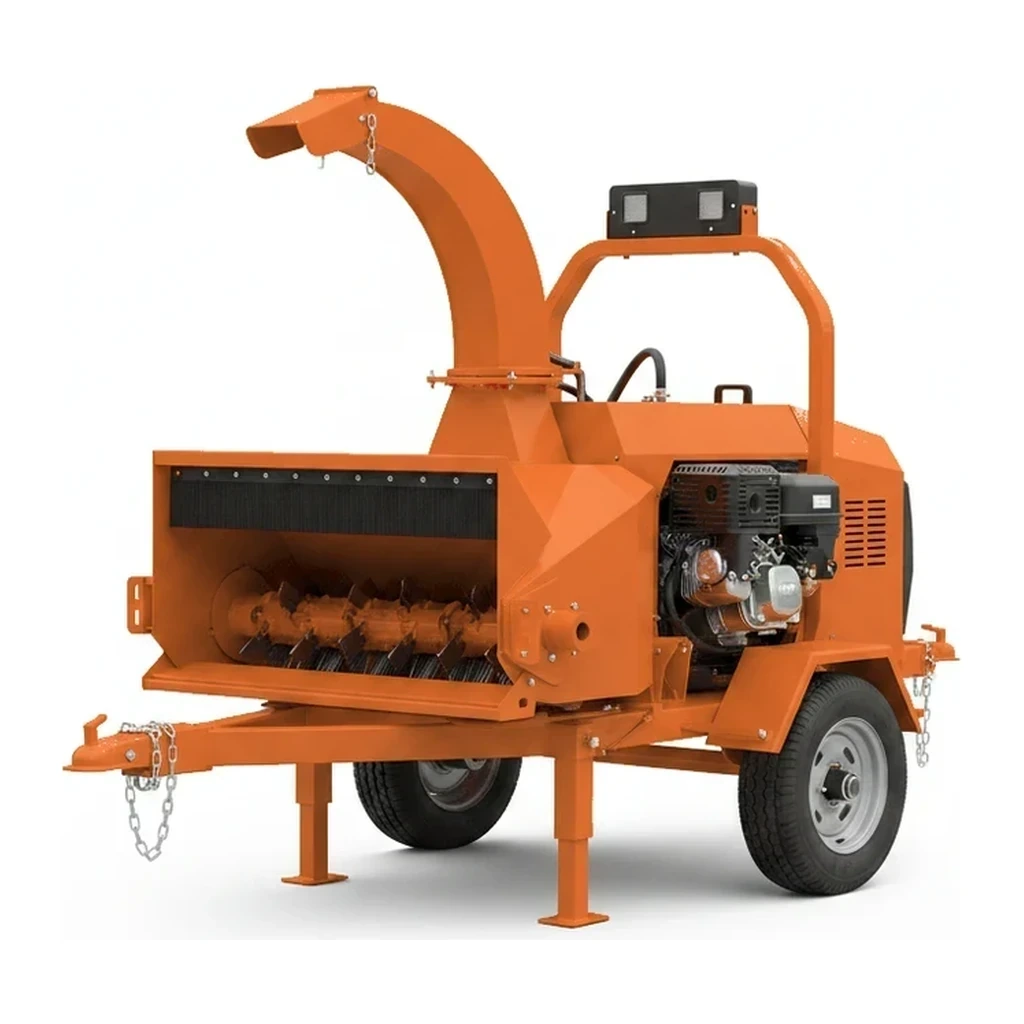
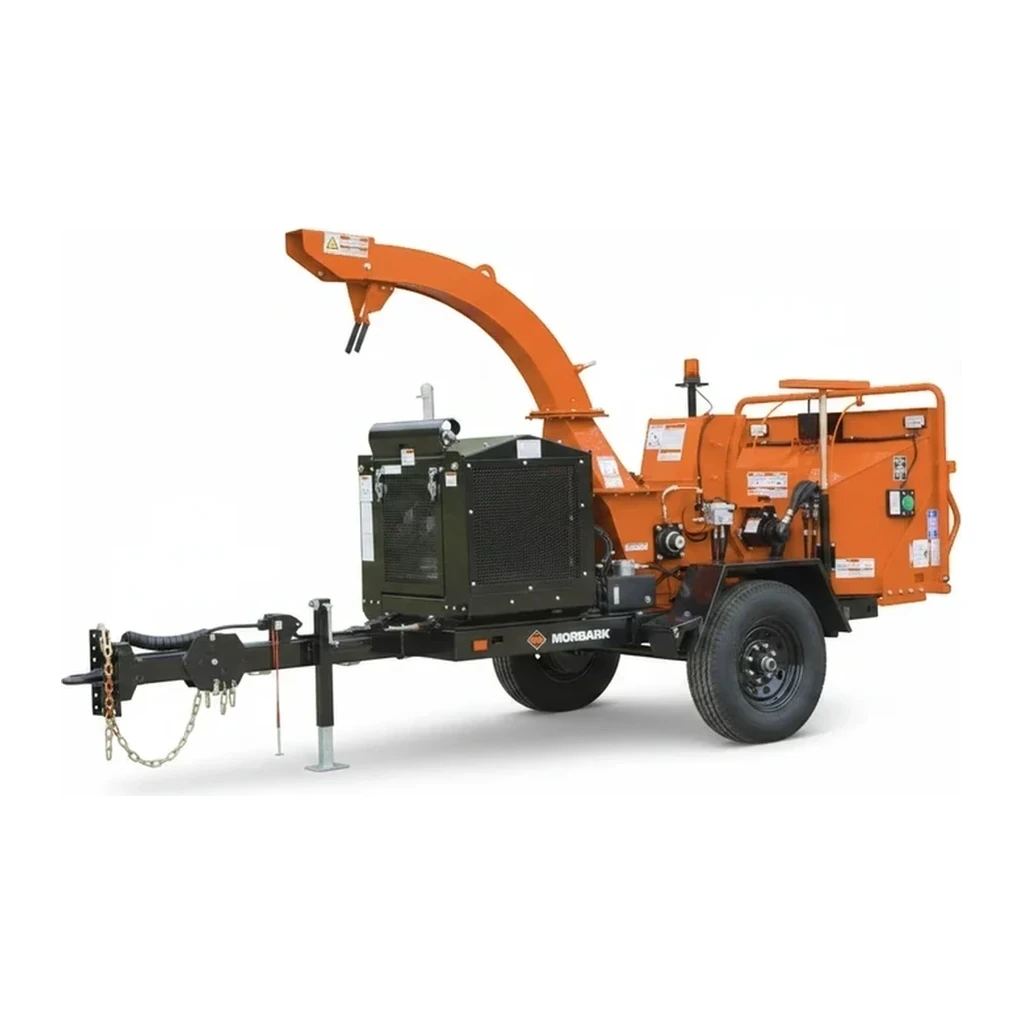
Material is fed through a horizontal or angled throat opening into a cutting chamber where either a rotating disc with cutting knives or a cylindrical drum with helical knives reduces wood into chips. Hydraulic feed rollers grip incoming material and pull it into the cutting mechanism at controlled speeds, typically 80 to 120 feet per minute. The resulting chips are expelled through a discharge chute, often adjustable through 360 degrees, into a truck bed or onto the ground. Power is supplied by gasoline or diesel engines ranging from 25 to 1,200 horsepower, with larger commercial units typically diesel-powered for sustained production work. Safety devices include feed-stop bars, emergency shutoffs, and reversing controls to clear jams. Most units are trailer-mounted for highway towing, while others mount on dedicated truck chassis or operate as stationary equipment.
Types & variants
- Disc Chipper
- Uses a flywheel disc (60.7 to 102 cm diameter) with radial knives spinning at 1,350 to 1,800 RPM; produces uniform chips and dominates production applications.
- Drum Chipper
- Employs a cylindrical drum (46 to 106.7 cm diameter) with helical knives at 916 to 2,126 RPM; common in smaller towable units, produces less uniform chips.
- Towable Chipper
- Highway-towable units on pneumatic tires with DOT lighting and brakes; standard for tree-service crews working off-site.
- Truck-Mounted Chipper
- Integrated into chassis or truck bed with direct PTO or dedicated engine; eliminates need for separate towing vehicle.
- Tracked Self-Propelled Chipper
- Crawler-mounted units with onboard controls for remote or rough-terrain land-clearing operations; operating weight to 185,972.9 kg.
- Stationary/Industrial Chipper
- High-capacity units (20+ inches) positioned at biomass facilities, mills, or transfer stations processing continuous volumes.
Key specifications
| Specification | Typical range | What it means |
|---|---|---|
| Chipper Capacity | 6 to 22 in | Maximum diameter of round wood that can be fed into the throat; primary sizing criterion for the class. |
| Engine Power | 25 to 1,200 hp | Horsepower required scales with capacity; 9-inch units typically 65–90 hp, 18-inch units 200+ hp. |
| Cutting Capacity | 15.2 to 53.3 cm | Maximum diameter of material the cutting mechanism can process; correlates directly with chipper capacity rating. |
| Feed Speed | 80 to 120 ft/min | Hydraulic roller speed controls production rate and material engagement; variable on most commercial units. |
| Operating Weight | 628 to 185,972.9 kg | Determines towing requirements, stability during operation, and ground pressure on soft surfaces. |
| Discharge Height | 15 ft (4.6 m) | Maximum height of chip discharge; must clear truck sideboards or chip vans in production settings. |
How the industry sizes it
The rental industry sizes brush chippers by chipper capacity, expressed in inches and representing the maximum diameter of round wood the machine can process. Limbs and brush up to 6 inches serve storm cleanup and one-truck landscape crews. The 7 to 10 inch range represents the 9-inch tree-service standard, handling most residential prunings and removals. The 10 to 13 inch category delivers 12-inch production capacity where whole limbs go in without bucking them down first. The 13 to 16 inch range supports 15-inch heavy removals, storm response, and municipal right-of-way contracts. The 16 to 20 inch category enables 18-inch whole-tree work behind bucket or crane crews with minimal handling. Twenty inches and larger units deliver whole-tree and land-clearing production feeding chip trucks continuously. Operators also reference engine horsepower, infeed opening dimensions, and whether the unit is disc or drum type when matching equipment to volume and material characteristics.
Applications
- Residential and commercial tree pruning and removal operations producing truckloads of chips daily
- Municipal right-of-way maintenance and storm debris cleanup following weather events
- Land clearing and site preparation converting standing timber and brush into transportable chips
- Utility vegetation management along transmission corridors and roadside rights-of-way
- Landscape maintenance processing routine trimming waste into mulch material or reducing disposal volume
- Biomass and renewable energy operations chipping feedstock for boilers, pellet mills, or composting facilities
Safety & operation
- Feed-stop bars ("safety bars") positioned at operator stations must immediately halt feed rollers and allow reversal when contacted
- Operators and ground personnel maintain clear zones around the infeed area; loose clothing, gloves, and jewelry present entanglement hazards
- Hearing protection is mandatory; sound levels at operator position frequently exceed 100 dBA during chipping
- Discharge chute orientation and wind direction require attention to prevent chips from striking personnel, vehicles, or structures
- Lockout/tagout procedures govern all maintenance, knife changes, and clearing of jams with the engine shut down and keys removed
Standards & certifications
- ANSI · Z133
- Safety standard for arboricultural operations covering chipper operation, maintenance, and operator training requirements
- OSHA · 29 CFR 1910.266
- Logging operations standard addressing portable chippers, machine guarding, and employee safety practices
Frequently asked
What is the difference between disc and drum chippers?
How is chipper capacity determined?
What maintenance intervals apply to commercial chippers?
Why do feed systems include reversing controls?
Compare popular models
Find by spec →Normalised to the same units. A dash means the figure was not published.
| Model | Engine power | Operating weight | Fuel capacity |
|---|---|---|---|
| Bandit 75XP | 37 hp | 2,101 lb (953 kg) | - |
| Morbark BVR19 | 275 hp | 8,999 lb (4,082 kg) | 40.0 gal |
| Morbark BVR13 | 102 hp | 5,201 lb (2,359 kg) | 16.9 gal |
| Bandit Intimidator 15XP | 139 hp | 12,000 lb (5,443 kg) | - |
| Bandit 65XP | 38 hp | 7,101 lb (3,221 kg) | - |
| Bandit 200UC | 84 hp | 4,799 lb (2,177 kg) | - |
Related equipment
Browse by manufacturer
Sources
Every specification is verified against the manufacturer's published data, with the source linked for reference.
All models
246 models · Page 3 of 6 · Every spec cited to source