

Radar Speed Sign
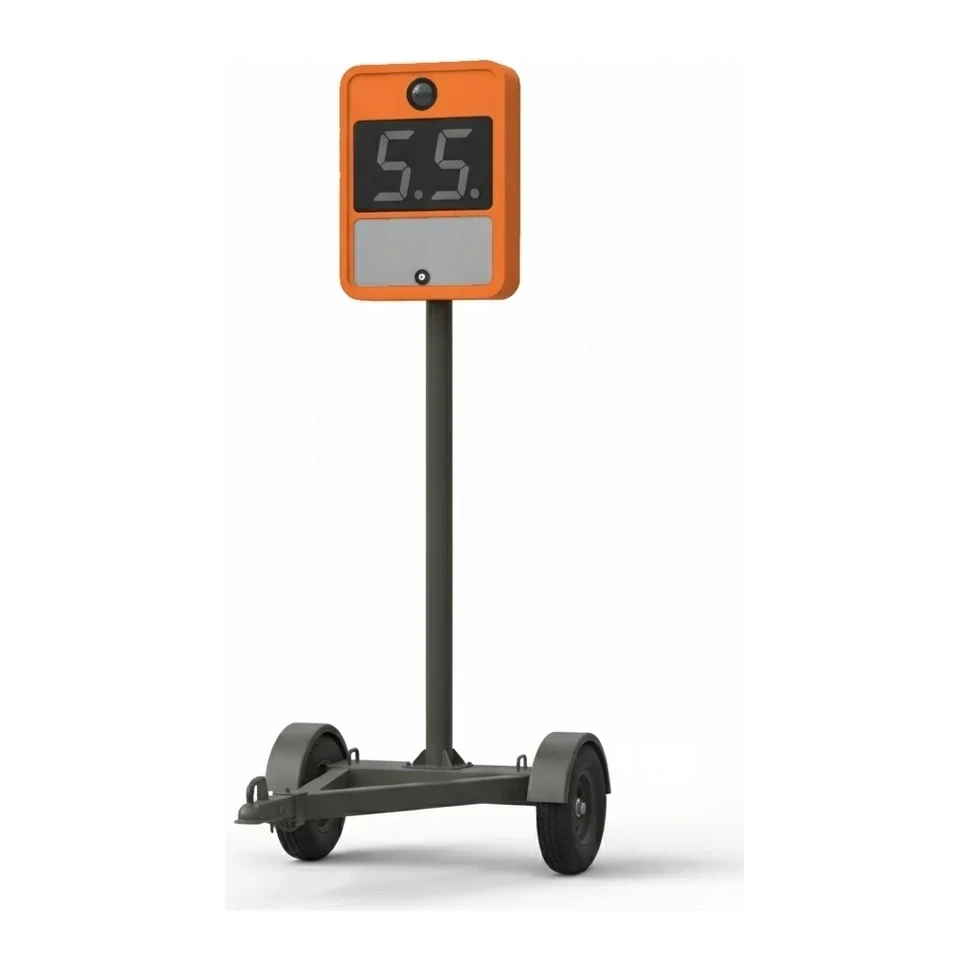
A radar speed sign is a traffic management device that uses Doppler radar to detect approaching vehicle speeds and displays them on an illuminated sign visible to drivers. These devices provide real-time feedback to motorists about their current speed, encouraging voluntary speed compliance in work zones, school zones, residential areas, and high-traffic corridors. Also known as driver feedback signs or speed displays, they serve as a traffic calming and safety enforcement tool.
How it works
The device integrates a Doppler radar sensor with a high-visibility LED or LCD display panel. As a vehicle approaches, the radar emits radio waves that reflect off the moving vehicle; the frequency shift (Doppler effect) between transmitted and received waves calculates the vehicle's speed. The measured speed is instantly displayed on the sign face, typically in large numerals visible from several hundred feet away. Many units include programmable features such as speed thresholds that trigger different display modes—flashing digits or warning messages when speeds exceed preset limits. Trailer-mounted configurations provide mobility for temporary deployments, while pole-mounted versions offer permanent installation options. Solar panels and battery systems enable operation in locations without grid power, and data logging capabilities record traffic patterns and speed compliance metrics for analysis.
Types & variants
- Trailer-Mounted Radar Speed Sign
- Self-contained mobile unit on a highway-rated trailer with integrated mast, power system, and towing package for temporary deployment and frequent relocation
- Pole-Mounted Radar Speed Sign
- Permanent or semi-permanent installation designed to mount on existing utility poles or dedicated posts, often powered by hardwired electrical or solar systems
- Solar-Powered Speed Display
- Off-grid configuration with photovoltaic panels and battery bank, suitable for remote locations or areas without electrical infrastructure
- Data-Logging Speed Sign
- Advanced units equipped with onboard memory or wireless connectivity to record speed data, traffic volume, and compliance statistics for traffic engineering analysis
- Dual-Display Speed Sign
- Bidirectional unit with displays facing both directions of travel on a roadway, monitoring and displaying speeds for vehicles approaching from either side
Key specifications
| Specification | Typical range | What it means |
|---|---|---|
| Display Size | 18-24 inch digit height | Height of speed numerals, determining visibility distance and effective warning range for approaching drivers |
| Radar Detection Range | 300-1000 feet | Maximum distance at which the Doppler radar can accurately detect and measure vehicle speed |
| Speed Range | 5-99 mph | Minimum and maximum speeds the device can detect and display to operators |
| Power Source | Solar/battery or AC | Energy system configuration, with solar/battery common for portable units and AC for permanent installations |
| Operating Temperature | -30°F to 140°F | Ambient temperature range within which the device maintains accurate operation and display function |
How the industry sizes it
The industry does not classify radar speed signs by standardized size bins. Selection is based on deployment requirements including mobility needs (trailer-mounted versus pole-mounted), power availability (solar versus grid-connected), display visibility requirements based on approach distance and speed limit, and whether data collection capabilities are necessary. Trailer units dominate temporary work zone and school zone applications, while permanent installations use pole-mounted configurations. Display digit height and radar range determine effective coverage area.
Applications
- Construction work zones to alert drivers of reduced speed limits and increase worker safety
- School zones and residential neighborhoods for traffic calming and speed awareness campaigns
- Highway approaches to sharp curves, intersections, or toll plazas requiring speed reduction
- Municipal traffic enforcement programs and speed compliance data collection
- Special event traffic management for temporary speed control in pedestrian-heavy areas
- Traffic engineering studies to measure baseline speeds and evaluate effectiveness of speed control measures
Safety & operation
- Position devices on stable, level surfaces with trailer stands fully deployed and wheel chocks in place to prevent movement during operation
- Maintain clear sight lines between radar sensor and approaching traffic, avoiding obstructions that interfere with detection accuracy
- Secure units against wind loads using guy wires or additional anchoring when mast is extended to full height in mobile configurations
- Follow traffic control plans and work zone safety protocols when deploying or servicing devices in active roadways
- Verify proper grounding and electrical safety on AC-powered installations to prevent shock hazards during maintenance
Standards & certifications
- MUTCD · Manual on Uniform Traffic Control Devices
- Federal Highway Administration guidance on traffic control devices including standards for changeable message signs and traffic calming devices
- NCHRP · National Cooperative Highway Research Program
- Research and guidelines on effectiveness of speed feedback signs and driver behavior modification techniques
- ITE · Institute of Transportation Engineers
- Professional standards and best practices for deployment of traffic management and speed monitoring devices
- FMCSA · Federal Motor Carrier Safety Administration
- Trailer safety requirements applicable to mobile radar speed sign units operated on public highways
Frequently asked
How do radar speed signs differ from enforcement speed cameras?
What data collection capabilities do modern radar speed signs offer?
How long can solar-powered radar speed signs operate without sunlight?
What factors affect the accuracy of radar speed detection?
Related equipment
Browse by manufacturer
All models
4 models · Every spec cited to source