

Towable Diesel Air Compressor
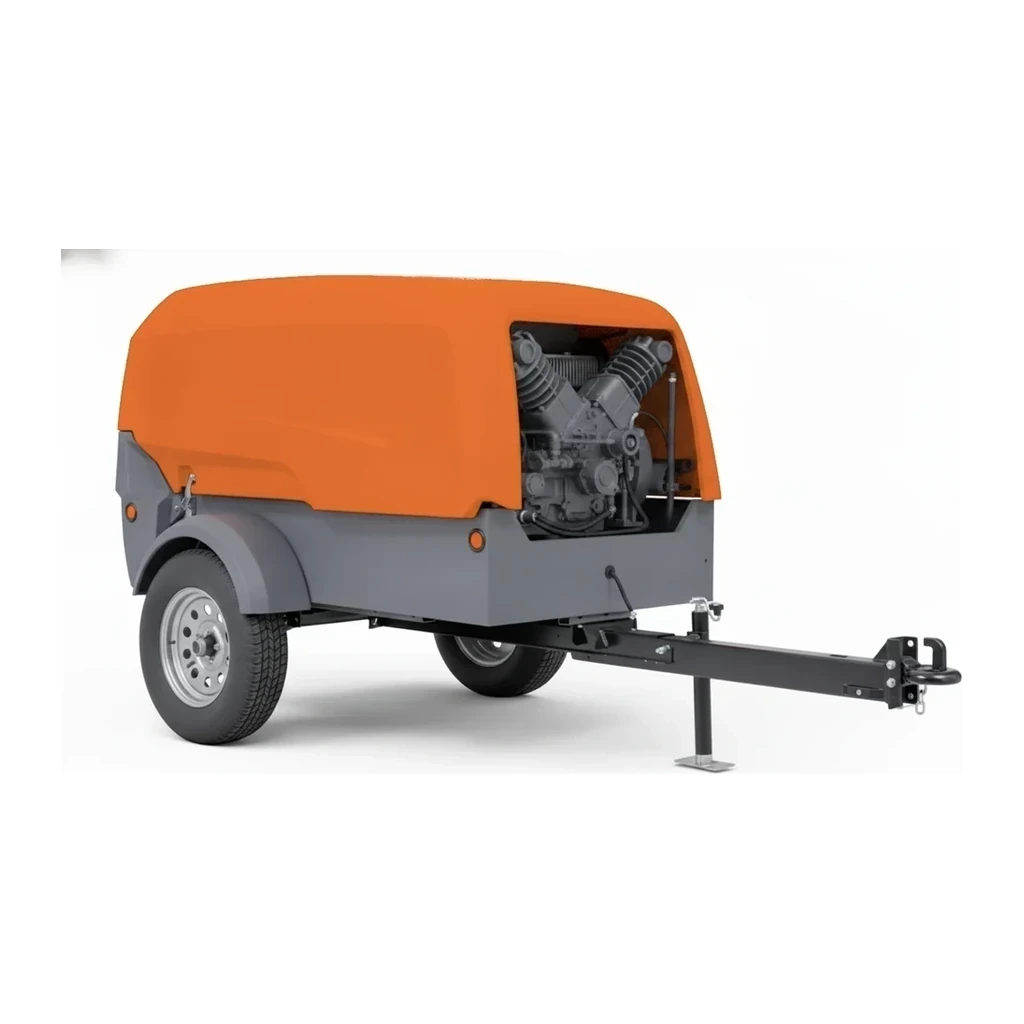
A towable diesel air compressor is a mobile compressed-air unit mounted on a road-towable chassis and powered by a diesel engine. These units provide high-volume air for pneumatic tools, sandblasting, drilling and industrial processes at remote or distributed work sites. Listed models deliver 110–900 cfm at maximum pressures of 100–550 psi, with size bands spanning up to 100 cfm, 100–185 cfm, 185–260 cfm, 260–400 cfm, 400–600 cfm, 600–900 cfm and 1,300–1,800 cfm.
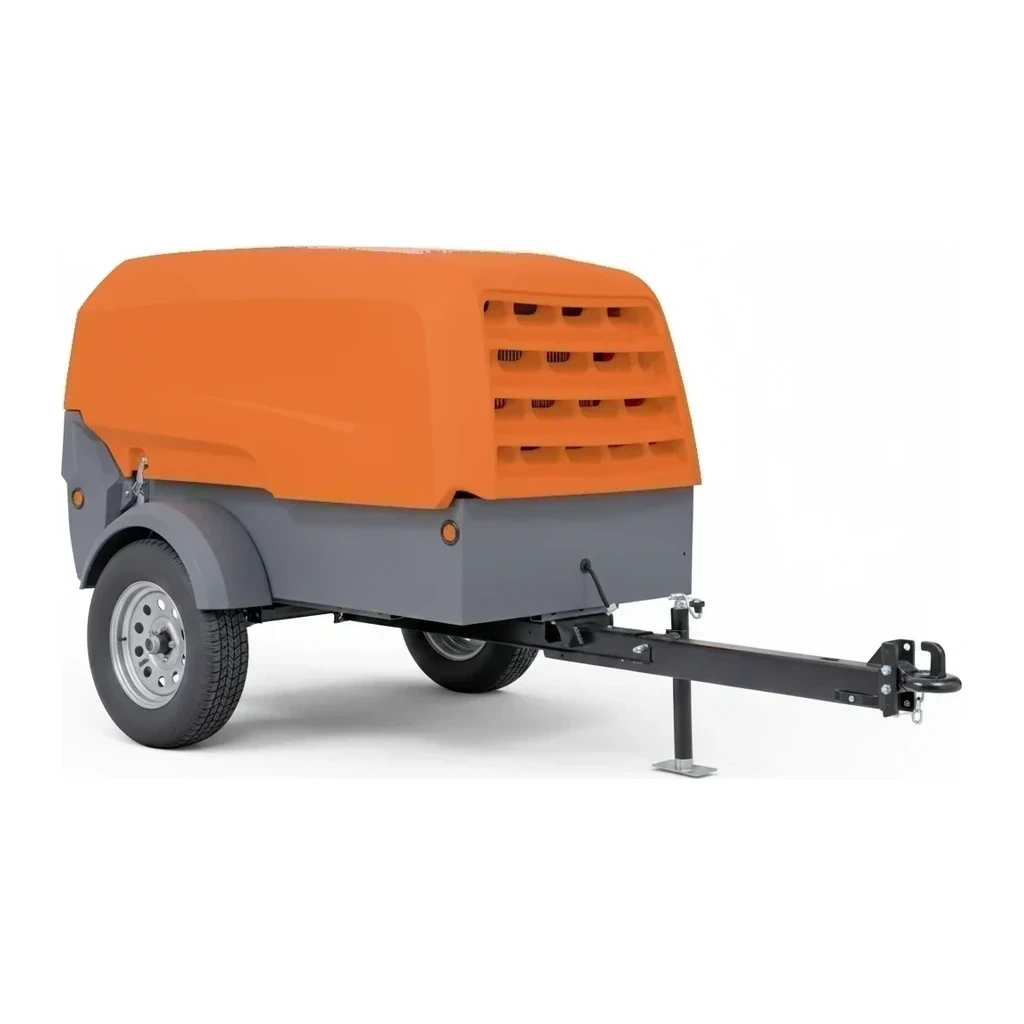
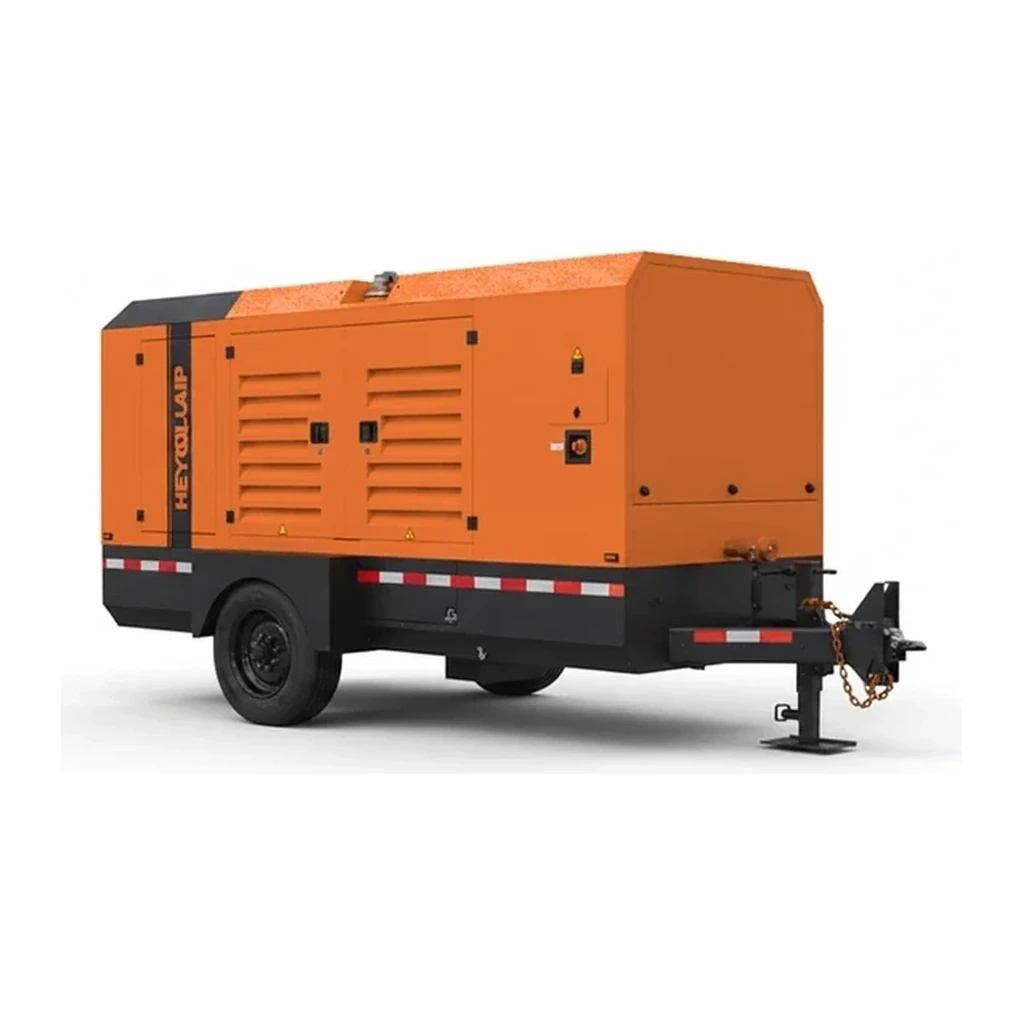
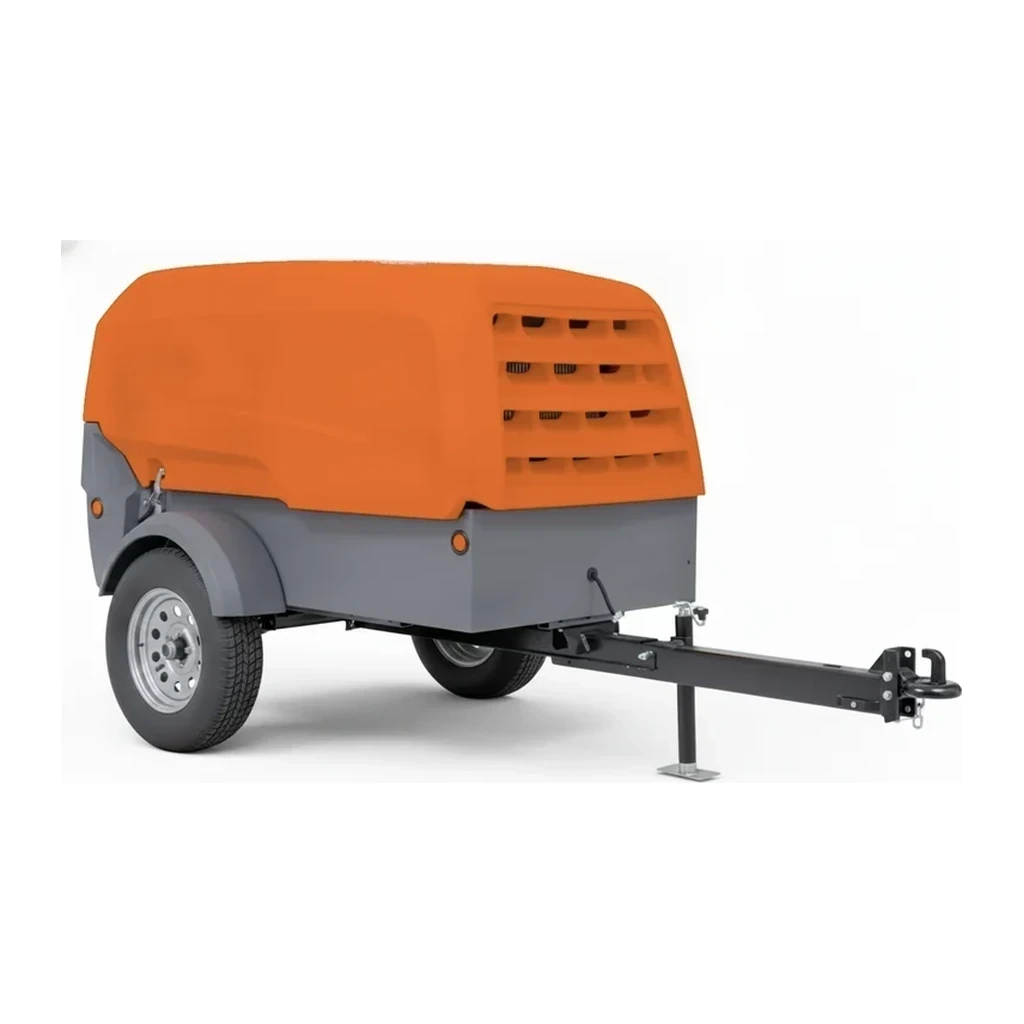
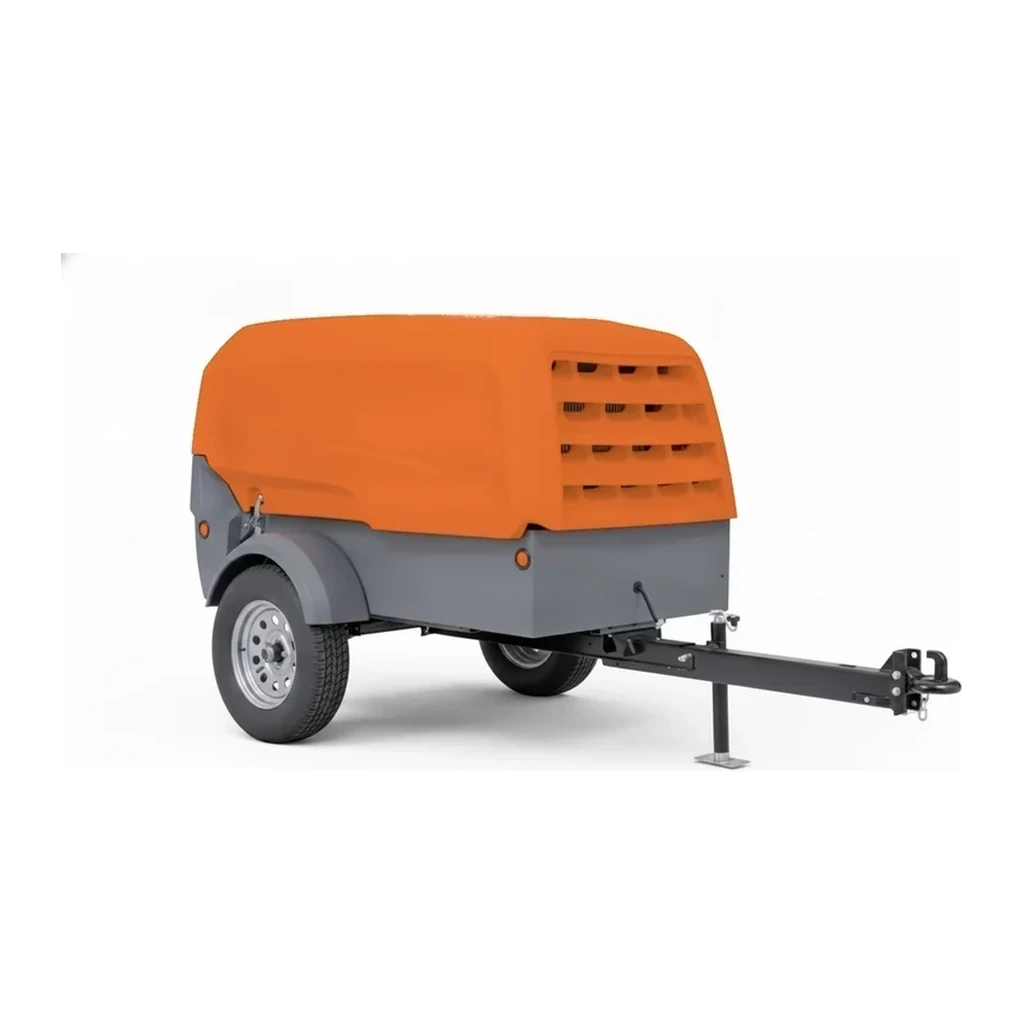
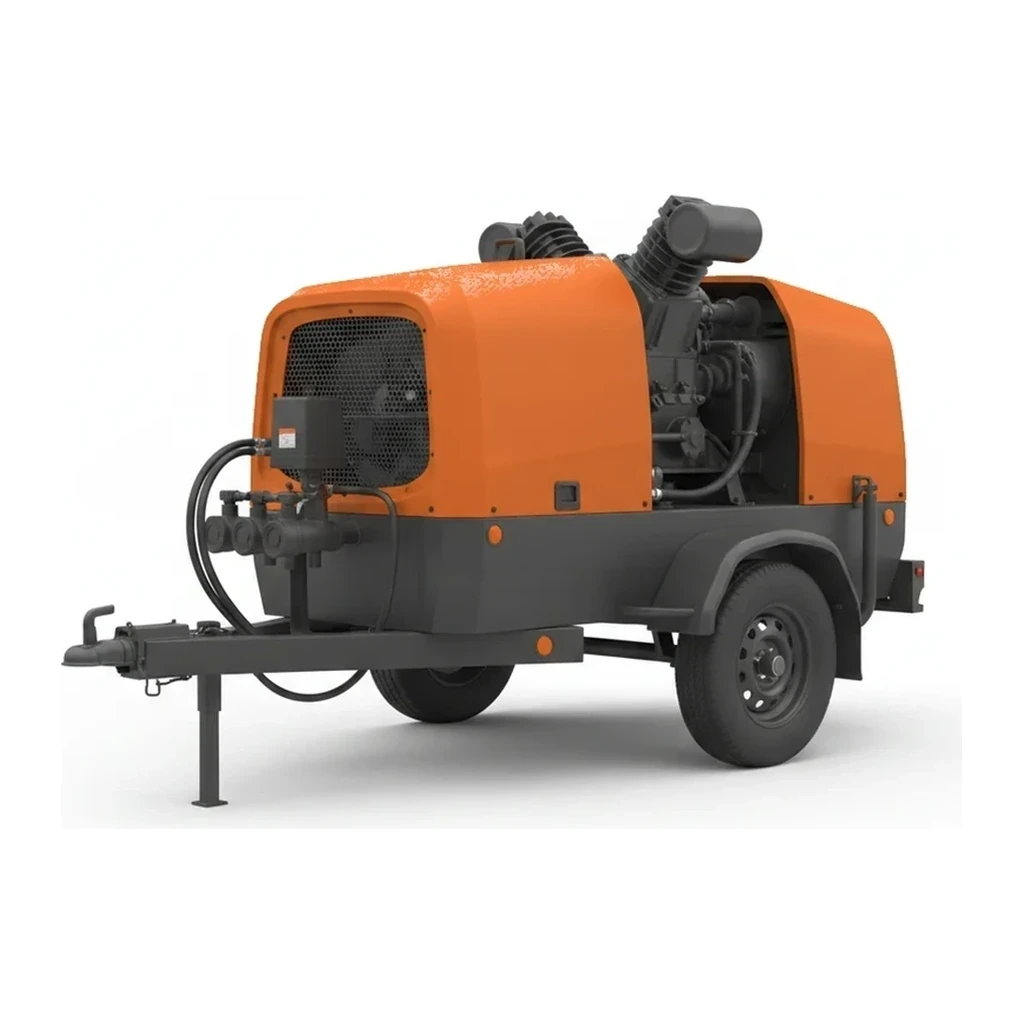
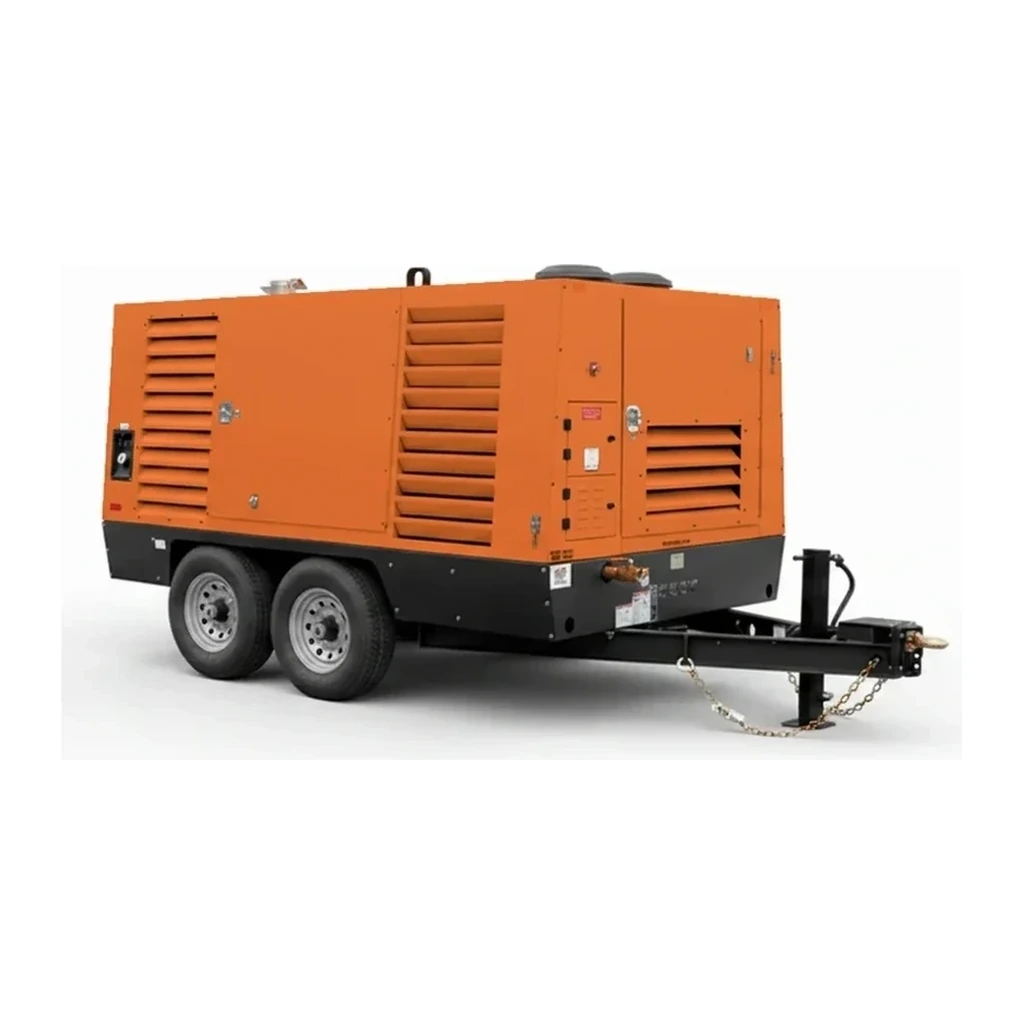
Cat classes
Pick a size class — capacity and reach differ across the range.
How it works
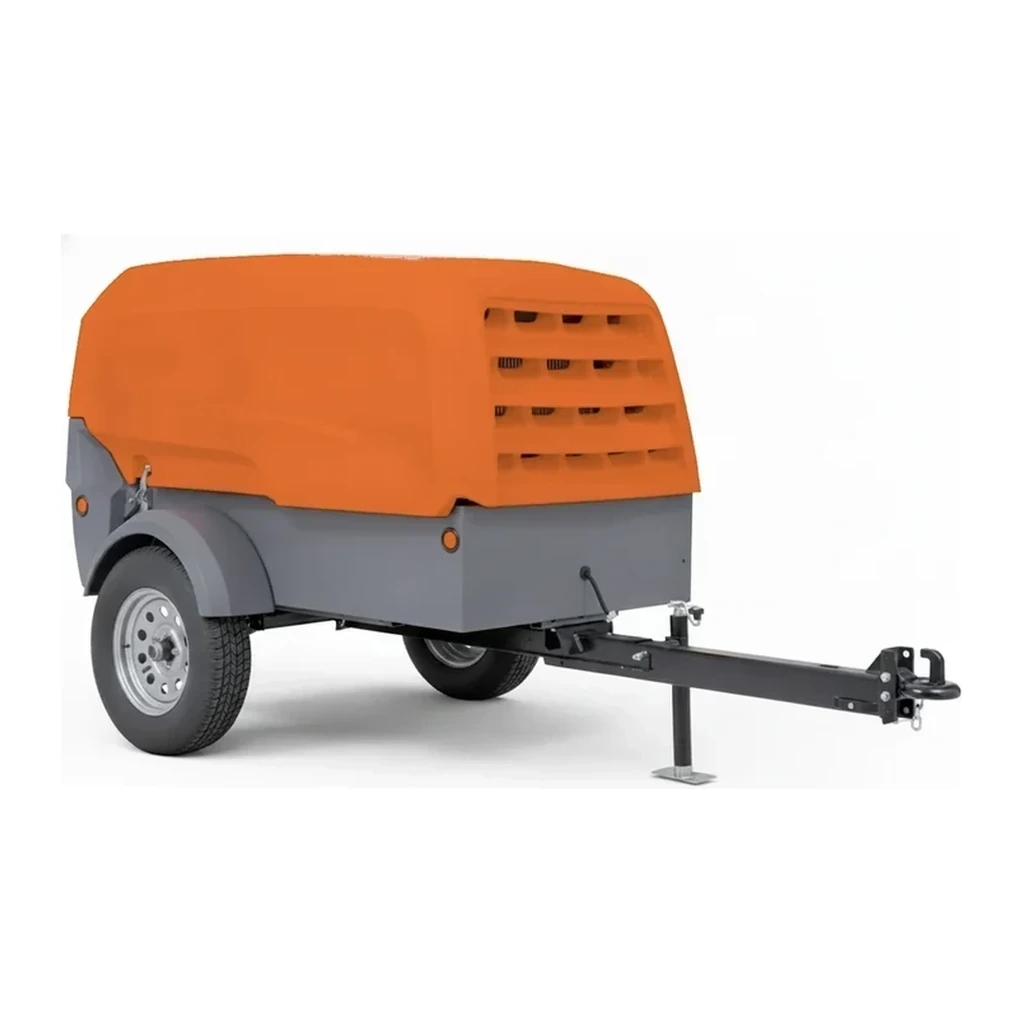
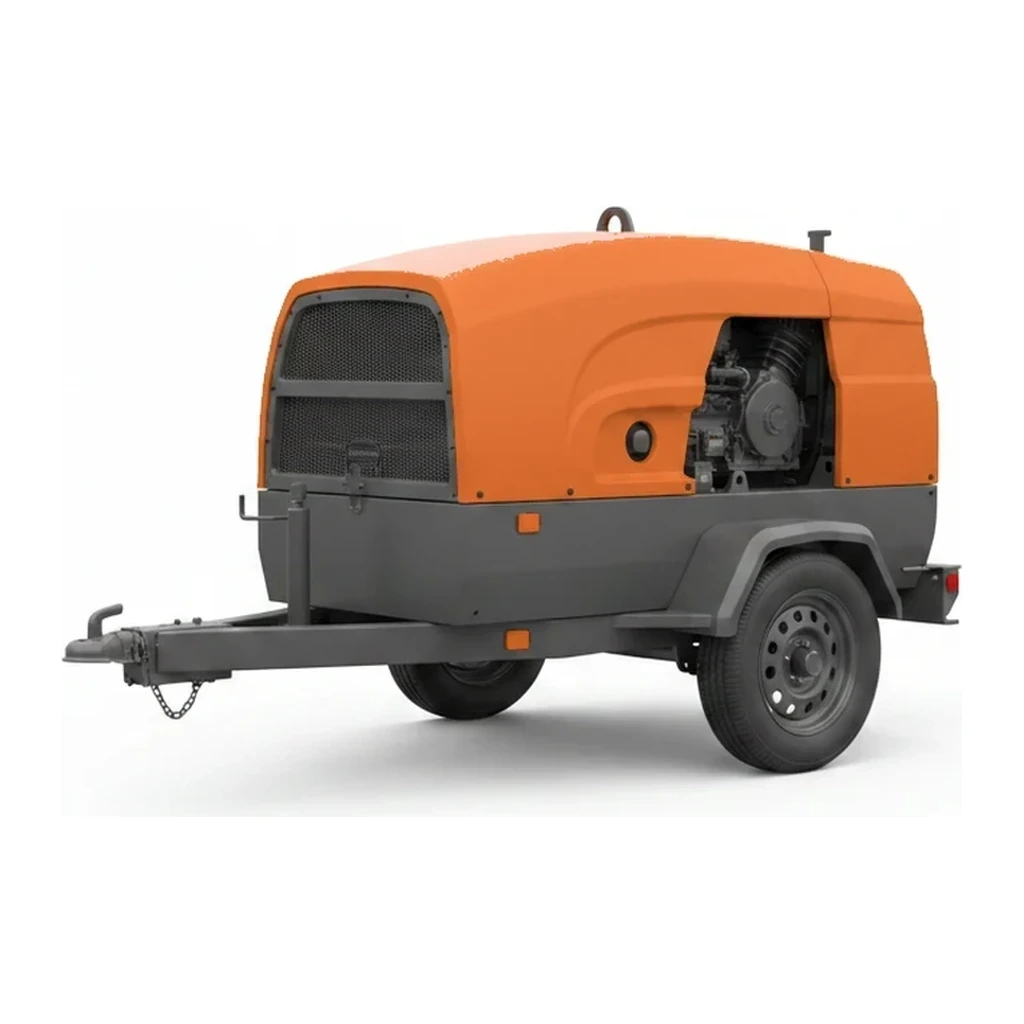
A diesel engine—49–600 hp across listed models—drives a rotary screw or reciprocating compressor element that draws in atmospheric air and compresses it to the working pressure. Engine speed is controlled automatically to match air demand, with aftercoolers removing heat and moisture separators conditioning the air before it reaches the outlet valves. Compressed air is delivered through hose connections with claw couplers and pressure regulation. The towable chassis carries DOT-compliant lighting, safety chains and a drawbar for highway transport. Units feature multiple outlet valves—typically 2–4 connections—hour meters, gauges and safety relief valves. Larger models add two-stage compression, electronic monitoring and sound-attenuating enclosures.
Types & variants
- Portable utility compressors
- Compact units up to 100 cfm for small pneumatic tool operations and light construction.
- Mid-range rotary compressors
- Units in the 100–185 cfm span with single rotary screw elements, workhorses of general construction and maintenance.
- Standard construction compressors
- 185–400 cfm machines built to feed multiple pneumatic tools, jackhammers and medium-scale operations.
- High-capacity industrial compressors
- Units above 400 cfm—size bands reach 1,300–1,800 cfm—for large blasting crews, drilling and infrastructure work.
- High-pressure variants
- Specialized units rated 300–550 psi for well drilling and process applications that standard 100–175 psi construction units cannot serve.
Key specifications
| Specification | Typical range | What it means |
|---|---|---|
| Airflow (cfm) | 110–900 cfm across listed models | The volume of air delivered per minute—the primary specification for matching compressor capacity to tool and application demand. |
| Maximum pressure | 100–550 psi across listed models | Most construction work runs at 100–175 psi; the upper reaches of the band serve drilling and specialized process needs. |
| Engine power | 49–600 hp across listed models | Diesel rating that scales with air output and determines fuel consumption at load. |
| Operating weight | 966–1,870 kg (about 2,130–4,123 lb) across listed models | Governs tow vehicle, hitch rating and braking requirements for road transport. |
| Rated speed | 1,800–2,800 rpm across listed models | Engine speed at which rated power and air output are achieved. |
How the industry sizes it
The industry classifies towable diesel compressors by free air delivery (cfm). Listed size bands run up to 100 cfm, 100–185 cfm, 185–260 cfm, 260–400 cfm, 400–600 cfm, 600–900 cfm and 1,300–1,800 cfm. Selection sums the cfm draw of every tool operating simultaneously, adds margin for line losses and duty cycle, and matches required pressure—100–175 psi for standard construction tools, higher for drilling and process work. Engine power, 49–600 hp across listed models, follows from the output class.
Applications
- Powering jackhammers, chipping hammers, impact wrenches and other pneumatic tools on construction sites
- Sandblasting and abrasive blasting for surface preparation and coating removal
- Drilling and well service operations requiring sustained high-volume air
- Pipe and pressure testing for municipal water, gas and industrial piping
- Utility construction including directional boring and underground installation
- Mining, tunneling and rock drilling requiring continuous compressed air
Safety & operation
- Hose ratings, couplings and whip restraints are verified before tools connect; a separated line at high cfm carries dangerous energy.
- Diesel exhaust requires open-air operation or engineered exhaust evacuation; units are never run in enclosed spaces.
- Highway towing requires a tow vehicle, hitch and braking rated to the unit's plated weight, with functioning lights and safety chains.
- Daily checks of air filters, oil, coolant and relief valves keep the unit safe under sustained load.
- Hearing protection applies near operating compressors, particularly non-enclosed models.
Standards & certifications
- OSHA · 29 CFR 1926.302
- Requirements for compressed air equipment in construction, including pressure limits and safe operating practice.
- ASME · Boiler and Pressure Vessel Code Section VIII
- Design and construction standard for receiver tanks and pressure vessels on the package.
- EPA · Tier 4 emission standards
- Regulates diesel engine emissions for non-road equipment, determining allowable particulate and NOx output.
Frequently asked
How is compressor cfm matched to tool requirements?
What differentiates rotary screw from reciprocating towables?
How does altitude affect output?
What maintenance do these units need?
Compare popular models
Find by spec →Normalised to the same units. A dash means the figure was not published.
| Model | Free air delivery | Max pressure | Engine power |
|---|---|---|---|
| Sullair 185 Series T4F Portable Diesel Compressors | 184 cfm | - | 60 hp |
| Sullair 900 Series T3 Portable Diesel Compressors | 900 cfm | 125 psi | 275 hp |
| Sullair International 185 T3 Portable Diesel Compressors | 184 cfm | - | 60 hp |
| Atlas Copco XAS 110 | 110 cfm | - | - |
| Atlas Copco QAS60 | - | - | 72 hp |
| Sullair TS20-150L | 826 acfm | - | 150 hp |
Related equipment
Browse by manufacturer
Sources
Every specification is verified against the manufacturer's published data, with the source linked for reference.
All models
51 models · Page 2 of 2 · Every spec cited to source